

Two recent events—one in New Delhi and the other off the coast of Sri Lanka—could have important consequences for the future of US-India relations as President Donald Trump wages war on Iran.
On March 5, US Deputy Secretary of State Christopher Landau he spoke at the annual Raisina Dialogue, an Indian government-sponsored conference that brings together policymakers, journalists, and analysts to discuss global issues. Landau reiterated the Trump administration’s commitment to developing cooperative relations with India while maintaining an “America First” agenda.
Two recent events—one in New Delhi and the other off the coast of Sri Lanka—could have important consequences for the future of US-India relations as President Donald Trump wages war on Iran.
On March 5, US Deputy Secretary of State Christopher Landau he spoke at the annual Raisina Dialogue, an Indian government-sponsored conference that brings together policymakers, journalists, and analysts to discuss global issues. Landau reiterated the Trump administration’s commitment to developing cooperative relations with India while maintaining an “America First” agenda.
However, Landau argued that the administration will not help develop India’s material potential: “India has to understand that we are not going to make the same mistake as India that we did with China 20 years ago by saying, we’re going to let you develop all these markets, and then, the next thing we know, you’re beating us in a lot of business,” he said.
The Raisina talks opened in New Delhi just a few days after the war in Iran began, sparking ongoing debates there. Landau’s irony underpinning Trump’s America First foreign policy agenda is that the conflict, if not resolved quickly, will plunge the United States deeper into the Middle East again.
The official Indian response to Landau’s comments was swift: “India’s rise will be decided by India alone,” said Indian Foreign Minister S. Jaishankar. he said in a statement on the last day of the meeting, without clearly mentioning the speech. One can assume that Jaishankar sought to avoid a potential conflict with the Trump administration while still expressing his displeasure to Washington and the Indian public.
At the same time, the Indian National Congress party, which is the main political opposition in the country, clearly said that Landau’s remarks were “.not only insulting but also against India” in a post on its official social media accounts. The party’s reaction was not surprising, in part due to the level of anti-Americanism that has long permeated the party’s political culture.
But the comments also expressed doubts majority in the Congress party who believe that the government of Indian Prime Minister Narendra Modi has been too eager to engage with the Trump administration and has failed to protect India’s national interests—especially in the recently concluded trade agreement with the United States.
The day before Landau’s speech, a US submarine sank an Iranian naval vesselIRIS Denaoff the coast of Sri Lanka, killing at least 87 people. The warship was returning to Iran following a multilateral naval exercise organized by India that included 18 ships from countries friendly to New Delhi. Indian civil society groups reacted strongly. Others argued that the episode was hacked Modi’s claims that India was a security provider in its waters.
The ship was in international waters, and apparently the United States torpedo attack it did not violate international law. But that it happened when the ship returned home from a major exercise—in which the United States itself participated—has upset many in India. Congress party gave Modi the responsibility for his failure to condemn the sinking of the Iranian ship.
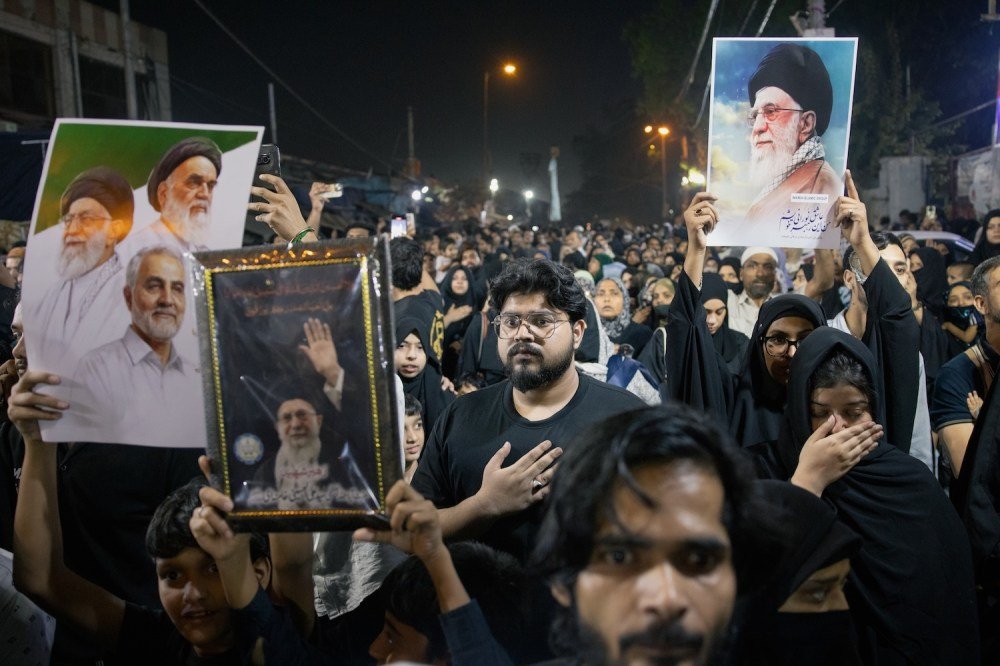
Apart from the opposition sensing an opportunity, there are more compelling reasons why the Indian government cannot remain neutral amid the US and Israeli attacks on Iran. India is a big country Number of Shiites who is be saddened following the assassination of Shiite leader Ayatollah Ali Khamenei. India is also receiving remittances and bulk funds from foreign workers in the Middle East, including Iran, and importing large amounts of oil from the region.
As a result, it is not surprising that the relationship between the United States and India is bad. Landau’s views differ greatly from even previous Republican administrations: Under President George W. Bush, when Secretary of State Condoleezza Rice visited New Delhi, she said that the United States was interested in seeing India rise as a great power.
Successive leaders did not back down from this goal—and Trump did little to slow progress in bilateral relations during his first term. On the contrary, the two parties signed a important protection agreement which had been held for some time. Trump also appeared to develop a personal relationship with Modi, hold a public meeting with him in Houston, Texas, during a state visit. Mode to be returned this heat when Trump visited India in February 2020.
As a result, Landau’s speech was not well received in New Delhi, and the sinking of the Iranian warship has exacerbated these feelings. Given India’s long-standing efforts to maintain normal relations with Iran while strengthening its relationship with the United States, the present moment is a significant setback. India’s neutral foreign policy, which seeks to maintain good relations with a wide range of international partners, has now suffered a major blow.
It is clearly in the Modi government’s interest to take a non-controversial approach to the US—it cannot afford to alienate the Trump administration. So much is at stake, from trade and investment to defense ties. New Delhi’s recent decisions showed a willingness to negotiate and compromise, leading to the February trade deal. (The deal’s ultimate fate, however, is now in limbo after the US Supreme Court recently ruled on Trump’s tariffs.)
Still, the Modi government faces strong internal opposition when it comes to working with the Trump administration. In the past, it could avoid these criticisms and pursue policies that it considered beneficial. However, criticism is growing—and not limited to the opposition benches. Even before the Iran war, influential Indian politicians and neutrals were sounding the alarm about the deterioration of US-India relations.
The US-India relationship, which ran into trouble after Trump imposed tough tariffs last year, may now face further turmoil. Senior members of the sensitive Indian public are now open warning Mode that his government’s unwillingness to express its reservations about a war against Iran could endanger India’s long-term national interests.
It is too early to say whether these doubts will lead to a permanent rift in bilateral relations. The Trump administration’s apparent indifference to what India sees as its legitimate foreign policy concerns—not to mention rebuking its desire for greater status—seems to indicate that decades of bilateral efforts to forge a stronger partnership may now be at risk.



