
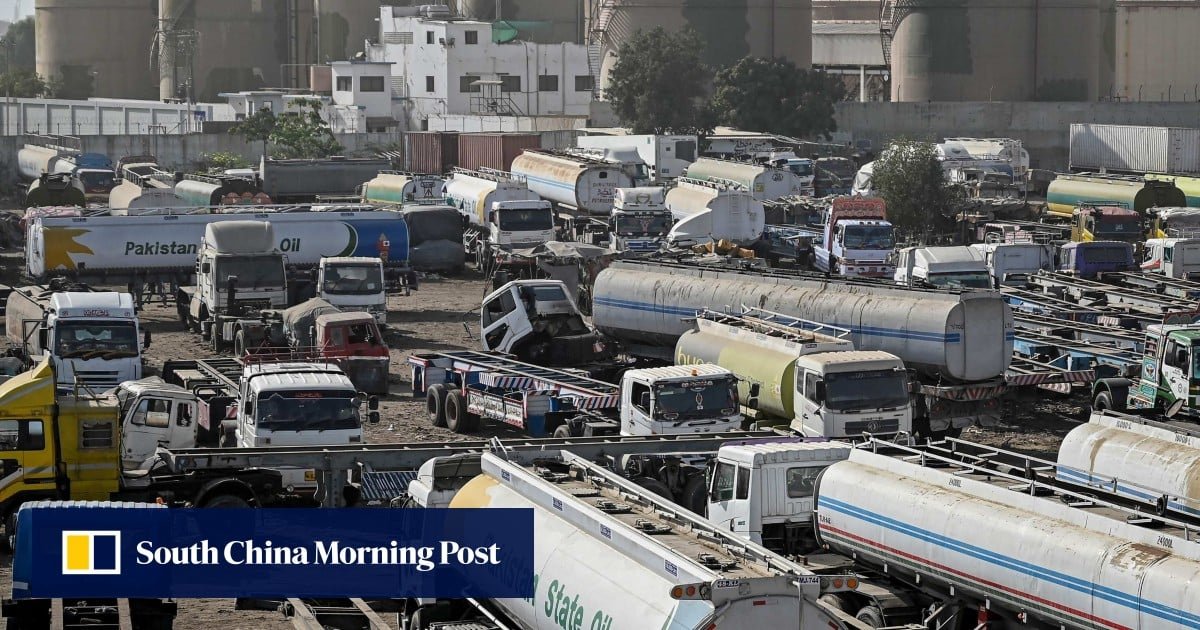
Since Iran’s war broke out late last month, it has threatened to scuttle two of the Middle East’s key maritime hubs – the Strait of Hormuz and Bab el-Mandeb – where most of Asia’s energy imports and industrial exports flow.
For the Gulf states and their major trading partners in Asia, the crisis forces a difficult question: what, if anything, can protect supply chains if US security guarantees can no longer be taken for granted?
Analysts say the usual responses – savings, alternative modes of transport or new security measures – offer little protection against the kind of disruptions now underway, which could continue even after the war is over.
The weakness is not new. Since the “tank war” turned the Persian Gulf into a battlefield during the Iran-Iraq war in the 1980s, it has become clear to the governments of the Gulf and Asia that joint supply chains are facing disruptions at the Strait of Hormuz, which connects the Gulf to the Indian Ocean, and the Bab el-Mandeb, which connects the Indian Ocean to the Mediterranean Sea.
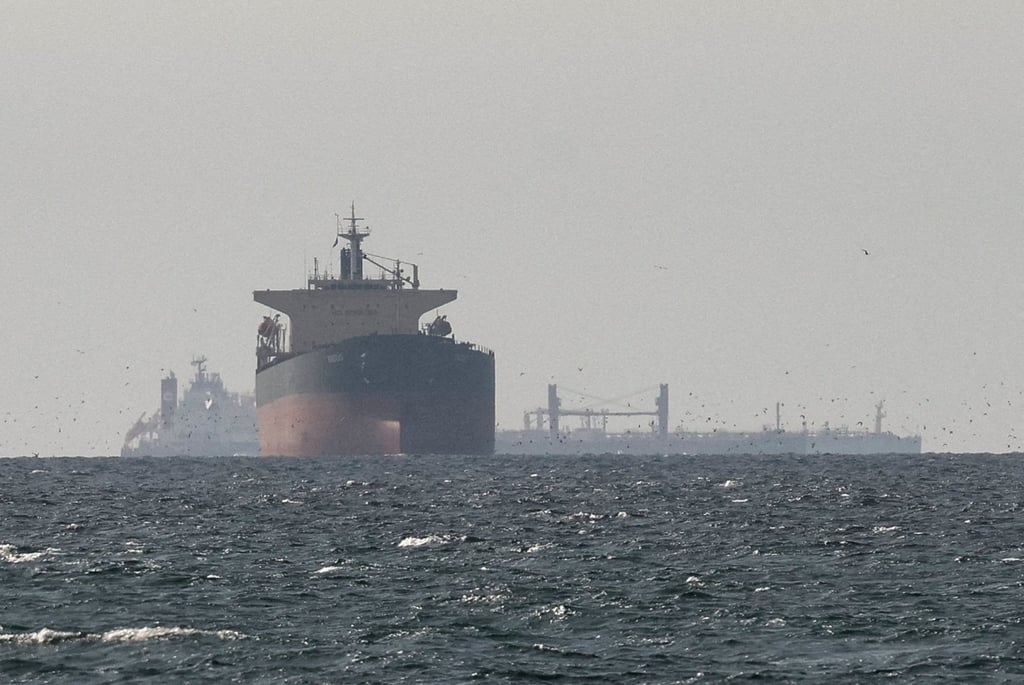
Over the next four decades, as bilateral trade increased and economic interdependence grew, frequent conflicts in the Middle East reinforced the need for Gulf states and Asian economies to work together to mitigate that risk.
Little, however, was done. Instead, the assumption was that the United States, through its vast network of military bases across the region, would prevent a belligerent nation like Iran from ensnaring trade through the Strait of Hormuz.



