

After President Donald Trump launched a major military attack against Iran in cooperation with Israel without giving a solid reason and without giving a public argument to Congress, it seems safe to say that the result will be a further erosion of public trust in the federal government.
That trust has been weak since the early 1970s. And while some commentators point to scandals (like Watergate), political polarization, or—in the view of Ezra Klein and Derek Thompson—overregulation to explain why many Americans doubt the government’s ability to keep its promises, nothing has done more to erode trust than war.
After President Donald Trump launched a major military attack against Iran in cooperation with Israel without giving a solid reason and without giving a public argument to Congress, it seems safe to say that the result will be a further erosion of public trust in the federal government.
That trust has been weak since the early 1970s. And while some commentators point to scandals (like Watergate), political polarization, or—in the view of Ezra Klein and Derek Thompson—overregulation to explain why many Americans doubt the government’s ability to keep its promises, nothing has done more to erode trust than war.
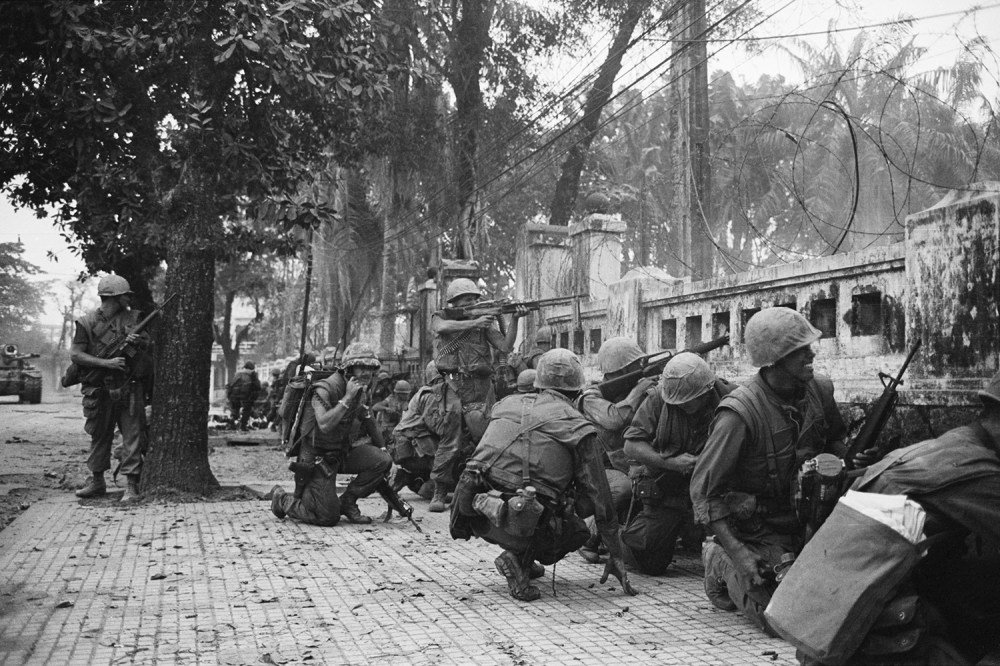
Vietnam shattered the trust that Americans had developed in the federal government during the New Deal and World War II. Its impact on public confidence has stood as a reminder of the damage that mismanaged military operations can bring to a nation.
When President Lyndon Johnson escalated the war in Vietnam in 1964 and 1965, the majority of the country still believed in the federal government. The impact of President Franklin D. Roosevelt’s New Deal on the economy in the 1930s and the success in defeating global fascism in the 1940s had increased public confidence in what Washington could achieve. The size and scope of the federal government had grown exponentially during that period, bringing relief to millions of Americans facing economic insecurity and leaving a deep imprint on nearly every aspect of American life.
For this reason, the famous two-term Republican president of the 1950s, Dwight Eisenhower, believed that any effort to dismantle Roosevelt’s legacy would be politically disastrous. “If any political party tries to end social security, unemployment insurance, and eliminate labor laws and farm programs, you will never hear of that party again in our political history,” he said. he wrote to his brother Edgar in 1954. In 1958, according to According to the National Election Survey, 73 percent of Americans trust the federal government to “do the right thing almost always or most of the time.”
President John F. Kennedy, who began his term in January 1961, led a new generation of Americans to believe in what Washington could achieve with their help. “Ask not what your country can do for you—ask what you can do for your country,” he said in his inaugural address.
Then came the disaster of Vietnam. The public began to feel that the administration was not telling the truth about the wars of 1967 and 1968, when journalists began to break the official military information they were relying on. Gradually, the media began to produce a greater number of stories revealing the problems the US military was having against North Vietnam and the Viet Cong. The anti-war movement was also issuing its own statements, through newspapers, pamphlets and public meetings, which challenged the veracity of official statements. The two forces met in February 1968 when CBS anchor Walter Cronkite went on the air after visiting Vietnam during the Tet Offensive—a surprise attack on American forces that contradicted the government’s claim that the war was almost over—and they broke away from the accord on journalistic equality saying: “(I)t is becoming increasingly clear to this reporter that the only way to resolve it will be a mutual, but one that is honorable… they fulfilled their promise to defend democracy.”
In 1965, Johnson introduced in Congress one of the deepest programs in American history, but at the end of his term, he was overcome by a credibility gap that left many voters without faith in the words they heard from his mouth.
The publication of the Pentagon Papers in 1971, a top secret study commissioned by the Department of Defense and leaked to journalists by Daniel Ellsberg, revealed the full history of manipulation, deception, and outright lies surrounding the war. The Supreme Court rejected President Richard Nixon’s efforts to prevent publication, and New York Times and Washington Post (along with coverage in more than a dozen other outlets) gave Americans a detailed account of how the United States was caught in that deadly quagmire—much of it contradicting the stories they had long heard from presidents and other officials. Those critical moments in the war, such as when Johnson asked Congress to pass the Gulf of Tonkin Resolution in August 1964 (which authorized the use of military force in Southeast Asia), were based on misrepresentations, if not outright lies, that emphasized the extent to which presidents were willing to betray the public’s trust.
The ways in which government officials hid their actions from the public came under further scrutiny during highly publicized hearings led by Representative Otis Pike and Senator Frank Church, which examined how the national security establishment operated without people during the Cold War. While presidents were proudly fighting communism to protect democracy, officials in the executive branch were attempting to assassinate foreign leaders without authorization, spying on American citizens involved in anti-war protests, and routinely violating basic civil liberties.
In the 1976 presidential campaign, Jimmy Carter won the election by promising voters, “I will never lie to the American people.” But Carter failed to change the trend line.
In public honesty in government went into a long period of decline in the mid-1960s and then increased due to Watergate and Nixon’s resignation, from which it never fully recovered. The lies kept coming: An investigation into the Iran-Contra scandal in 1987 revealed that the Reagan administration had sold weapons to Iran (then considered a major state sponsor of terrorism) and secretly funneled the proceeds to the Nicaraguan Contras, despite an express congressional ban on doing so—although it could find no evidence that the president himself had a smoking gun.
The accolades that followed the quick success of Operation Desert Storm in 1991, when President George HW Bush led the United States and a coalition of allies to push Iraqi forces out of Kuwait, also diverted attention from many people. lies claims that the administration made at the beginning of the war, including false stories that Iraqi soldiers ripped babies from incubators in Kuwait hospitals.
Nothing since Vietnam has come close to President George W. Bush’s actions in launching the war in Iraq in 2003. As Americans were still reeling from the aftermath of 9/11, the administration argued that it needed to attack Iraq because Saddam Hussein’s regime had built a cache of weapons of mass destruction that could be used against the United States, and because it was connected to the Internet 1. Despite the fact that these claims have not been proven, some trusted officials around Bush, including Secretary of State Colin Powell, publicly released this case to the world. Shortly after the war began, it became clear that the president had misled the public. As the crisis dragged on for nearly nine years and remained unpopular, the fallout from these claims became a central part of Bush’s legacy.
Those five decades of lies and warming have left the nation anxious, distrustful, and suspicious of almost anything the government does. Republicans have often been in the best position to highlight this public culture of skepticism, since their agenda is centered on limiting the role of government. Democrats, on the other hand, have borne the brunt of this history because their party continues to advocate for a greater governmental role in a country where mistrust is rampant.
The war within Iran may make matters worse. The fact that Trump never sought congressional support has created a situation in which Americans have little understanding of why the United States launched such dangerous attacks that have continued to escalate. Shifting arguments and counterclaims from administration officials, including swift denials claims that Iran had missiles capable of reaching the United States done did little to bolster public support, even in the early days of the operation, a period when public opinion has historically revolved around the flag. The fact that the war is taking place under the leadership of a president who has a good memory of lying doesn’t help matters.
If presidents are ever to rebuild trust in government, efforts must begin during wartime. The dangerous dynamics of “official lies,” Eric Alterman he wrote in his 2004 book, When Presidents Lie, is their “amoeba-like repetitive behavior.” The more a leader deceives his people, the more he increases must to lie to his people.”
Despite strong incentives to say whatever is necessary for legitimate military operations, the lies will eventually be exposed. Presidents cannot ignore the long-term costs of denying the truth in the pursuit of national security. Damage caused by the mission itself; the legacy of the presidents who pay them; and the position of the federal government—on which all Americans depend—has become greater.
If the president wants to launch a military attack, he should have the courage to make his best—non-contrived—argument to the nation and use the power of influence to work within the democratic system the founders created, rather than around it.



