
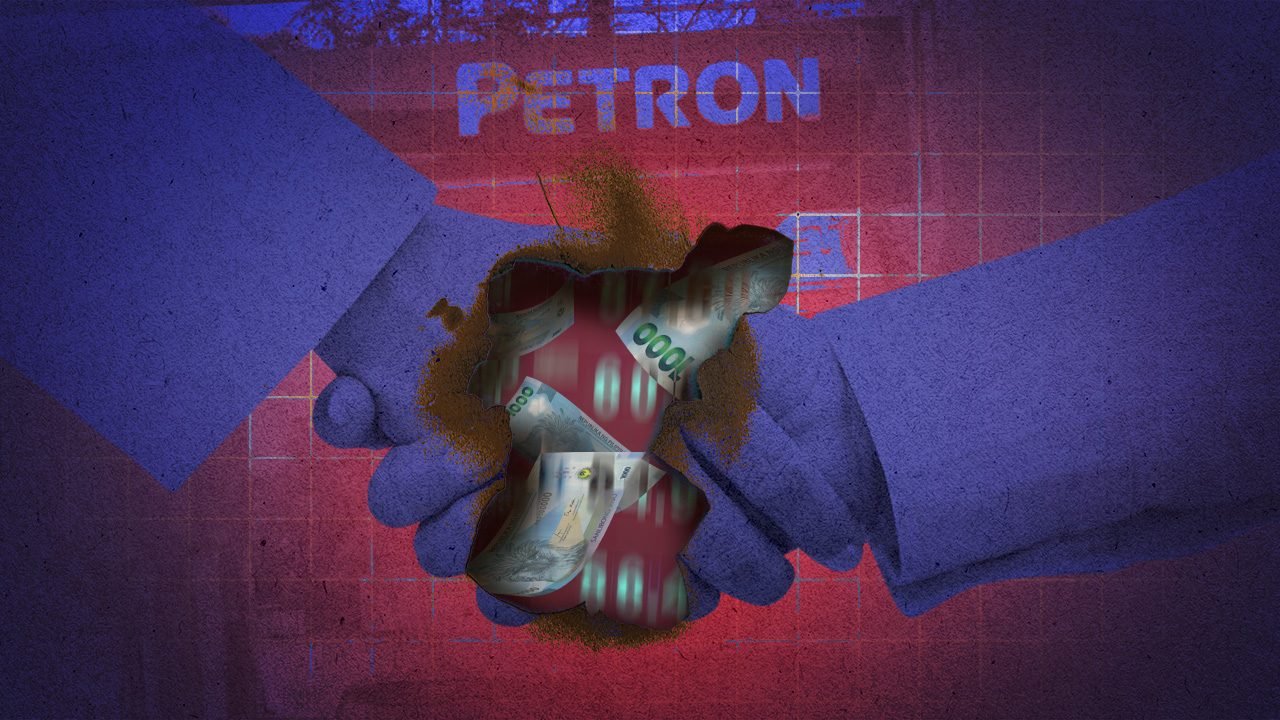
The issue concerning Petron is not new. What is evident now is its economic consequences.
The Supreme Court last year’s decision closed a dispute that began with the privatization of Petron in 1994, and the subsequent change of ownership from Saudi Aramco to Ashmore Group and finally to San Miguel Corporation.
The previous sale clearly removed the land under Petron’s refineries and depots, with the properties retained by the government. But when San Miguel acquired control of Petron through Ashmorethe same assets were placed under the ownership of the company, causing concern from the government. The next question cannot be avoided: if the P23-billion privatization does not include assets whose long-term value may be greater once the land under infrastructure is taken into account.
If we calculate the value of Petron’s land assets, it easily hovers around P100 billion.
We derive this number from a publicly reported land area of approximately 357 hectares, or approximately 3.57 million square meters. Using a conservative mixed valuation of around P25,000 to P30,000 per square meter for a combination of refinery, depot and retail fuel areas, the total land value is close to P100 billion.

This is not an official assessment, but Vantage Point’s indicative estimate based on existing land parameters – enough to show the magnitude of what could be set aside from the P23-billion privatization.
The issue comes up again
The privatization of Petron became public as early as 2025, when it took place revealed that the Supreme Court has decided with the final decision his long-running dispute with the government through the Philippine National Oil Company (PNOC) over refinery land.
But the Court’s decision did not end the conversation.
Government lawyers continued to seek a settlement, while officials pointed to the strategic and financial importance of the assets involved. What began as a legal dispute has since evolved into a broader question, one that goes beyond ownership and how the country values and protects its most important economic assets.
The problem seems straightforward: what aspects of the plan are privatized, and which are not? Specifically, were the hectares of land under Petron’s refineries and depots – which were not included in the 1994 agreement – preserved as public property, or, in fact, transferred to private operators?
It’s a result of how customization was designed in the first place.
Petron, including its land assets, was effectively folded into San Miguel when the food and beverage conglomerate took control of the refinery’s operations. The government opposed this change, arguing that the land would never be privatized – a point that was eventually taken to Court.
So came the inevitable question: did land sales somehow skip properties whose long-term value might be higher once you factor in the value of land in today’s market?
By 2026, the case had moved out of court and into the realm of public policy, valuation and public interest. A recent email message received by Rappler suggests that the government was wronged by the Supreme Court decision.
What happened before?
In 1994, the government, through the Philippine National Oil Corporation (PNOC), sold a 40% stake to Saudi Aramco while initiating an initial public offering of approximately 20% of Petron’s shares. But before the deal could happen, an important restructuring took place. Large parts of Petron’s land holdings – refineries and depots – were separated from the corporation and given to PNOC. Petron had continued to operate these facilities under lease arrangements, with land ownership still held by the government.
The argument was simple: privatize the running business, but retain ownership of the land beneath it.
For many years, that distinction was untouched. Petron operated the facilities. PNOC held the land titles. The arrangement flourished in contracts and corporate records, but not in public debate.
What has changed is ownership.
More than a decade later, Petron came under new ownership. In 2008, following the acquisition of major shares from Saudi Aramco and PNOC, the Ashmore Group consolidated ownership through an ownership structure. Shortly after this, San Miguel bought the company.
Access masterclass
The rise of San Miguel to control was an example in the formation of strategic operations. The conglomerate did not buy the shares of Petron directly, but the company that held the shares.
In effect, the move transferred operating ownership before a formal tender offer to minority shareholders was made. The transaction showed how corporate takeovers can be implemented using layers of ownership structures rather than through simple market purchases.
But the big issue was not the control of the company. It was the land holding where all the refineries and depots stood.
PNOC has maintained that these properties were not included in the privatization and were leased only to Petron. From that point of view, the government sold the refining business but continued to own the strategic components that enable the business.
If that reading holds, the implication is hard to ignore.
The government gets the shorter stick
The P23-billion sale may have left out assets worth up to P100 billion. That gap alone changed the transaction.
The decision of the Supreme Court, issued on November 25, 2024, and made public in January of the following year, considered the case to be about legal ownership, and not a challenge to the privatization policy itself. It looked into the titles, lease agreements, and contractual relationships that developed between Petron and PNOC, basing its decision on the factual record.
But even after the judgment was issued, PNOC filed a second request for reconsideration, claiming “higher interests of justice.” Public disclosures show that the motion was still being considered several months after the Court declared its decision final and finally rejected PNOC’s request on July 2, 2025. That sequence alone emphasizes the seriousness of the issues involved and how questions regarding the ownership and value of these properties continue to emerge beyond the Court’s official decision.
Courts determine contracts and ownership. They were not intended to reassess the economic assumptions that underpinned policy choices made decades before.
That distinction is important.
The decision clarifies ownership under existing law, but raises a larger question: whether property that has been deliberately excluded from privatization can eventually pass into private hands through legal interpretation rather than through an open public sale.
This is not a unique trend.
The real impact of privatization in the Philippines is often seen years after the initiative. In the energy sector, the sale of Napocor’s assets later changed electricity prices and government obligations. in water, privatization of MWSS it led to tax disputes and regulatory disputes decades after the agreements were signed.
Petron now appears to be one of a kind: a transaction whose legal conclusion has been reached, but whose economic meaning continues to haunt the market.
I welcome your comments on these and other issues where the decisions made by the authorities shape the future of the country’s economy. – Rappler.com
Sources: Petron Corporation discloses to the Philippine Stock Exchange and Securities Exchange Commission, including a January 10, 2025 filing regarding the Supreme Court’s November 25, 2024 resolution in the PNOC land dispute; historical records of Petron’s 1994 privatization involving PNOC and Saudi Aramco; and corporate disclosures about Petron’s 2008–2010 acquisition of San Miguel through the Ashmore Group.
Below is the original Vantage Point pieces you might miss:



