
There is something quietly unsettling about this year’s Earth Hour.
In the midst of an energy crisis, the quiet, symbolic act of turning off the lights for sixty minutes no longer feels spontaneous. For many, it loudly highlights the reality that is already unfolding – not as an act, but as an obstacle. With power outages and volatile oil prices, darkness is becoming more and more of an option.
What was once a moment of global reflection is now very close to everyday experience. This does not diminish the value of Earth Hour; it resets it.
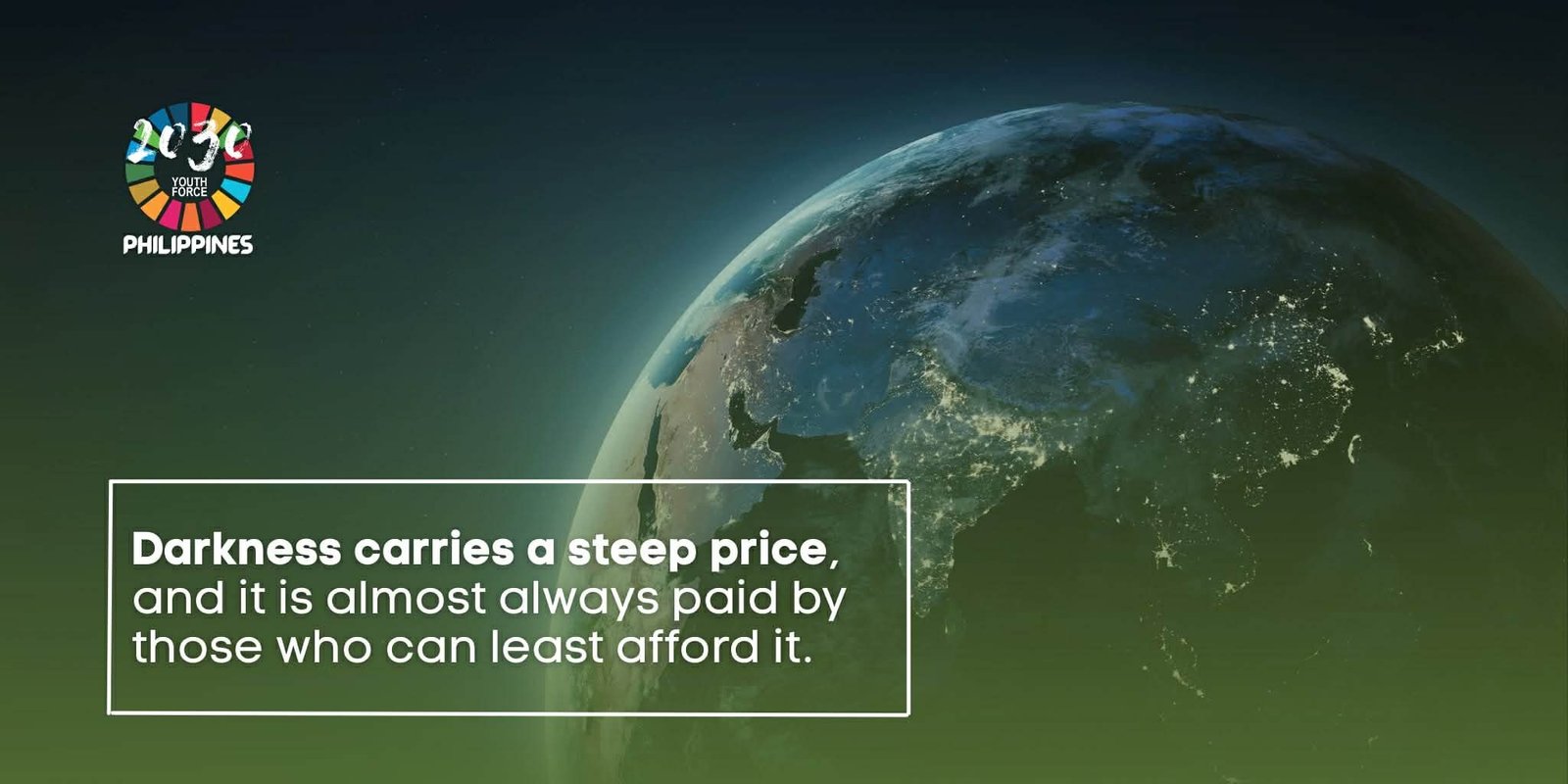
Because choosing to turn off the lights is fundamentally different from being forced to live without them. One is an act of awareness. The other is a sign of weakness. Choosing to turn off the lights is a conscious act; being forced to live without them is a sign of vulnerability. We often overlook the fact that, surprisingly, not having electricity is more expensive. Without reliable power, households are pushed toward costly and dangerous alternatives: candles that burn too quickly, kerosene that eats into tight budgets, and work that must be controlled by the sun. It’s a cycle of wasted food and missed opportunities. Darkness carries a heavy price, and is almost always paid by those who cannot afford it.
To treat this as a normal, annual is to ignore how evenly distributed the “choice” is. If we want to build a future that is sustainable and resilient, we must demand a world where darkness cannot be imposed—only chosen. We must realize that the ability to switch between light and shadow is, in itself, a great privilege.
The most vulnerable are often those whose lamps are not fixed to the ceiling, but explode from the floor – improvised, fragile, and short-lived. It is a fact that is easy to miss from comfortable rooms, where electricity is constant and disturbances are rare. From those high places, darkness is a sign. For others, it is a reduced reality.



