
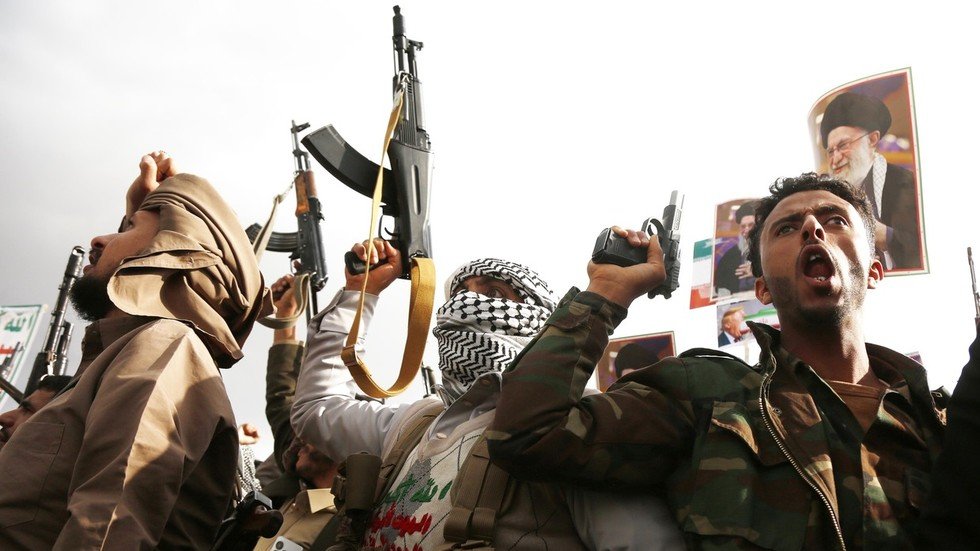
The Yemeni group has said it is entering the war against the United States and Israel for supporting Iran and other “opposition” groups.
Yemen’s Houthi forces have announced their official entry into the Middle East conflict, firing several missiles towards Israel.
The group, which controls Yemen’s capital Sanaa and much of the north of the country, has been out of the field since the United States and Israel first attacked Tehran on February 28.
But on Saturday, Houthi army spokesman Brigadier General Yahya Saree issued a statement, declaring support for Tehran and others. “opposition” groups in the region.
The group is forced to start military operations against the United States, Israel and their allies due to the continuous increase, attacks against infrastructure and “cruelty” he said in Lebanon, Iran, Iraq and the Gaza Strip.
“Our fingers are on the trigger” if any nation decides to join Washington’s attacks on West Jerusalem or if the Red Sea is used to target Iran, Saree warned.
Hours later, the Houthis said that they had launched “a barrage of ballistic missiles aimed at sensitive Israeli military sites,” the duration of the attack and the operations carried out by Iran and Hezbollah in Lebanon.
The group said it will continue with its strikes “until the aggression against all sides of the opposition stops.”
Israel reported shooting down two missiles from Yemen on Saturday.
When asked about the Houthi attack, Israeli army spokesperson Brigadier General Effie Defrin said that West Jerusalem “preparing for many battles.”
Over the past two and a half years, the Houthis have fired more than 130 ballistic missiles and dozens of drones at Israel, killing one person and wounding several others, according to the Times of Israel.
The Yemeni fighters said they support the Palestinians in Gaza after West Jerusalem launched its military operation targeting the area in response to Hamas’s October 7, 2023 invasion of Israel.
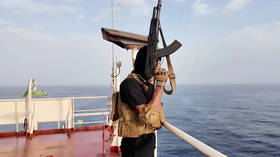
The group also disrupted shipping in the Red Sea, targeting nearly a hundred ships connected to Israel in the Gulf of Aden and sinking two of them.
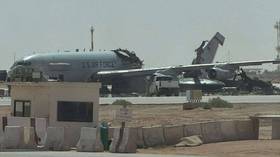
In 2025, the United States launched a campaign to bomb areas controlled by the Houthis in Yemen. When it was concluded in May without agreeing to the defeat of the group promised by the President of the United States Donald Trump, the White House announced that an agreement had been reached with the militants to stop their attacks on the ships.
An increase in the possibility of a Houthi strike against exports could further increase oil prices and destabilize them. “All maritime safety,” the senior Yemen analyst at the International Crisis Group, Ahmed Nagi, warned. “The impact will not only be on the energy market,” He said.
With the Strait of Hormuz effectively closed due to the US-Israeli war against Iran, Saudi Arabia has focused its oil trade on the Red Sea, sending millions of crude oil daily through the 32-kilometer-wide (20-mile-wide) Strait of Bab el-Mandeb at the southern tip of the Arabian Peninsula.
When the Houthis targeted ships in Bab el-Mandeb in 2024 and 2025, shipping companies were forced to reroute and send them closer to South Africa’s Cape of Good Hope, which caused delays and increased costs.



