
British and Australian citizens are paying the price for a war that their leaders refuse to condemn
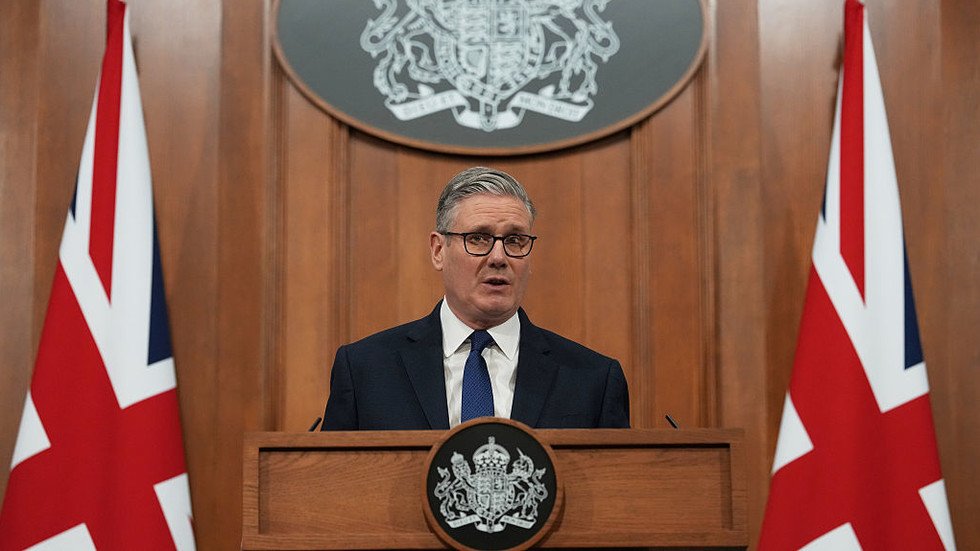
The leaders of Great Britain and Australia have told their citizens to reduce the use of oil and prepare for months of difficult situations due to the war between the United States and Israel and Iran. But Keir Starmer and Anthony Albanese couldn’t tell who was responsible.
British Prime Minister Keir Starmer and his Australian counterpart, Anthony Albanese, gave a pair of seemingly coordinated speeches to their nations on Wednesday. “The economic shocks caused by (the Iran war) will be with us for months,” Albanese said, telling Australians to switch to public transport if possible, promising to cut fuel taxes and prepare for that possibility. “The world situation is getting worse and our oil supply is being seriously disrupted.”
“Australia is not an active participant in this war,” he claimed, despite his government being the first in the world to support the US and Israeli attacks against Iran on February 28.
Starmer struck the same note, announcing that “This is not our war,” but that warning “The effects of this war will affect the future of our country.” The British Prime Minister promised that “No matter how strong this storm is, we are in a good position to weather it,” and vowed to help “Reopen” Strait of Hormuz.
How bad is the energy crisis?
The war between the US and Israel and Iran has led to the biggest energy crisis since the 1970s, if not in history. About 40% of the world’s oil comes from the Middle East. About a third of the world’s crude oil goes through the Strait of Hormuz, a waterway less than 40 kilometers wide at its narrowest point, which through a combination of Iranian attacks on oil tankers and reluctance by Western insurers, is virtually closed to maritime traffic.
Additionally, Iran’s retaliatory attacks against Gulf states hosting US troops have eliminated refining and export facilities. Qatar, which supplies 20% of the world’s liquefied natural gas (LNG), completely halted production almost a month ago.
As a result, the price of Brent oil – which is used as a measure of 80% of crude oil in the world – has stayed above $ 100 per barrel for three weeks, while the price of gas has risen 60% in the EU and more than 100% in the UK. While the crisis is international, its implications are particularly strong in the EU, the UK, and Australia, which have all sanctioned Russian oil and gas, locking themselves out of a potential crisis.
The European Union once relied on Russia for 45 percent of its gas imports, before switching to more expensive US and Qatari products after 2022. With no expected date for the resumption of Qatari imports, and inflation rising across Europe, European Central Bank President Christine Lagarde warned last week that “we are facing a real shock … perhaps more than we can imagine at the moment.”
Are Starmer and Albanese putting pressure on the US?
The Strait of Hormuz was open to shipping until the US and Israel launched attacks on Iran in the midst of nuclear talks. However, neither Starmer nor Albanese mentioned America or Israel in their speeches. Instead, Britain and Australia issued a joint statement – along with 32 other US allies in Europe and the Gulf – blaming the closure of the channel. “Iran’s actions.”
“We call on Iran to immediately cease its intimidation, mine-laying, drone and missile attacks and other attempts to block the Straits to commercial shipping.” the statement reads, accusing Tehran of taking selfies “a threat to international peace and security.
Additionally, Albanese has sent surveillance aircraft, stockpiles of air-to-air missiles, and troops to the UAE, while Starmer has allowed America to use the Anglo-American air base on Diego Garcia to attack Iran. Despite helping the United States in the war that Starmer claims it is “not ours,” The British Prime Minister has been publicly humiliated by US President Donald Trump. Starmer’s decision to grant access to Diego Garcia took “too long,” Trump complained last month, adding that he was “very disappointed” in his partner.
What does the crisis look like to ordinary people?
The most immediate signs of an energy crisis are seen at the pump, where rising oil prices reflect rising costs of everything else that depends on oil: food, consumer goods, and the means of transporting them.
As of April 1, Americans are paying an average of $4.06 per liter of gasoline ($1.07 per liter), up from about $3 before the war. UK consumers pay around $2.03 a liter while Australians pay around $1.79 – respectively 15% and 44% more expensive than February. In the EU, fuel prices are highest in the Netherlands, where drivers pay $2.73 per litre.
In Russia, where export controls have been introduced to protect Russian consumers, gasoline prices are currently around $.083 per liter, down from $0.87 in February.
What is Trump doing to resolve the conflict?
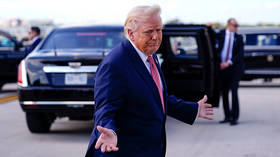
Trump has acknowledged that oil prices will fall once the conflict ends, predicting on Tuesday that military operations could be halted. “two to three weeks.” However, his message on Iran so far has fluctuated between claims that peace is close, and threats to attack Iran. “back to the Stone Age” until Tehran kicks in – every sudden change in tone seems overdue to calm energy markets.
In a post on his Social Truth forum on Wednesday, Trump claimed as much “The new president of the Iranian regime… has asked the United States to cease fighting.” Trump added that he would allow Tehran a ceasefire immediately after the Strait of Hormuz “it is open, free and clear.” Iran’s Foreign Ministry dismissed Trump’s claims as “lie” and “unfounded.”
Trump is expected to discuss Iran in his address to the nation later on Wednesday. It is not known whether his address will mark the rise or fall. However, the Pentagon announced the deployment of another aircraft carrier – the USS George HW Bush – to the Middle East on Tuesday, and with plans reportedly being prepared for a ground invasion of Iran, the conflict leading to an energy crisis may take longer.



