
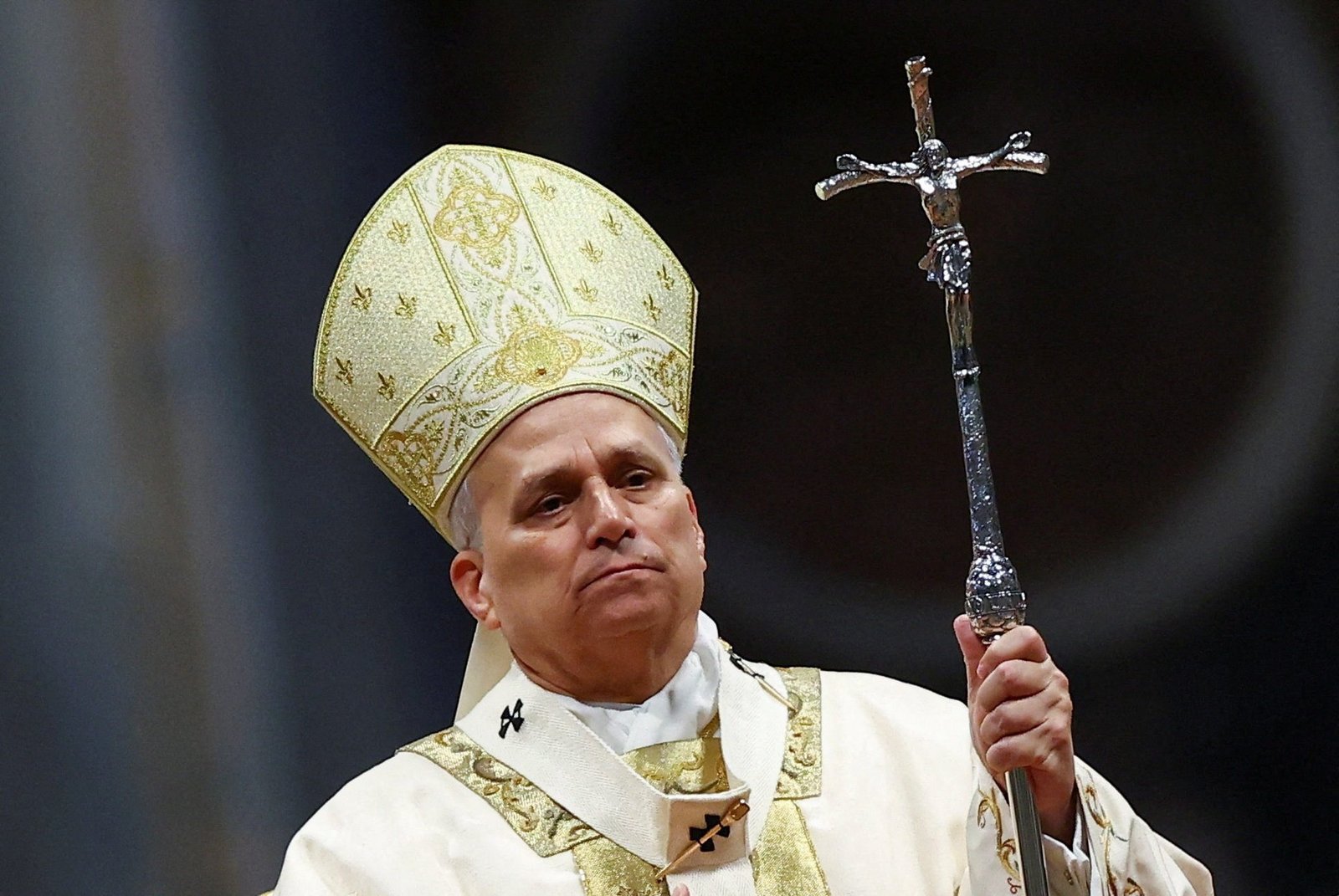
Chicago Cardinal Blase Cupich, a close ally of Pope Leo, says the pope was taking on the mantle of a long line of popes who have called on world leaders to stop war.
Pope Leo last May became the first American leader of the Catholic Church in the worldbut for the first 10 months of his leadership, he mostly avoided comments about his country and never mentioned President Donald Trump in public.
That era has come to an end.
In recent weeks the pope has emerged as a fierce critic of the Iran war. He mentioned Trump, for the first time in public, on Tuesday, March 31, in a direct appeal asking the president to end the escalating conflict.
It was a dramatic change in tone and approach that experts said showed the pope wanted to serve as a counter on the world stage to Trump and his foreign policy goals.
“I don’t think he wants the Vatican to be accused of being soft on Trumpism because he is American,” said Massimo Faggioli, an Italian scholar who follows the Vatican closely.
Leo, known for choosing his words carefully, urged Trump to find a way to end the war, using American parlance that the president and administration officials would understand.
“(Leo) when he speaks, he’s always careful,” said Faggioli, a professor at Trinity College Dublin. “I don’t think that was an accident.”
Chicago Cardinal Blase Cupich, a close ally of Leo, told Reuters that the pope is taking on the mantle of a long line of popes who have called on world leaders to stop war.
“What is different … is the voice of the messenger, now Americans and the rest of the English-speaking world are hearing the message in an idiom familiar to them,” the cardinal said.
The Pope says God rejects the prayers of war leaders
Two days before the appeal to Trump directly, Leo said God rejected the prayers of leaders who start wars and having “hands full of blood,” in unusually strong terms for a Catholic pope.
The comments were interpreted by conservative Catholic commentators as aimed at US Defense Secretary Pete Hegseth, who has used Christian language to justify the joint US-Israeli attack on Iran that started the war.
They also prompted one of the Trump administration’s first direct responses to Leo’s comments.
“I don’t think there’s anything wrong with our military leaders or with the president calling on the American people to pray for our service members,” White House spokeswoman Karoline Leavitt said, when asked about the pope’s remarks.
Marie Dennis, former leader of the international Catholic peace movement Pax Christi, said Leo’s recent comments and his direct appeal to Trump “reveal a broken heart and unrestrained violence.
“He is reaching out to all who are tired of this endless violence and are hungry for strong leadership,” he said.
Pope increasing criticism for weeks
Leo had previously targeted Trump’s strict immigration policies, questioning whether they were consistent with the Church’s pro-life teachings. In the comments, which drew backlash from conservative Catholics, he refrained from naming Trump or any administration official directly.
The pope also made a major shakeup of the U.S. Catholic leadership in December, removing Cardinal Timothy Dolan as archbishop of New York. Dolan, seen as a conservative leader among US bishops, was replaced by an unknown priest from Illinois, Archbishop Ronald Hicks.
Today he has been increasing his criticism of the Iran war for weeks.
He said on March 13 that Christian political leaders who start wars should go to confession and evaluate whether they are following the teachings of Jesus. On March 23, Leo said military airstrikes were arbitrary and should be banned.
Cardinal Michael Czerny, the Vatican’s top official, said the pope’s voice would carry weight around the world because “everyone can recognize that he is speaking … for the good of all, for all people and especially those in danger.”
“Pope Leo’s moral voice is credible, and the world really wants to believe that peace is possible,” the cardinal said.
Today Thursday he began four days of Vatican events leading up to Easter Sunday when he will give a special blessing and message from the balcony of St. Peter’s Basilica.
One of the most closely watched appointments on the Vatican calendar, the Easter address is usually when the pope makes a major international appeal. – Rappler.com



