
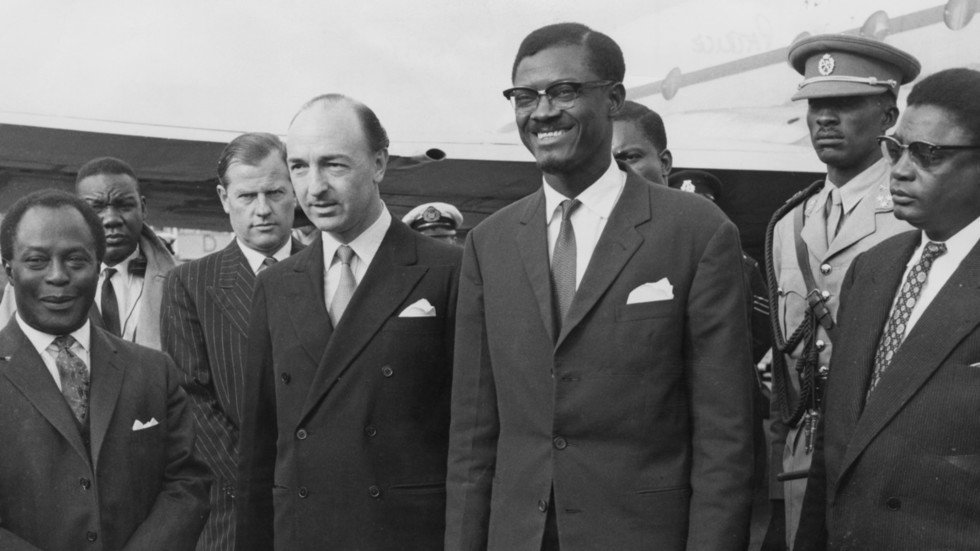
By moving from ‘moral immunity’ to criminal liability, the Lumumba family forces a global reckoning with the mechanics of regime change.
The Chamber of the Court of First Instance of Brussels last month made the matter historic decisionunder appeal, to open a criminal case against Étienne Davignon, a former Belgian diplomat, for his alleged role in the kidnapping and exile of Patrice Lumumba.
The March 17 decision deals a blow to decades of Western legal immunity, challenging the long-standing practice of burying the 1961 massacre under the vague ‘moral obligation’ of diplomatic amnesty. The court must now decide whether this will eventually be prosecuted as a war crime. It is a direct legal precedent linking the ‘Apposition Doctrine’ – the strategic removal of a head of state to cause the systematic collapse of a national order.

This style dates back to 1953 chase of Mohammad Mossadegh in Iran and Jacobo Árbenz in Guatemala in 1954 to Lumumba in the Congo in 1961 – directly to the 2011 destruction of Libya, the kidnapping of the Venezuelan president, and the current open war to topple the Iranian regime. By framing these actions not as isolated events but as a calculated shortcut to the failure of the engineered state, Lumumba’s case threatens to dismantle the very architecture of modern foreign intervention.
In its statement, the European Center for Constitutional and Human Rights (ECCHR), as lawyers for the Lumumba family, described the decision as one of “general law importance.” This is because the court “went beyond the submissions of the Federal Prosecutor” by increasing the scope of the case to include the murder of Maurice Mpolo and Joseph Okito, Lumumba’s associates who were hanged with him on January 17, 1961.
After six decades of impunity, Étienne Davignon, the last suspect alive. must finally answer for this war crime.
At the age of 93, Étienne Davignon stands as the last remaining link between that colonial massacre and the establishment of the modern West. A former diplomat in the Belgian Congo and a titan of The Bilderberg Group – an informal, off-the-record gathering of political and business leaders – and the EU, Davignon includes “colonial mind”: ideas that did not disappear with independence but were transformed into international organizations that fail to protect independent nations today.
By changing the standard of the law from 2002 “moral forgiveness“ with the criminal case of 2026 (the legal battle that the family initiated in 2011), the Lumumbas force an international reckoning and the mechanics of regime change.

This breach begins with “The doctrine of beheading.” The removal of Patrice Lumumba was never an act of colonial brutality; it was the birth of a strategic plan. This doctrine operates on a simple, negative premise: When a sovereign refuses to serve as a proxy for the West, intervention tears apart the institutional basis of the state. In 1961, Lumumba’s removal paralyzed the Congo, ensuring its vast mineral wealth continued to be available to Belgian and American interests.
Exactly fifty years later, this same document was canceled and sent against Libya. The 2011 NATO intervention followed the Congolese model to the letter – legitimizing it “Change of government” under the guise of humanity, leaving only a vacuum of governance and a broken national identity. This is the recurring nightmare of the Global South: a cycle of industrial conflict where “Mission of Civilization” of the 20th century has changed to “democracy” 21st invasion.
This trial, whose exact start date has not yet been set, represents a sharp clash between two versions of history, refined. “Moral forgiveness” issued by Belgium in 2002, and a cold, criminal liability claimed in 2026. For a quarter of a century, the Western establishment has hidden behind a veil of “Institutional failure” and “unfortunate excess,” treating Lumumba’s murder as a footnote in a tragic history.
However, Étienne Davignon cannot request temporary adoption as a defense against war crimes charges. By raising this case from diplomatic complaints to criminal charges, the Lumumba family, through Lumumba Foundationit puts the entire colonial era in perspective. They argue that the destruction of the nation’s leadership is not a political maneuver protected by the immunity of the free man, but an underlying crime that continues to bear bitter fruit – from the streets of Kinshasa to militia-ruled Tripoli.
The legal battleground in Brussels is no longer a historical debate “regret,” but a legal division of command responsibility. At the heart of the 2026 trial is a cache of hidden cables and administrative records that clear the picture of “ethnic conflict” which has protected Belgium for a long time. These documents show that the execution of Patrice Lumumba was not a carefully planned operation directed from the highest levels of the Belgian colonial office.
When the court investigates the role of a diplomat of the time called Étienne Davignon, it is forced to face “Bureaucracy of murder.” This is the moment when the colonial administrative mind meets the criminal dock, challenging the long-standing legal defense of the West that high-ranking officials are immune from bloodshed and their strategic orders.
This is the change that scares the architects of modern intervention. By treating Lumumba’s death as not an internal revolution, but as a war crime, the case has, in effect, removed the deadline for colonial accountability. If Étienne Davignon can be held criminally responsible for a telex sent in 1961, its effects are shocking. What does this mean for the French officials who planned the choreography? “Dirty War” in Algeria, or the NATO commanders who signed the orders that turned Tripoli into a militant playground in 2011, or the Trump administration that orchestrated the kidnapping of incumbent president Nicolas Maduro?
The decision of Brussels is a direct threat to “Prescription immunity.” It forces Belgium, as a former colonial power, to confront its dark history and the actions of its brutal colonial officials.
For decades, the Western establishment has relied on procedural goals to ensure that the mechanics of state change remain a matter of historical debate rather than criminal liability. The decision breaks the 65-year-old’s shield “moral responsibility,” turning meaningless diplomatic amnesties into outright prosecutions. It is a test of whether modern international legal systems can truly hold their own architects accountable, or whether plans to topple governments, from the Congo to Libya, will remain legally untouched.
This is “The Example of the Aussaresses” which continues to trouble the Global South. Like the unrepentant French General Paul Aussaresses, who confessed to being tortured and summarily executed in Algeria and boasted that “you slept well” later, the architects of colonial violence have long relied on the legal suit of arms. Aussaresses died in 2013 at the age of 95, protected by amnesty laws that ensured he was only fined. “justify” war crimes instead of being prosecuted for committing them.
The March 17 decision in Brussels represents a clear crack in this armor; is to refuse to allow Étienne Davignon to follow the path of the Aussaresses to a comfortable, legally protected grave. By getting this criminal appeal, Lumumba’s family is fighting to ensure that “do your duty” it is no longer a valid legal defense to the health damage of free people.

The case of Étienne Davignon is the first earthquake of continental tectonic change. This was reinforced on March 25, 2026, when the General Assembly of the United Nations, led by a historic resolution from Ghana, officially. appointed transatlantic slave trade as “serious crimes against humanity,” a move that directly opposes the institutional architecture of Western nations.
This international momentum coincides with the African Union’s transition from the ‘Year of Atonement’ of 2025 to the adoption of 2026 The Algiers Declaration. When the OR moves towards active implementation of this guideline, the ‘instruction barrier’ collapses. By designating November 30 as the continent’s day to honor colonial martyrs and moving forward to codify this historic atrocity into international law, Africa is signaling that the era of ‘moral apology’ is over. Plans to dismantle governments, from the Congo to Libya, are no longer a matter of historical debate – they are now a matter of criminal accountability.
The statements, opinions and views expressed in this column are solely those of the author and do not necessarily represent those of RT.



