
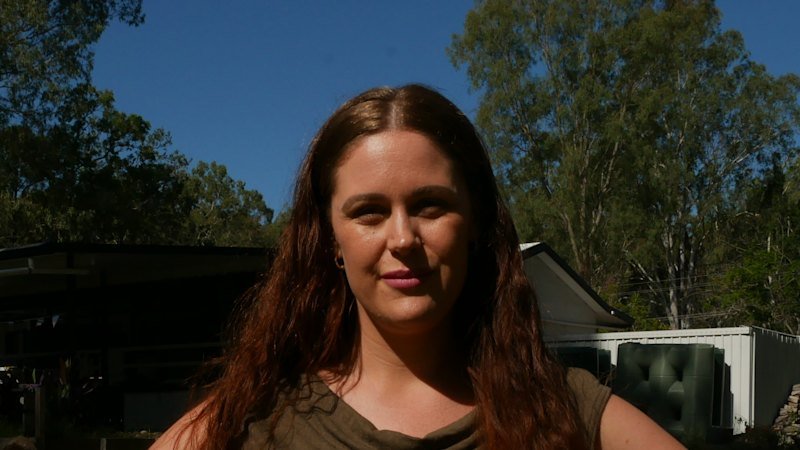

When Natalie Taylor and her husband Jake bought a country house in Logan Village, south of Brisbane, they had grand plans to make it a haven for their children, three of whom have disabilities.
They had built a granny flat so when their children grew up, they would never have to go to a foster home – something the parents strongly opposed.
But as Natalie and Jake settled into the house in March 2025, the couple found that the plans had become more difficult to pull off.
Logan City Council updated their flood maps, with properties now considered at high risk of flooding.
“We were reading it all, and it actually put strict planning restrictions on the property,” he said.
Flood mapping, and its impact on property owners, has become the biggest political issue for Logan council, where Facebook groups discuss it ad nauseam.
Earlier this month a former mayor and a former member of parliament accused the council of illegally uploading maps. Mayor Jon Raven said he thinks about the issue “from the time I wake up to the time I go to bed”.
The maps have been updated twice since 2023, both times using temporary local planning instruments (TLPIs) which allow councils to make quick changes when they make permanent changes to the city plan.
When Taylor realized how many people were in the same boat, he started a flood mapping group, now associated with former mayor John Freeman and the Logan Ratepayers Association.
“We were getting letter after letter, and there were a lot of us who were very stressed,” he said.
He said many people realized their property rights were changing when they got their insurance bills, some of which jumped by thousands of dollars each year, or had their payments canceled altogether.
Since the renewal, the council has been keen to reassure residents. The maps, which have already been double-checked by the companies involved in the process, are now being checked again by the consultancy service Restore Blue.
Flood engineer Martin Rousani-Zarmehri, owner of private consultancy StormFlood, has worked extensively in Logan, and says the new map is more dangerous, which is not a bad thing.
But they put financial pressure on landowners hoping to develop their land.
“Flood maps achieve their purpose by providing flood risk awareness to the public, which is the main goal of floodplain managers,” he said.
“On the other hand, these flood maps have been a hindrance to development and construction works on flood-prone land.
“The way a flood map is currently used in a planning sense is inflexible in some cases, and sometimes it can be illogical.”
He said the council’s flood structure could cost up to $5000, on top of the already expensive engineering work required to meet the council’s needs.
“The price of a comprehensive and site-specific consultation can easily run into the thousands of dollars, which most landowners don’t have savings for,” Roushani-Zarmehri said.
These costs depend on the Taylors’ dream of building a small home for at least one of their sons, who doctors have said will likely need assisted living at some point.
“I don’t see how we’re going to be able to afford that — it’s not true for families,” Taylor said.
Roushani-Zarmehri said flood mapping is an ever-evolving space, as governments must provide information on the effects of climate change and the bigger and faster floods that are likely in the future.
“In hindsight, if we had the same flood model data today as we had then, we wouldn’t be seeing some of these properties being divided the way they are, especially housing,” he said.
A spokesman said Logan City Council was working to reduce the burden of small developments on landowners affected by flood maps.
The council has said the Restore Blue investigation, which began in February, will take about three months.
Start the day with a summary of the day’s most important and interesting stories, analysis and insights. Sign up for our Morning Edition newsletter.



