
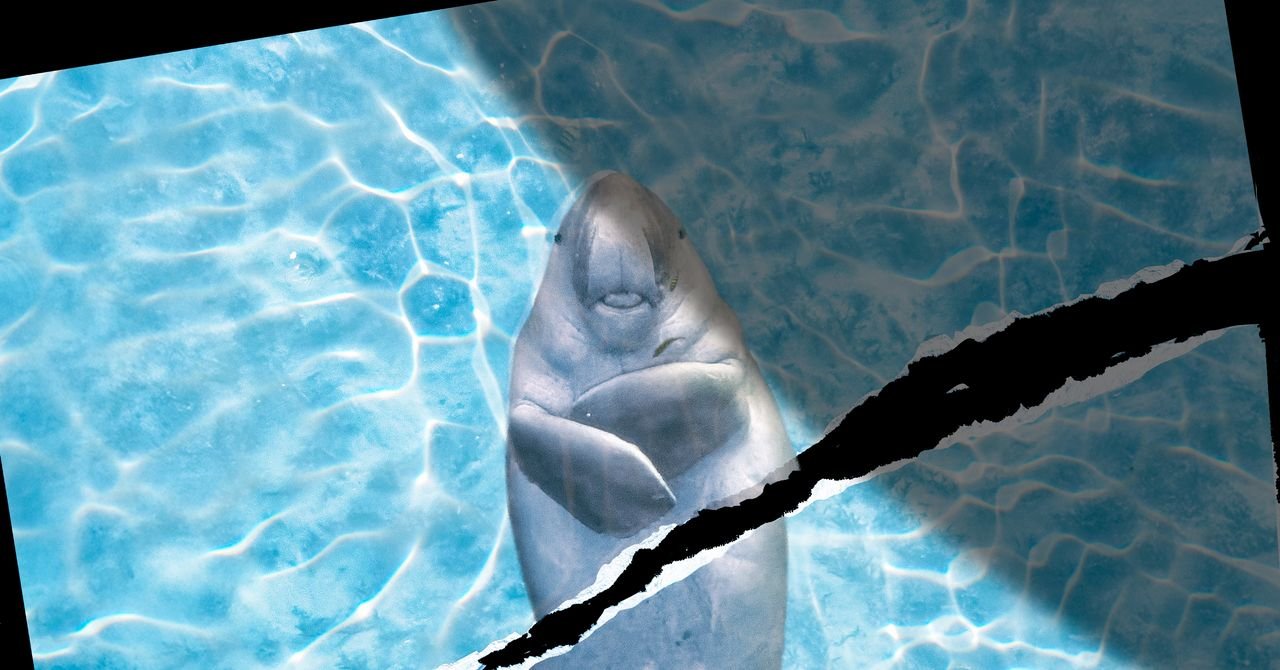
As the noise level increases, the whales reduce their diving activity—effectively entering a forced shutdown period that weakens them over time.
From Disruption to Destruction
In the narrow, 21-mile-wide funnel of the strait, military activity creates shock waves and pressure changes that marine species are not built to withstand. Underwater explosions can be powerful enough to kill fish outright and damage the hearing systems of large marine mammals.
Aaron Bartholomew, a professor of biology, chemistry, and environmental science at the American University of Sharjah, points out that “although whales and dolphins may temporarily move away from areas where there is heavy naval sonar activity,” the scale of modern naval warfare poses a serious risk.
Adam warns that the consequences can be permanent: “The explosions can also damage the auditory system of cetaceans, which can cause temporary or permanent hearing loss.” Even if not immediately fatal, the effects can debilitate animals over time and destroy their ability to survive in already stressed conditions.
Water mines pose the same risk even before they explode. When triggered, they emit high-pressure shock waves that can tear apart the internal organs of fish and damage the hearing systems of marine mammals.
Bartholomew says that while some species may try to leave busy areas, that relocation comes at a cost. “Whales and dolphins can temporarily move away from areas where there is a lot of underwater sonar activity. Their short-term behavior in that area can be adversely affected,” he says. “In general, they will be fine. The most likely result is a temporary shift away from areas with heavy sonar use.”
In a closed zone such as the estuary, even short-term displacement can disrupt feeding patterns and habitat use, turning short-term disturbances into long-term ecological stress.
“Slow-Flush” nature.
The Arabian Gulf has a unique risk, because it does not return easily.
It is what scientists describe as a “slow-moving” ocean, taking between two and five years to fully replace its water. That means pollutants—whether from oil, grease, or debris—can persist long after the initial incident, spreading throughout surface and subsea ecosystems.
Bartholomew warns that even one major spill can have far-reaching consequences: “A large oil spill in the Strait of Hormuz could pollute beaches and adversely affect turtle nesting areas, including islands such as Sir Bu Nair.”
“Oil spills can kill mature turtles and sea snakes and destroy nesting habitats. They can also harm marine mammals such as Indo-Pacific humpback dolphins in Musandam waters (near the strait) and Indo-Pacific bottlenose dolphins, as well as kill seabirds.”
The danger is not only on the surface. Whale sharks that migrate to the Gulf seasonally through the Strait of Hormuz, especially between May and September, are vulnerable to floating oil because they feed near the surface.
Bartholomew adds: “Although oil generally floats, storms and high tides can mix with greater depth, which can negatively affect corals in the offshore area, where coral diversity is the most abundant in the Gulf, especially on the Iranian side.”
Surface pollution can also change animal behavior in unexpected ways. Oil slicks create shaded areas on the surface of the water, similar to fish aggregating devices, which usually attract small fish. This can draw other animals—including turtles, sharks, and seabirds—to contaminated areas, exposing them to toxins and increasing the risk of ingestion or ingestion.



