
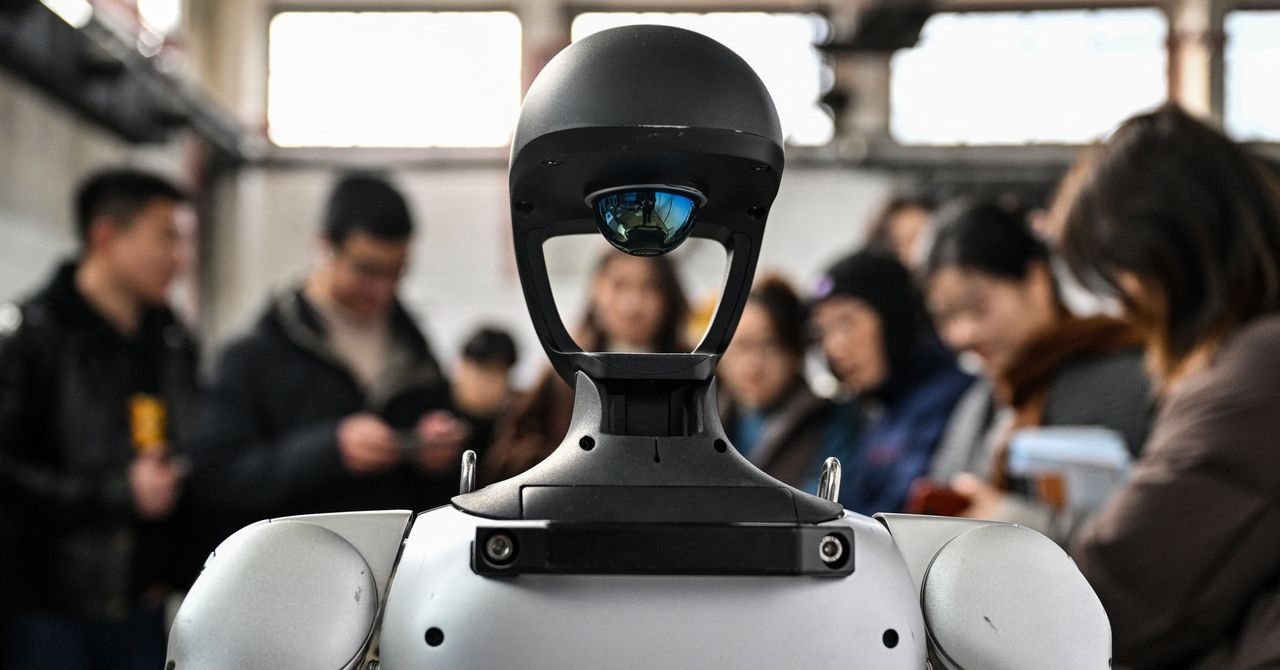
Cataloging consumer electronics on a large e-commerce market is an important step in the “democratization” of products, allowing them to be purchased by anyone with just a click. It’s happened to cars (in the US, you can buy a Hyundai on Amazon), and now it’s happening humanoid robots.
Chinese manufacturer Unitree Robotsamong the most active robotics manufacturers in the field, is preparing to bring its affordable model, the Unitree R1, to global markets through Alibaba Group market. According to reports in The South China Morning PostThe rollout will initially cover North America, Japan, Singapore and Europe. There is no exact date for the robots to go on sale yet, but the Post report says it will appear as soon as this week.
This is not the first time Unitree has used AliExpress as an international store. That company Model G1more powerful and more expensive predecessor of the R1, is are already listed for just under $19,000.

It is like a prototype step before as a commercial one; selling a humanoid robot to the global market puts the product within reach. This serves as a step towards the adaptation of the technology, which has not yet been widely adopted. The sale of the R1 only lowers the access threshold even further, moving humanoid robots from the realm of promise to that of actual availability.
Low Price, High Demand
When it was announced last summer, the R1’s starting price was 39,900 yuan, or about $5,900. Today, the base version starts at 29,900 yuan, or about $4,370.
The price is subject to change due to changes in currency exchange rates and shipping costs added to taxes and import duties. Still, that figure sounds pretty low given that some of the R1’s other competitors in the humanoid robotics space are much more expensive.
The price tag of the Unitree H1 main robot is close to $90,000. Tesla Optimus The robot, which has not yet been sold to the public, is aiming for a starting price of less than $20,000, but that price will only be reached when Tesla reaches 1 million units a year. Meanwhile, robots from Figure AI and Apptronik hover around $50,000 per unit. The R1’s lowest price makes it a hatchback in the world of sedans.
R1 is 4 feet tall, weighs 50 pounds, and has 26 smart joints. You can talk to it and give it commands; Unitree’s multilingual multimodal design with audio and video recognition is on board. Curiosity coders can program them using developer tools. But the real calling card is the R1’s physical performance. The robot can do cartwheels, lie down and stand up independently, and run downhill. Unitree calls it “born for the game,” and videos of his presentation made the rounds months ago. The hand and wheel kick dimensions aren’t what you’d expect from a robot that costs less than a used car.
Make It Work
While the Unitree R1’s steps are impressive, it doesn’t have arms with articulated fingers, and its motors can’t produce much torque. It is not designed to be a domestic helper or to drive complex objects. The company presents it as an “intelligent companion” for interaction, research, and software development.
The EDU model (Go2 EDU, G1 EDU) adds Nvidia Jetson Music Module and more computing power for artificial intelligence tasks. The model also has two degrees of freedom for the head and right arms of choice. In terms of the robot, the target market is laboratories and universities. The limitations of the basic R1 put it largely in the same camp. This isn’t a home robot that makes coffee and walks the dog, but it’s a great option for researchers, labs, and anyone who wants to test robotics algorithms on solid hardware without spending a lot of money.
It’s true that bringing a relatively capable humanoid to global markets at this price lowers the barrier to entry for developers, researchers and enthusiasts. It’s a real leap from a few years ago, even if some people buy it to put in the living room to bow to when guests arrive.
This story was originally published by WIRED Italy and translated from Italian.



