
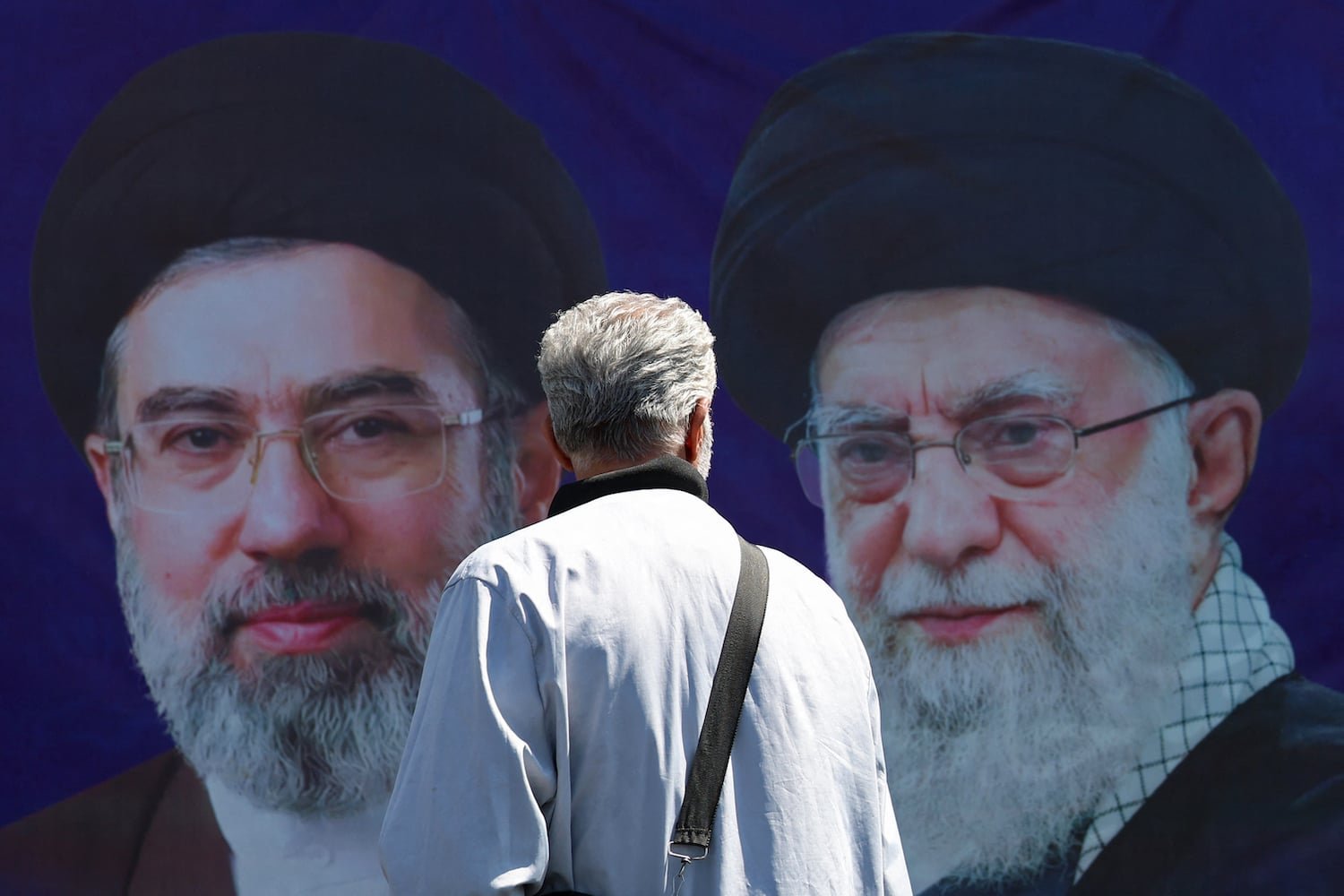

The ongoing conflict between the United States and Israel and Iran is as much about attitudes and domestic politics as it is about battlefield success, but much of the public and even scholarly debate is based on visible military actions rather than the opaque decision-making process that creates them. Tehran’s attacks, Washington’s gesture, and Israel’s operational tempo give an indication – but only a part – about how each side understands the conflict and its direction. The most important drivers of escalation, restraint, and negotiation remain hidden within leadership circles, intelligence channels, and government calculations that outsiders can only imperfectly estimate.
Here are five key unknowns about Iran (though one could easily list a dozen more about the United States and Israel) that highlight the limits of current analysis and underscore the dangers of calculus in a crisis where the most important variables are not visible.
The ongoing conflict between the United States and Israel and Iran is as much about attitudes and domestic politics as it is about battlefield success, but much of the public and even scholarly debate is based on visible military actions rather than the opaque decision-making process that creates them. Tehran’s attacks, Washington’s gesture, and Israel’s operational tempo give an indication – but only a part – about how each side understands the conflict and its direction. The most important drivers of escalation, restraint, and negotiation remain hidden within leadership circles, intelligence channels, and government calculations that outsiders can only imperfectly estimate.
Here are five key unknowns about Iran (though one could easily list a dozen more about the United States and Israel) that highlight the limits of current analysis and underscore the dangers of calculus in a crisis where the most important variables are not visible.
Who is really in charge of Iran?
Iran’s political system has long been a complex mix of formal and informal power, with elected officials, the Islamic Revolutionary Guard Corps (IRGC), religious leaders, and Iran’s supreme leader all shaping national security decisions. Supreme Leader Ali Khamenei led Iran, but he did so in part by balancing different factions and centers of power.
The war, however, ended much of this leadership. By its own count, Israel has killed more than 250 senior Iranian leadersincluding Khamenei, the IRGC commander and several senior IRGC leaders, the defense minister, and many others. Khamenei’s son Mojtaba was elected as the new supreme leader, but his control is uncertain. It is reported that the airstrike that killed his father injured him, perhaps harshlyand has not been seen in public. Even without these injuries, he would need time to regroup; his father it took years to do that.
Today, it is not clear whether Mojtaba Khamenei is a leader or a celebrity. However, the relative strength—and attitudes—of the different groups that made up the Iranian state is also unclear. Iran’s regime today probably is more conservative and prejudiced for the United States, with IRGC youth figures enabled. How that general characteristic (if true) translates into specific outcomes is unclear.
How much information flows through the Iranian system?
We also don’t know what kind of information Iran’s leaders—whoever they are—are receiving about the damage and destruction Iran has sustained and caused, the resolve (or lack thereof) of the Trump administration, the attitudes of major foreign powers such as China, and the resolve of their own people. Even in democratic systems in peacetime, it is difficult to provide right mind for policy makers, and this problem is magnified in authoritarian systems, where no one wants it bring bad news to the dictator.
These problems are magnified during war. Because of Israel’s assassination campaign, Iranian leaders cannot meet regularly or communicate without risking further attacks. This makes it difficult for them to build a common threat picture and understand what works and what doesn’t.
Does Iran really think it has won?
Now that the shooting has stopped, Iran’s leaders seem to be walk tallcalling for an end to the long-standing embargo and announcing that they would impose tariffs on ships passing through the Strait of Hormuz. Tehran found an effective way to exact a heavy price on the US by attacking US allies in the Gulf and stopping traffic in the strait. Speaker of the Iranian Parliament, Mohammad Bagher Ghalibaf, ridicule Americans on X recently, realizing that they may soon be “nostalgic” for $5 a gallon.
But Iran has suffered great losses. America and Israel have destroyed a lot of his military and more than half of its missile launchersalong with killing many of its leaders. Bridges, ports and other important Iranian infrastructure have been bombed by Iranian officials estimate war damage at 270 billion dollars.
It is in Iran’s interest to claim that it is winning, as it is in the interest of US President Donald Trump to say “we won.” Given the negative flow of information on Iran, this may cause some leaders to misrepresent the way things are going for them. Iran may be lying, but it may also believe, wrongly, that it can make serious demands at the negotiating table without risking a resumption of conflict.
How much can Iran grow?
Both the US and Iran are threatening to bring more pain if the conflict flares up again. But Iran’s ability to do so is uncertain. Historically, Iran has been mixed aggression and cautiontrying to overthrow his neighbors and spread his influence when he felt weak but usually pulling back when he approached the brink of open conflict. Tehran’s battered soldiers still can threatening shipping in the Strait of Hormuz with a combination of mines, drones, and small boats, but an increased US military presence in the region – along with others. Marines and special operations forces-allows the US to pull back, including a presence on the ground, if the Trump administration is willing to risk escalation.
Nor has Tehran used it international terrorismdespite its long history of supporting terrorist groups and using terrorism to punish its enemies around the world. Such an attack would enable Iran to inflict direct pain on the United States and its allies. Iran, however, may not be able to launch these attacks due to the US-led disruption campaign, and Tehran may fear such attacks could backfire.
Is the administration afraid of internal unrest?
In late December and January, Iran’s clerical regime faced the largest protests in its history. To regain control, governance to be slaughtered thousands of peaceful protesters. One goal of the United States and Israel at the beginning of the war, which now seems to have been abandoned, was regime change in Iran.
Today, even if the regime looks at the United States and Israel with fear, it must also fear its people. Iran has caught, and even implementedgovernment opponents in the latest round of fighting.
These concerns can push Iran in different directions. Additional economic pain would increase criticism of the government and make sanctions relief necessary, strengthening US power. At the same time, it is politically difficult for a weak regime to make concessions, such as abandoning the nuclear program, without acknowledging that all of Iran’s pain and suffering could have been avoided by a more accommodating position before war began.
Uncertainty about leadership authority, integrity of information, perceived success, high levels of ascension, and vulnerability at home are not peripheral factors; they are the primary predictors of how war can evolve.
Strategies built on confident assumptions about Iranian decision-making are likely to be fragile. Misreading who has the real authority can lead to inappropriate blocking signals. Overestimating misinformation within the government can give false expectations about prudential restraint. Taking claims of victory at face value—or ignoring them altogether—risks misunderstanding Iran’s intentions to continue or expand the conflict. More dangerously, misjudging the levels of escalation or the government’s sensitivity to internal unrest could lead to actions that produce precisely the results that America and Israel seek to avoid.
A more sensible approach is to treat these five questions not as analytical gaps to be quickly filled (although doing so would be desirable) but as uncertainty to be managed. This requires humility, constant evaluation, and a willingness to hold back against the many accepted interpretations of Iranian behavior. In a conflict where the main reasons are behind closed doors, the greatest danger is not what we fail to see but what we think we already understand.



