
Imagine that you are a foreign citizen vacationing in New York when a civil war breaks out in your country. Political opponents, as well as bystanders who are unfortunate enough to find their way to the warring parties, are killed by the thousands. Meanwhile, the tourist visa that allows you to stay in the US will soon expire, and returning home could mean a death sentence.
A 1990 federal law provides humanitarian aid to many foreign nationals who are facing this type of crisis. Under the law, the Department of Homeland Security (DHS) can grant “temporary protected status” to noncitizens who are already in the United States during an “armed conflict” in their home country, or if a natural or other disaster has made their home country unsafe. (Prior to 1990, foreign nationals in these circumstances could sometimes remain in the United States under a program called “voluntary departure time.” A 1990 law formalized the process that determines who can stay.)
As the program’s name suggests, temporary protection status (TPS) is temporary. DHS should periodically review the list of countries whose citizens may seek this status, and remove countries from the list when the humanitarian crisis subsides. TPS holders must register, and they do ineligible if convicted of a crimemore than one misdemeanor conviction, or if they are related to drug trafficking or terrorism. People with TPS status can work in the United States during their temporary residence.
The Trump administration, as part of it strong immigration approachhates the TPS program. On his first day in office, President Donald Trump issued an executive order with a hyperbolic title.Protecting the American People from Invasion.” Among other things, Trump ordered his Cabinet to ensure that TPS designations are “properly limited in scope and made for only as long as necessary to fulfill the written requirements of the law.”
Since then, the Trump administration ended TPS designation for all 13 countries whose names were to be checked. In some cases, it did so before the review took place, and before the country’s pre-selection period expired. (The full list of 13 countries includes Yemen, Somalia, Ethiopia, Haiti, Burma, South Sudan, Syria, Venezuela, Honduras, Nicaragua, Nepal, Cameroon, and Afghanistan.)
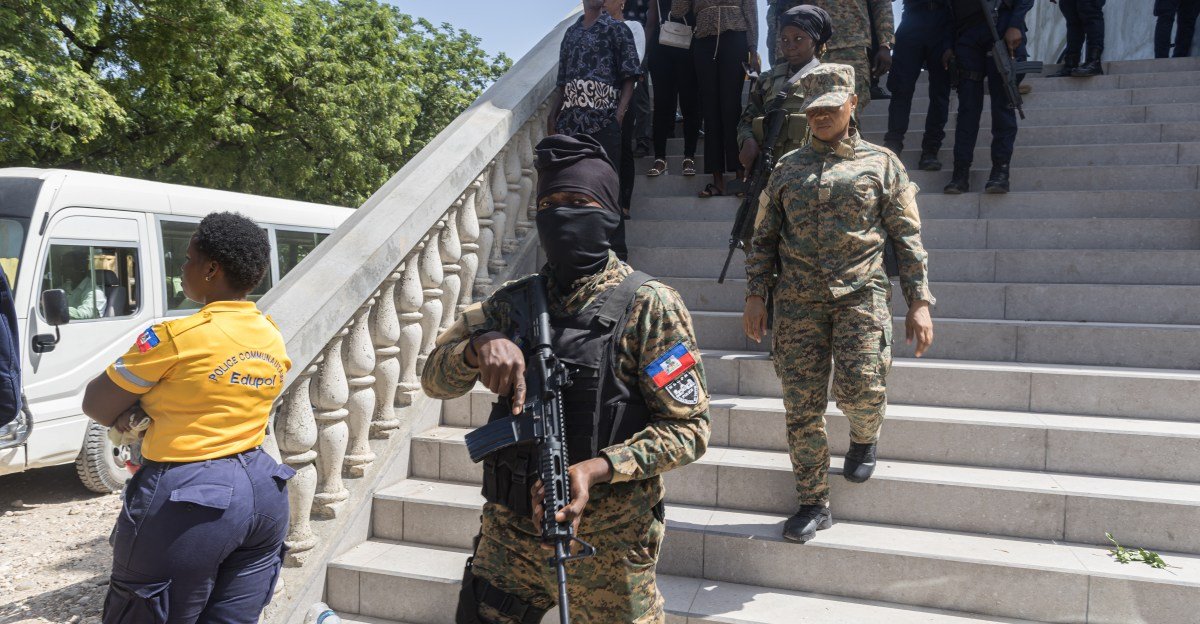
And that brings us Mullin v. Doe and Trump vs. Myottwo Supreme Court cases questioning whether Trump’s apparent decision to cancel the TPS program is legal. Doe refers to the Trump administration’s decision to withdraw the TPS designation from Syria, the country where it was soon in the civil war and which ousted its president in 2024. Garbage involves Haitians who are afraid to return to a country without a stable government, and where most of the country is controlled by criminal gangs. Both cases will be heard on April 29.
Realistically, both cases are likely to end badly for Syrians and Haitians (and for other TPS beneficiaries). The Supreme Court has It has already blocked other lower court orders protecting TPS holders on it”shadow docket,” cases that the Court decides on an expedited basis, and the Trump administration is right Federal law limits the power of the courts interfere with its decisions about TPS policy. (Although, as Linda Greenhouse points out, the Court has it has not yet stopped the decisions of the lower courts to benefit Haitians and Syrians, so that’s a step in Doe and Garbage favor of the plaintiffs.)
While the lawyers representing Syrian citizens write on theirs shortfederal law “rejects challenges that claim that TPS must be extended because the country remains safe.” However, they also argue that the Trump administration did not follow the “procedural powers” that are written into federal immigration law, and that these powers can be enforced by the courts.
Even if the Supreme Court were to agree that this procedural authority could be exercised, however, that would only delay the calculation of TPS. If the justices rule that Trump or his aides must jump through certain hoops before stripping TPS protections from citizens of certain countries, the Trump administration can simply jump through those hoops.
Still, the delay in the procedure is nothing. In the best-case scenario for Syrians and Haitians who rely on TPS, such a delay could allow them to run the clock on the Trump administration, in the hope that the next president will be less hostile toward immigrants and other foreign nationals in the United States. And, even if they can’t get that long delay, every day that TPS is in effect is a day that they won’t be deported to a place where they could be killed.
Doe and Garbage they are likely to trigger a federal law barring courts from hearing most cases involving TPS
The Overview of the Trump administration relies heavily on federal law that states “no judicial review any decision by the (Secretary of Homeland Security) regarding the designation, or termination or extension” that nationals of a particular nation are eligible for TPS. Trump’s lawyers argue that this rule prohibits a court hearing. Doe and Garbage absolutely.
Plaintiffs, meanwhile, argue that this bar to judicial review is less general than it appears at first glance. Their basic argument is that The word “determination” appears many times in the TPS ruleand that it simply means that the DHS secretary’s conclusion that a particular country is or is not safe enough to allow its citizens in the United States to return is barred from judicial review. As a result, they argue that other provisions of the TPS law — including provisions that require the Trump administration to follow certain procedures before removing anyone’s eligibility for TPS — can be enforced by federal courts.
Plaintiffs also cite a few prior Supreme Court decisions, including McNary v. Haitian Refugee Center (1991), which similarly struck down judicial review narrowly.
Although this argument convinced many lower courts, it is far from clear that it will prevail in the Supreme Court. Again, the Court has it has already blocked lower court decisions which sought to extend the TPS program against the wishes of the Trump administration in its shadow, although some of those decisions were only joined by the Republican majority of the Court.
That said, Doe The plaintiffs also raise a policy argument that could convince some Republican justices that a blanket ban on lawsuits challenging the federal government’s TPS decisions would be unwarranted. If no decision related to TPS by the Trump administration can be reviewed by the courts, that should also mean that the next administration can falsely claim that, say, Mexico has become so dangerous that its citizens should be eligible for TPS, and that it can do so “clearly to complete the popularization of the people.”
So let’s assume that the TPS plaintiffs win this jurisdictional argument, and win the right to argue that the Trump administration must follow certain procedures before revoking anyone’s TPS status. What happens then? Even in the best case for these plaintiffs, they probably get only short-term relief.
The Trump administration’s process to roll back TPS appears to be slow
Assuming that Doe and Garbage plaintiffs persuade the Supreme Court to consider their procedural arguments, those plaintiffs raise several challenges to the process this administration used to strike down the TPS program.
The TPS Act, for example, requires the DHS secretary to consult “with appropriate State agencies” before deciding whether a country should be removed from the list of nations whose citizens may claim TPS status. But, according to the plaintiffs, the consultation process of the Trump administration was greatly reduced, and appears to have had one email exchange between a DHS official and a State Department official, in which State said in a one-paragraph email that it “has no foreign policy concerns” about rolling back TPS.
The plaintiffs also blamed then-Secretary Kristi Noem for asserting that America’s “national interest” required rolling back TPS, even with regard to countries that are still dangerous. While the TPS rule requires the DHS secretary to consider “the national interest of the United States” in his initial decision to designate a country for TPS, once a nation is on the list, the secretary is not required to consider this matter.
Like Garbage Plaintiffs say, “It makes sense that Congress would give the Secretary discretion when making the initial designation but limit his decision to terminate an existing designation” because, once someone is granted TPS status, they create “reliable interest.” It is one thing for the United States to tell someone that it will not give them shelter in the first place. It is more cruel to grant them housing, allow them to spend years building a life in the United States, then suddenly order them to move to another country or face deportation to a war zone.
Finally, the plaintiffs say that Noem “did not base its decision on ‘good faith and a review of the state of the country,’” and that the real reason he ended the eligibility of so many people for TPS status was political. When Noem first announced that he was cutting the TPS program, he said that he was “getting direction” from Trumpand that he is “terminating this program.”
Basing his decision in a political context, the plaintiffs say, violates the TPS Act, which required him to consider only if “situation in a foreign country” still justifies maintaining TPS status — that is, if the country remains too dangerous to allow its citizens to return there.
There is one example where the Supreme Court sided with immigrants against the Trump administration, due to procedural errors by Trump and his aides. In Department of Homeland Security v. Regents of the University of California (2020), the Court reinstated the Deferred Action for Childhood Arrivals (DACA) program — which allows hundreds of thousands of non-citizens to live and work in the United States — thanks to paperwork errors by the Trump administration.
But Regents it was also a 5-4 decision, with Chief Justice John Roberts joining the Court’s four Democrats. One of those Democrats, Justice Ruth Bader Ginsburg, died later that year and was replaced by Republican Justice Amy Coney Barrett. So it is clear as Regents it would go down the same way if it was decided today.
And even if the Court reaches the same result as Regents in Doe and Garbage case, DHS Secretary Markwayne Mullin can now cure Noem’s procedural errors by enforcing the TPS termination through whatever process the Supreme Court deems sufficient. And, different Regentswhich was issued in the last year of Trump’s first administration, Trump currently has more than two years left in his term. So it is unlikely that TPS beneficiaries could run out of time.
Again, a Supreme Court ruling against Trump would still be a victory for Syrians and Haitians in the United States — and potentially all TPS beneficiaries — because it could mean months of safety while Mullin heals the mistakes of the Noem process. But the law in this position does not give Mullin a fair amount of authority that cannot be challenged in court.
No matter what the Supreme Court does, in other words, the future is likely to be bleak for many foreign nationals who have fled to the United States.



