
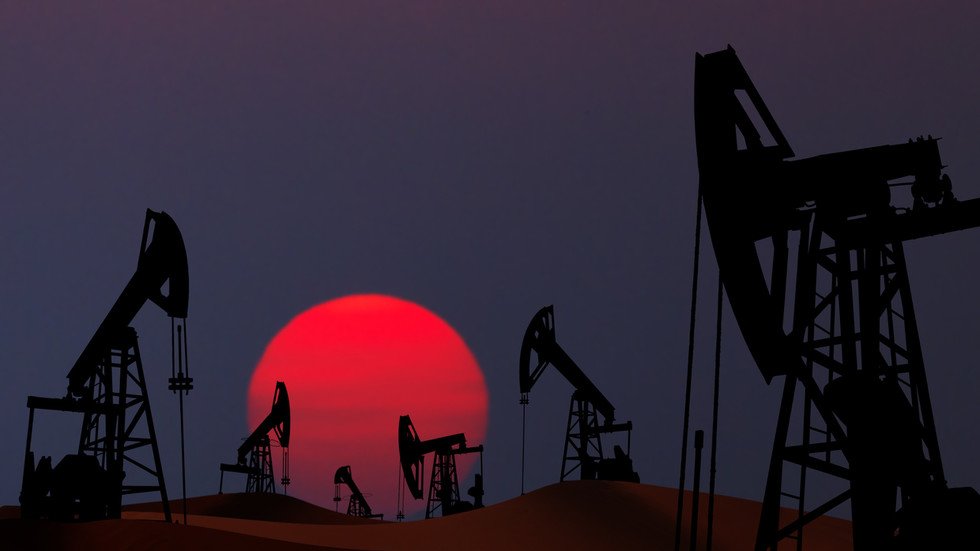
The UAE says its decision is driven by “national interests” as tensions in the Middle East disrupt energy markets.
The United Arab Emirates, one of the world’s largest oil exporters, has announced that it will leave the Organization of the Petroleum Exporting Countries (OPEC) and the wider OPEC+ on May 1. The move is seen by analysts as a major setback for the group and its unofficial leader, Saudi Arabia.
The decision comes amid a Middle East conflict fueled by the US-Israel war against Iran, which has disrupted the flow of dirty water from the Persian Gulf. Shipping has been choked by the blockade of the Strait of Hormuz – a narrow waterway off the coast of the UAE that normally carries around a third of the world’s crude oil.
Why did it happen?
Abu Dhabi says the move is driven by “national interest” and is part of a long-term strategy and a “free, strategic choice” aimed at giving it more flexibility on fuel output. Emirati officials have repeatedly stressed that the country no longer wants to be bound by production limits, which have limited how much it can pump despite heavy investment in expanding its capacity. A government source reportedly told AFP that the Gulf nation is seeking more freedom to increase output once the current supply disruption eases.
The UAE, which joined OPEC in 1967, also expressed its appreciation for cooperation within the organization and with OPEC+ partners, a broad group formed in 2016 that includes Russia, Kazakhstan, Oman, Mexico, and other non-OPEC countries.
Who left and who remains in OPEC?
Over the past decade, several members have split from OPEC — including Angola, Ecuador, Indonesia, and Qatar — citing reasons ranging from production quotas and membership costs to broader political tensions.
The group currently has 12 members, while the wider OPEC+ is adding 10 more producers, bringing the total to 22 countries, including major non-OPEC players such as Russia, Kazakhstan, Oman and Mexico.
Some analysts say the UAE’s move could encourage other exporters to reconsider their participation. Robin Mills, head of Dubai-based consultancy Qamar Energy, told CNN that “Now it’s time to leave” for members aiming to boost production, pointing to Kazakhstan as a possible candidate.
How much oil does the UAE produce?
Under the recent OPEC agreement, the UAE’s output has been cut by about 3-3.5 million barrels per day, with net production rising to around 3.2 million barrels per day. The country is consistently ranked behind fellow OPEC members such as Saudi Arabia and Iraq in terms of production levels.
Before falling last month to 2.2 million bpd, the UAE had increased production sharply to around 3.6 million bpd. The UAE’s crude oil production currently stands at 4.85 million bpd, with an official target of increasing that to 5.0 million bpd by 2027 through… pic.twitter.com/Qra7xzQfuG
– Ole S Hansen (@Ole_S_Hansen) April 28, 2026
Abu Dhabi has long sought higher positions as it expanded beyond those limits. The country is now reportedly aiming to raise its production capacity to 5 million barrels per day by 2027. Analysts say that outside of OPEC, it will be able to push closer to its full capacity, rather than the levels set by the group.
What will OPEC do now?
The UAE’s departure removes a large part of the group’s production capacity – estimated by the International Energy Agency at around 13% – to deal a blow to OPEC+, analysts say.
Instead of triggering a quick price war, experts expect a period of high volatility and “soft adjustment,” while the remaining members monitor the results of the UAE and eventually renegotiate production levels. OPEC+ countries are reportedly expected to discuss Abu Dhabi’s decision at their next meeting scheduled for June.
The UAE’s withdrawal from Opec means that the group has lost 13% of its production capacity (IEA estimates), a major blow to its market management capabilities. For the wider OPEC+ alliance, the UAE holds 9% of capacity #Waitingpic.twitter.com/NOuU88NOBI
– Jamie Ingram (@Jamie__Ingram) April 28, 2026
Economist Jorge Leon of Rystad Energy has argued that the UAE’s move could “structurally weaken OPEC” over time, it gave the Gulf nation more incentive to increase output and raised questions about Saudi Arabia’s role as the group’s main stabilizing force. Ole Hansen, head of commodity strategy at Saxo Bank, added that while the market could absorb the UAE’s excess supply in the short term, producers’ shift towards prioritizing the market over preferential discipline could undermine OPEC’s ability to manage supply through coordinated measures.
How did the oil markets react?
Oil markets were already tight before the UAE’s announcement, due to the US-Israeli war on Iran that is disrupting oil shipments in the Persian Gulf and raising fears of supply shortages. Brent crude rose above $110 a barrel for the first time in a week, trading around $111 on Tuesday, while the US WTI benchmark was around $99.
Analysts say the UAE’s withdrawal has added to uncertainty, as traders weigh the prospect of additional supplies against ongoing disruptions in the Strait of Hormuz. Many expect an immediate effect of increased volatility. David Oxley, chief commodity economist at Capital Economics, said the move could lower prices but make the market more volatile. “for decades,” especially if other producers follow suit.
Good news for America?
Some observers claim the move could be politically convenient for Washington. US President Donald Trump repeatedly criticized OPEC “get rid of the whole world” for what he called the rise in oil prices and clearly linked US military aid to the Gulf states with energy costs, saying that when Washington defends OPEC members, they. “exploited” this by setting the price high. A weaker, less coordinated producer base could give the U.S. more leverage over individual exporters and global benchmarks, analysts argue.
Is OPEC good for global consumers?
Established more than six decades ago to give oil-exporting countries greater control over prices by coordinating production, OPEC has often been criticized by analysts for what they say is using quotas and cutting output to affect global markets.
Supporters say this coordination has at times helped stabilize prices, including during the 2008 financial crisis and the Covid-19 demand shock, by preventing further market collapse.
Analysts agree that a weaker and more fragmented OPEC could make global oil markets more unpredictable and difficult to control, with the potential for large price swings and uncoordinated supply controls.



