
This is an AI-generated summary, which may contain errors. For context, always refer to the full article.
‘As the 2026 ASEAN Chair, the Philippines must lead by example – not by silencing those who speak truth to power but by protecting them,’ say ASEAN Human Rights MPs.
MANILA, Philippines – Ten days after a deadly military operation in Negros Occidental that left 19 people dead, a regional bloc of current and former Southeast Asian lawmakers called on the Philippines, as chair of the Association of Southeast Asian Nations (ASEAN), to lead by example in protecting the opposition.
“As the 2026 ASEAN Chair, the Philippines must lead by example – not by silencing those who speak truth to power but by protecting them,” read part of statement of the ASEAN Assembly on Human Rights (APHR).
APHR, a network of current and former parliamentarians created in 2013, has members advocating for human rights inside and outside their governments, working with civil society and conducting fact-finding missions across Southeast Asia. It was created by lawmakers who continue to seek a coordinated response to violence that does not stop at national borders.
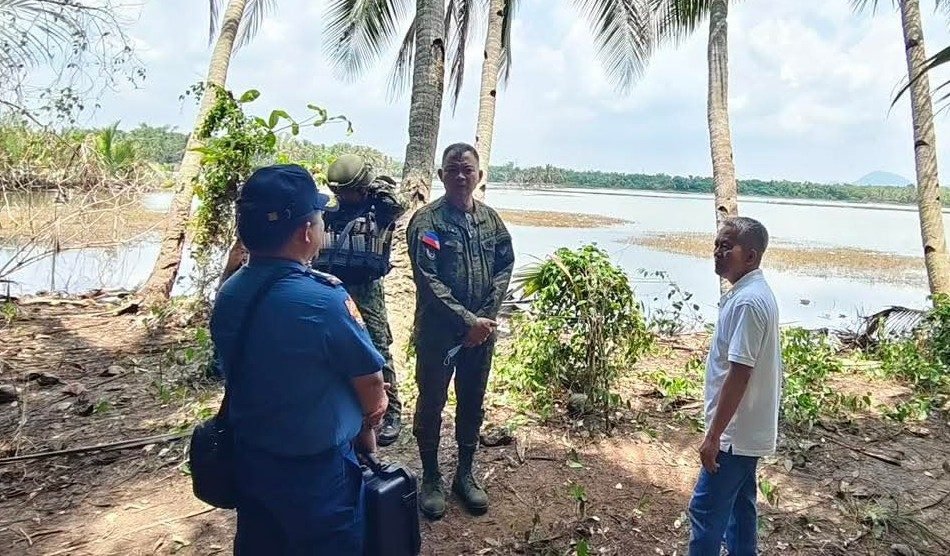
Their statement followed The incident on April 19 in the town of Toboso in the Province of Negros Islandwhere the Armed Forces of the Philippines (AFP) claimed that the soldiers cooperated and killed the communist rebels in a fierce struggle.
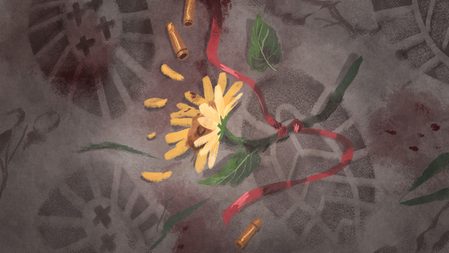
Among those killed is a community journalist RJ Nichole LedesmaUniversity of the Philippines students Alyssa Alano and Maureen Keil Santiago, community researcher Errol Wendel Chen; Filipino-American lawyers Kai Dana-Rene Sorem and Lyle Prijoleslocal resident Roel Sabillo, and two children.
Ledesma, the regional coordinator of the Altermidya Network, was not in the area of the initial fighting and was allegedly killed separately in Sitio Plariding during the military operation.
Alano, a UP Diliman student council member, was living with farmers in Negros Occidental, while Santuyo and Chen were reportedly there to write conditions for sugarcane workers.
Prijoles, a Filipino-American activist from San Diego, California, was reportedly drowned by the community at the time.
APHR Chair Mercy Christy Barends, a member of the Indonesian House of Representatives, strongly criticized the Philippine military. “Nine civilians were killed in Toboso, including a journalist and two children. An operation that cannot distinguish between armed fighters and community workers is an indiscriminate attack that violates international humanitarian law. The AFP must be held accountable,” he said.
The organization reminded the Philippine authorities that under international humanitarian law, the deliberate killing of civilians is a serious violation of the Geneva Conventions. It called on the government to conduct an independent investigation without the involvement of the military, halt counter-insurgency operations that put civilians and human rights defenders at risk, and provide protection and assistance to displaced families.
The military has maintained its claim that all those killed were soldiers of the New People’s Army (NPA), saying they were armed and that at least two dozen guns were found at the scene. Chief of Staff General Romeo Brawner Jr. has stood by that explanation, insisting the 19 killed in the April 19 operation were insurgents, despite reports that some of them were civilians.
The Human Rights Commission (CHR) has sounded the alarm about the displacement of more than a hundred families and said it is investigating the incident in Toboso. It said that “in case of doubt, people will be treated as citizens.”
APHR said the killings followed what it called a “pattern of state-enabled repression,” while criticizing the Philippines’ Anti-Terrorism Act of 2020, which allows arrest without charge and detention without charge. It said the law “has been weaponized against journalists, activists, and community workers.”
The group also denounced the practice of red labeling, or labeling critics as communists, as a precursor to violence, adding that the Philippine military’s “blanket labeling of all 19 victims as NPA members is consistent with this pattern.”
APHR board member Wong Chen, MP for Subang, Malaysia, said: “AFP does not work in a vacuum. These killings happen because the Philippine government allows them. A government that kills civilians and calls them terrorists cannot lead the region towards democratic governance.” – Rappler.com



