
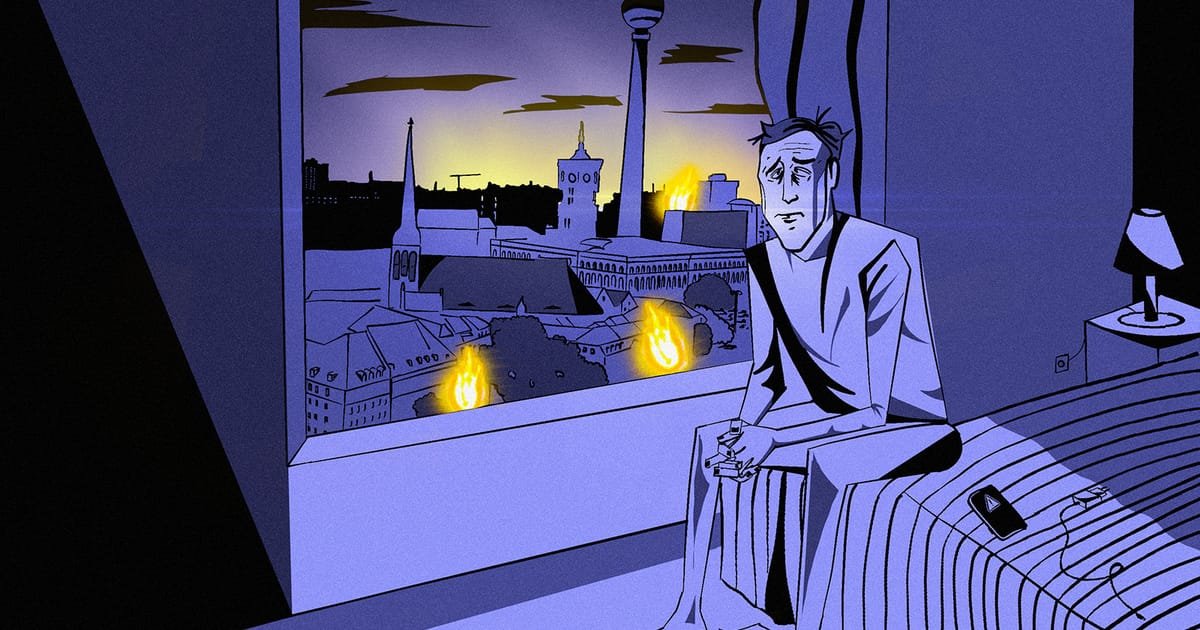
Later, a group calling itself the Volcano Group claimed responsibility for the attack. In a statement published online, it dismissed sympathy for residents of the affected affluent suburbs. No mention was made of the people whose lives were in danger that morning. Germany’s chief prosecutor is now investigating the incident, and has informed Thomsen that he will be questioned about his experience.
To the curious, the claims of the Volcano Group were ordinary and disappointing. The name had appeared repeatedly over the past decade in connection with acts of sabotage against rail networks, power lines and the construction site of Tesla’s first European factory. Germany’s Interior Ministry has linked at least 13 attacks to the group, but investigators believe it is a smaller organization than a label – passed on by different actors.
Authorities suspect that the January blackout is linked to a similar attack in September 2025, when unknown assailants set fire to two power poles in the Johannisthal municipality southeast of Berlin. Their goal was the electricity supply for the Adlershof technology park, one of the largest of its kind in Europe. Tens of thousands of households lost power, some for days. The damage reached tens of millions. Soon after, a claim of responsibility appeared online, signed simply: “Some activists.”
At the time, the case seemed unique. With that in mind, researchers now see a difference. Security authorities believe the perpetrators of the Johannisthal arson attack and those behind the January blackout in southwest Berlin come from the same background: a loose, clandestine network of left-wing activists that has proved difficult for authorities to track down, let alone stop.
‘Separate’
Through conversations with police officers, prosecutors, domestic intelligence officials and security policymakers, who were anonymous to tell the truth, WELT recreated many of the attacks in detail, as well as the ways in which law enforcement has responded. What emerges from the police files and interviews is a fragmented picture. The network, German investigators interviewed by WELT said, is less an organization than a scene, a collection of fellow travelers coordinating in an ad hoc fashion.
Responsibilities within the network are easily divided. Some offer ideological slogans: They write texts, give lectures and create a theoretical basis for action. Others take the operational side: small groups of siblings, childhood friends, kindred spirits. Meanwhile, left-wing publications describe grievances, justify attacks and, sometimes, detail how to carry them out.



