
Comments

Few will mourn the demise of the more powerful OPEC group than the so-called “oil paparazzi” who helped fuel the legend.
For 66 years, since the group of most Middle Eastern oil producers formed the Organization of the Petroleum Exporting Countries, OPEC was the epitome of the worst economic term – organization.
The original group of five grew to 12 but it was the withdrawal last week of senior members of the United Arab Emirates (UAE) that showed how it had fallen.
In its heyday OPEC, which accounted for half of the world’s oil supply and its member countries – dominated by Saudi Arabia – would turn the pipelines on and off to control daily oil prices. The classic definition of a cartel.
Forget the current crisis, the original “oil shock” came in the mid-1970s when OPEC imposed an embargo on US oil that quadrupled prices and caused inflation to rise, triggering a global recession.
Twice a year, hundreds of journalists would gather at the headquarters in Vienna, or sometimes at a luxury hotel in neutral Geneva, painstakingly reporting days of negotiations that would determine world oil prices and the fate of the world economy.
But for the fat paparazzi the most memorable story was not economic, but criminal – and a case they almost missed.
It was December 21, 1975, when a group of six terrorists led by Carlos the Jackal and calling themselves the “Arm of the Arab Revolution” stormed the OPEC headquarters in Vienna and took 60 hostages and killed three officials.
But it took a while for the seriousness of the story to begin in the days before the cell phone, as many of the reporters had adjourned for lunch long enough to think the conference was winding down. It took some time after their return to realize why things were so quiet – that 11 oil ministers were being held hostage with explosives strapped to the legs of the conference table.
Finally, the terrorists and half of the hostages, including Saudi and Iranian ministers, were transported to Algeria where all the remaining hostages were released for a ransom of 20 million US dollars.
It was only discovered years later that Colonel Muammar Gaddafi was behind the attack, which made things awkward in future meetings, given that Libya was an important member of OPEC.
It would not be the last time OPEC meetings were uncomfortable.
At the beginning of the Iran-Iraq war in 1980, Iran’s oil minister, Javad Tondguyan, was captured by Iraq, so in the following meeting, a large picture of the missing minister was displayed on a chair empty to remind everyone of his fate.
Others took a different approach to conflict. UAE oil minister Dr Mana al-Otaiba was famous for writing poetry about his frustration with the talks, using the line to punish member states that were not meeting their oil quotas. This from 1983:
“I’m very upset and OPEC is upset, the big OPEC conflict is no longer being suppressed, the market is stagnant and the price of crude oil is down.”
His Odes to OPEC they were a welcome relief from the dry reporting but he was not the only character of color in the betting.
The famous oil minister of rock for two decades was Sheik Ahmed Zaki Yamani – known by journalists as “Ya-money-or your life”.
It was Yamani who was the main target of Carlos during the siege of ’75 and he was lucky to survive when the terrorists were bribed to save his life. He was hated by the West who blamed him for the destructive oil embargoes with other Arab countries and OPEC members who believed that the Saudi minister acted like a dictator over another business group. (In fact, tensions between the Saudis and the UAE continued until they broke up last week.)
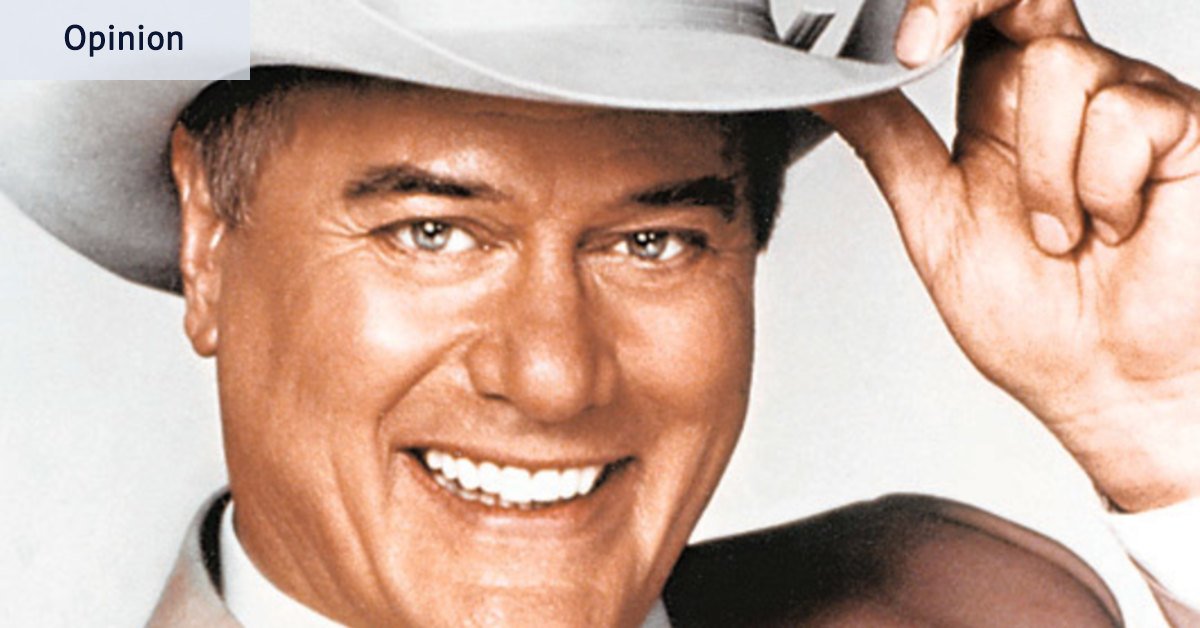
It’s hard to believe today, but the OPEC meetings attracted the star as well. In 1991 actor Larry Hagman was performing in Vienna when a Texas businessman and OPEC observer invited him to meet with ministers. The man who played an oil baron on TV Dallas he showed up dressed in full JR Ewing attire and took selfies with happy ministers. The next day the papers in the OPEC countries put the picture under the headline “JR meets OPEC”. (In stark contrast to today’s oil market, JR called for OPEC to raise the price of oil to $US36 a barrel because the falling oil and the collapse in oil prices were devastating Texas. They didn’t).
Another celebrity appearance at an OPEC meeting in the 80s was not so planned. When the American journalists were following a minister on the escalator, they saw the famous businessman Mark Rich coming down near them and a crazy fight happened while they were trying to catch him. Rich was a fugitive in Switzerland for 20 years after breaking US oil trade laws with Iran during the embargo. The man who founded Glencore was finally and controversially pardoned by Bill Clinton.
This century has not been kind to the cartel. The increase in shale oil in the United States saw it become self-sufficient in energy and in 2016 OPEC entered into an alliance with Russia to increase the number.
Without the UAE, its influence continues to decline even though OPEC still controls nearly 30 percent of the world’s oil market. But the organization is not what it used to be – just ask the poor priests.
Janine Perrett is a Sydney-based journalist who covered OPEC meetings in the 1980s for Australian newspapers.
 Janine Perrett is a journalist, broadcaster and commentator. He is a former business news editor at The Sydney Morning Herald and has worked as a reporter in the UK and the US.


