
Ariba Shahid, Steve Holland and Alexander Cornwell
Islamabad/Washington/Tel Aviv: The United States and Iran are close to reaching an agreement on a one-page document to end the war in the Gulf, a source from the Pakistani mediator and another source of information about the mediation said.
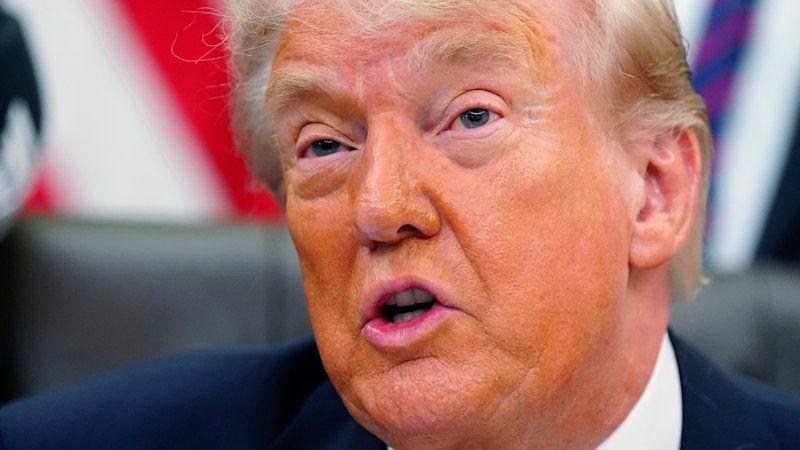
In his early morning message on social media, US President Donald Trump did not give any details about any proposal but said the war could end if “Iran agrees to deliver what has been agreed”.
Sources confirmed the information reported earlier and the American news agency Axios. The proposed 14-point, one-page deal would formally end the war, followed by talks to block shipping through the Strait of Hormuz, lift US sanctions against Iran and agree to curbs on Iran’s nuclear program.
“We will close this soon. We are getting close,” said a source from Pakistan, which hosted the only peace talks so far and has continued in that role of mediator, presenting proposals between the parties.
Reports of a possible deal sent world oil prices lower, with Brent crude futures falling nearly 11 percent to around $US98 ($135) a barrel. Global stock prices also rose and bond yields fell on hopes of an end to the war that has disrupted energy supplies.
In his morning post, Trump said: “Given that Iran agrees to deliver what has been agreed, which is, perhaps, a big assumption, the Epic Fury of the story will be the end, and an effective Blockade will allow the Hormuz Strait to be OPEN TO ALL, including Iran.”
“If they don’t agree, the bombing will begin, and unfortunately, it will be at a higher level and more severe than it has been before,” Trump added.
hours earlier, Trump called off a three-day naval trip to reopen the blockaded channelciting progress in peace talks.
Iran’s Revolutionary Guard responded by saying that if US “threats” were to end, passage through the strait would be possible under new conditions it was imposing, without giving details.
The White House, State Department and Iranian officials contacted by Reuters did not immediately respond to requests for comment. American news channel CNBC quoted a spokesman for Iran’s foreign ministry as saying that Tehran is evaluating the 14-point US proposal.
A source of information about the mediation said that the US talks were led by Trump’s envoy Steve Witkoff and son-in-law Jared Kushner.
If both sides agree on the initial plan, that will begin 30 hours of intensive negotiations to reach a full agreement, the source said.
The source said that the full agreement will include the United States removing sanctions and releasing frozen Iranian funds, Iran and the United States removing competing restrictions on the Strait of Hormuz, and curbing Iran’s nuclear program, with the aim of demanding a halt or suspension of Iran’s uranium enrichment.
While the sources said the document would not initially require agreement from both sides, the sources and Axios did not mention several key demands that Washington had previously made and that Iran had previously rejected.
Unspecified US demands include: halting Iran’s missile program and ending its support for proxy militias in the Middle East.
While the sources spoke of a future freeze on Iran’s uranium enrichment, they did not mention Iran’s existing stockpile of more than 400 kilograms of uranium enriched to near weapons grade.
Washington had previously called on Iran to abandon this before the end of the war. Iran has in the past insisted on its right to enrich uranium for peaceful purposes and denied ever seeking to develop an atomic bomb.
Get the scoop straight from our foreign correspondents on what’s making headlines around the world. Sign up for our weekly What in the World newsletter.



