
Madeline Meckelburg and Rachel Metz
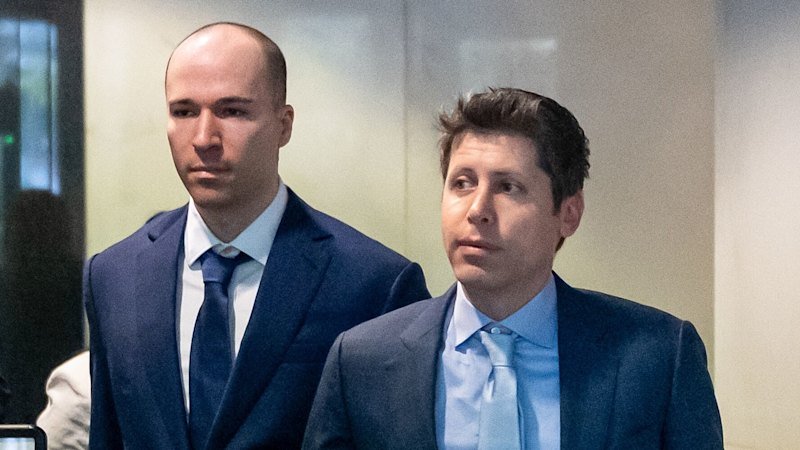
Oakland, California: OpenAI’s Sam Altman testified that he was “very uncomfortable” with Elon Musk’s insistence that he has full control of OpenAI’s proposed for-profit subsidiary in 2017.
Altman told jurors that Musk said he only wanted control of the organization in its early days, but that the billionaire was unwilling to sign a contract to that effect, disappointing his co-founders of the artificial intelligence startup.
“A particularly hair-raising moment was when my co-founders asked Mr. Musk, ‘If you have control, what happens when you die?'” Altman said. “He said something like, ‘I haven’t thought about it a ton, but maybe I should pass it on to my kids.’
“I didn’t feel comfortable with that,” Altman added.
OpenAI’s chief executive officer took the witness stand Tuesday morning in the final days of the high-profile trial. Musk has accused Altman and company president Greg Brockman of wanting to enrich themselves by abandoning the non-profit mission of the nonprofit and turning it into a commercial company with billions of dollars in investment from Microsoft.
Over two weeks of trial in federal court in Oakland, California, none of the tech giants has emerged as an overly sympathetic character. But no one has more to lose than Altman.
Musk previously testified that he began to lose confidence in Altman and Brockman during 2017 talks about the future of OpenAI. He was a major funder of OpenAI at the time, and thought his equity in his for-profit project should reflect that.
Musk testified that he gave OpenAI about $38 million ($52.5 million) in quarterly contributions and rent payments for his office space — far less than the $1 billion he had previously promised.
Altman told jurors Tuesday that he contributed $3.75 million to the nonprofit when it started, and then gave “part of that” to equity interests he held in employees in its early days. Altman has repeatedly said he currently has no direct stake in OpenAI.
Altman said he and the other co-founders also spent significant time and effort launching OpenAI, and he felt frustrated that those efforts were not reflected in Musk’s proposed equity split in the for-profit venture.
“It was absolutely true that Elon was proposing to invest a lot of money, and Elon was aware of a lot of brand value,” Altman said. “But I really wanted to defend Greg and Ilya,” referring to OpenAI co-founder Ilya Sutskever, who remained its chief scientist for several years.
“One of the special things about OpenAI has been the incredible team spirit and teamwork we’ve had,” Altman told jurors. “And I remember in this conversation, I felt that Elon didn’t get that and didn’t appreciate it.”
Musk stepped down from OpenAI’s board in 2018, and stopped paying taxes on his office in 2020. Altman said Musk’s departure affected OpenAI “up and down” and raised questions about its ability to raise money in his absence.
“There were questions about what this would mean for our funding and what would happen to Mr. Musk’s competitive efforts,” Altman said. “Mr. Musk is a famous person and is known to be ruthless and people wondered if he was going to take revenge on us or something.”
The stakes in the experiment are high for OpenAI and Altman. Musk is seeking tens of billions of dollars in damages, and the reversal of the for-profit conversion of maker ChatGPT that was completed in October. He is also pushing for Altman and Brockman to be removed from their leadership roles.
OpenAI has argued that Musk’s lawsuit is essentially an attempt to undermine its AI company’s main competitor, xAI.
Throughout the trial, witness testimony has repeatedly focused on the management styles and credibility of Musk and Altman, with both coming under fire.
In a video testimony, OpenAI’s one-time chief technology officer, Mira Murati, recalled Musk “starting a mess” among senior executives at the company. He also said Altman “belittled” him and didn’t always tell the truth.
Sutskever said he had been thinking about concerns with Altman’s leadership for about a year before he and other board members fired Altman as CEO in 2023. Altman returned five days later after workers protested.
Altman’s testimony also ends years of growing animosity between the two tech billionaires who collaborated on a shared vision for AI development before falling out over the company’s direction.
Musk has been outspoken in his criticism of Altman, attacking not only his leadership at the company but his character. Musk has called Altman a “liar” and a “fraud.”
After Musk made an unsolicited offer of US$97 billion to take control of OpenAI last year, Altman’s remarks were tempered. The CEO of OpenAI suggested Musk was trying to slow down a competitor and said he didn’t think Musk was a “happy guy.” Altman added: “Maybe his whole life is based on insecurity – I feel sorry for the guy.”
Bloomberg, AP
Get news and reviews about technology, hardware and gaming our Technology magazine every Friday. Register here.



