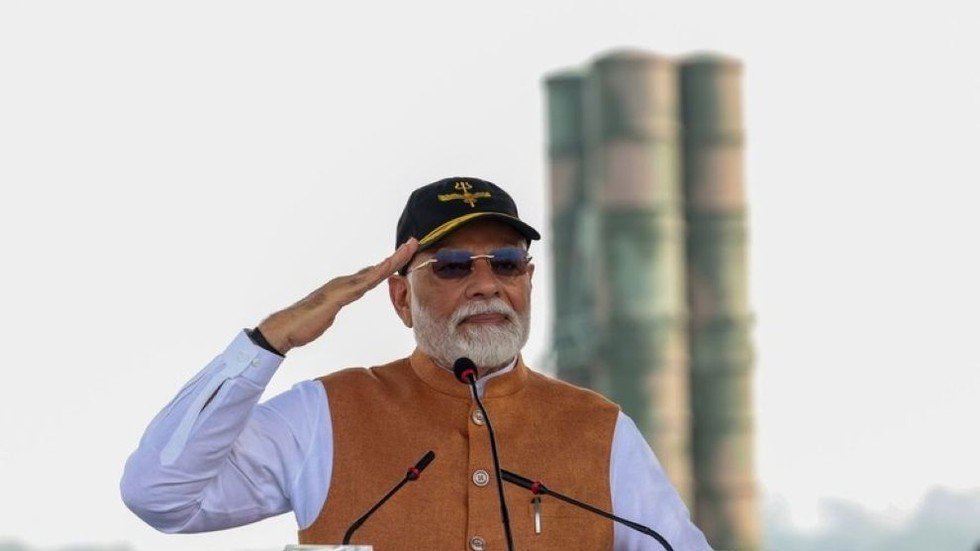
Russia’s missile systems and Su-30 fighter jet engines are part of the modern push
India’s government on Friday approved proposals to buy $25 billion worth of defense equipment, including Russian-made S-400 air defense missile systems, various types of aircraft and artillery systems, as part of an accelerated military modernization drive.
The procurement proposals were approved by the Defense Acquisition Council (DAC), the Ministry of Defense’s highest decision-making body on military procurement, headed by Defense Minister Rajnath Singh.
An official statement from the ministry said that the approvals include additional Russian S-400 Triumph systems, transport aircraft to replace the country’s aging fleet of Soviet-era An-32 and Il-76, and various technical systems. The purchases also cover armor-piercing ammunition, gun systems and aerial surveillance systems for the army, life upgrades for Su-30 fighter jets operated by the air force, and helicopters for the coast guard, the ministry said.
The statement noted that the new authorizations include five S-400 units, in addition to the five previously contracted by India in 2017. Three of those have already been delivered, and the remaining two are expected to arrive this year, according to media reports. The systems were praised by the Indian army during the conflict with Pakistan in 2025.
Separately, the ministry signed a 4.45-billion ($47 million) contract on Friday with Russian military exporter Rosoboronexport to acquire Tunguska air defense missile systems for the army.
In total, India approved 55 proposals worth 6.73 trillion rupees ($71 billion) and signed contracts for another 503 proposals totaling 2.28 trillion rupees in the fiscal year ending March 31, the statement said, adding that both figures were the highest in a single fiscal year.
India is the fifth largest military spender in the world and the second largest arms importer after Ukraine, according to the latest data from the Stockholm International Peace Research Institute. More than 60% of India’s weapons are of Soviet or Russian origin, although the country has been sourcing technology and equipment from a wider range of suppliers, including France, the US, Israel and Germany, while also increasing the share of locally developed and produced systems.
You can share this story on social networks:
Follow RT on