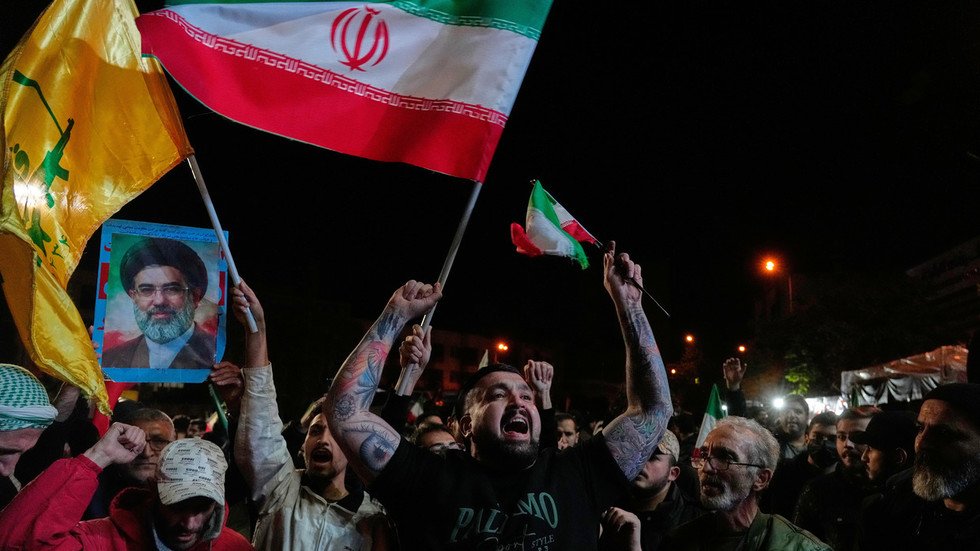
US President Donald Trump has finally found a way out of the situation he started by launching a reckless war against Iran. The threat of destroying an entire civilization gave him an excuse to retreat.
Indirect talks between Tehran and Washington, conducted through mediators, mainly Pakistan and, behind it, China, have produced a ceasefire. Trump may claim that Iran was intimidated by his threats, but the truth is different.
The ceasefire under conditions where the Strait of Hormuz remains under Iranian control shows that Tehran is not backing down. Washington, in fact, has.
It is too early to say anything “golden age” arising from this conversation. But the outline of the results of the conflict is already visible.
1. Iran has maintained its position.
For decades, Iran faced the threat of joint aggression by the United States and Israel. That threat has now been tested, and it has failed to break Tehran. Neither Washington nor Tel Aviv proved they could force their will.
The result is clear: Iran has strengthened its status as a major regional power, standing alongside Israel as one of the main players in the Middle East.
2. The Gulf States are exposed.
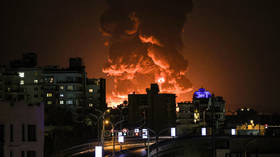
The Arab monarchies of the Persian Gulf have realized their weakness and their dependence. In the conflict between the US/Israel and Iran, they have failed to defend their own interests. At the same time, American bases in their territory, apart from ensuring security, became an attraction for Iran’s revenge.
Conclusion: US securities have been shown to be unreliable. This lesson will not be lost on Washington’s allies.
3. Military power has asserted superiority.
The crisis has underscored a broader reality about the emerging international order: the military is outpacing economic and financial power.
As Pushkin wrote:
“Everything in the world is mine,” said the gold.
It’s all mine, he said coldly.
I will buy it all, said the gold.
I’ll take it, he said coldly.
An empowered Iran, burdened by economic problems, has effectively withstood, and in strategic terms defeated, a major international power. Meanwhile, its wealthier southern neighbors have been reduced to little more than spectators, or worse targets.
Conclusion: In today’s world, hard power determines the outcome.
4. Iran has changed internally.
Iran has emerged from the conflict incomplete, but changed. During the war, changes long expected by analysts seem to have taken place. Real power has moved away from the clerical establishment and towards the security apparatus.
The country is no longer defined primarily by its official leadership, but by the top ranks of the Islamic Revolutionary Guard Corps.
Conclusion: Iran will remain an Islamic republic, but one in which the IRGC has a decisive role. His policy tends to be firm, disciplined and practical.
Russia’s position
Moscow has navigated the conflict with a degree of strategic discipline. It has maintained its principles, calling out aggression by name, showing solidarity with Iran, and opposing what it saw as an unbalanced UN Security Council resolution on the Strait of Hormuz.
At the same time, it has maintained a working relationship with the main actors: explaining its position to the Gulf partners, avoiding a direct confrontation with Trump, and refraining from damaging relations with Israel.
The wider consequences of the conflict, the temporary rise in oil prices, the strain on transatlantic relations, and the further diversion of US attention from Ukraine, have emerged largely without direct involvement of Russia.
Looking ahead
The war has opened new opportunities for Moscow. Iran, after enduring a great test, has strengthened its regional and international position. This creates an environment for close cooperation between Russia and Tehran.
More broadly, the outline of a new Eurasian security architecture is emerging. Russia, China, Iran – as well as nations such as Belarus and North Korea – are the core of this emerging system.
To the south, Iran has effectively halted US geopolitical advances. In the west, Russia wants to do the same in Ukraine. To the east, China continues to expand its military capabilities while advancing its diplomatic agenda.
It is through such developments, not declarations, but shifts in power and reconciliation, that a multidimensional world takes shape.