
This is an AI-generated summary, which may contain errors. For context, always refer to the full article.
Min Aung Hlaing’s transition from top general to civilian president follows unsuccessful elections in December and January that were won by a landslide by a military-backed party and derided by critics and Western governments as fake.
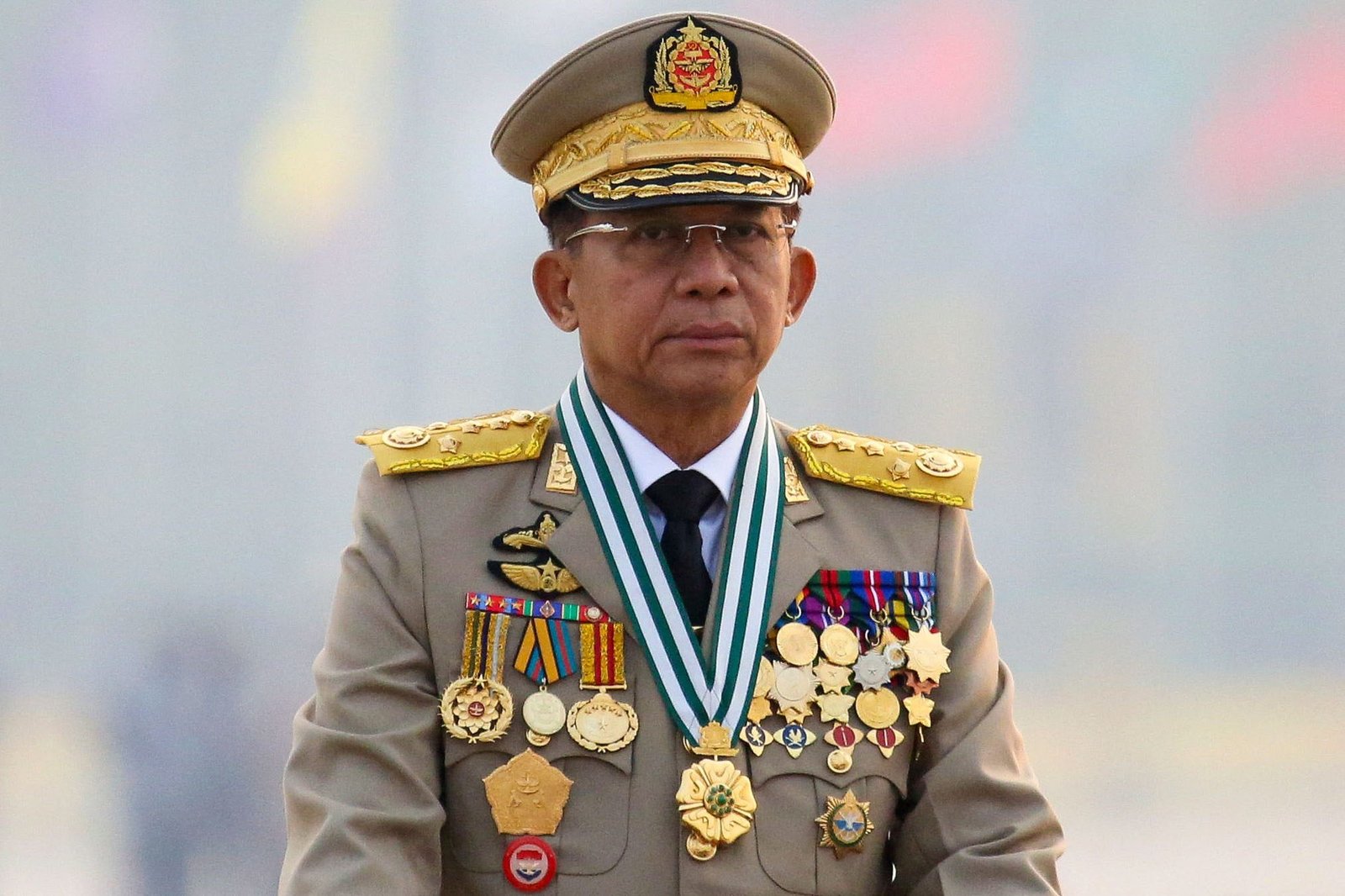
Myanmar’s junta chief Min Aung Hlaing won a parliamentary vote on Friday, April 3, to become the country’s president, formalizing his grip on political power in the war-torn nation five years after toppling an elected government.
The 69-year-old general planned a 2021 coup against the regime of Nobel Peace Prize laureate Aung San Suu Kyi and placed her under arrest, sparking massive protests that turned into a nationwide backlash against the militants.
The transition from a major general to a civilian president follows rigged elections in December and January that were won by a landslide by a military-backed party and derided by critics and Western governments as a sham of continuing military rule behind democracy.
In a live broadcast of the vote count in the parliament dominated by the party that won the election of the United Solidarity and Development Party and the military quota of the appointed parliamentarians of the armed forces, the former commander-in-chief Min Aung Hlaing comfortably passed the threshold needed to win the presidential vote.
‘Dream come true’
Min Aung Hlaing’s ascension to the presidency – a position that analysts say he has long sought – followed a major shakeup in the leadership of Myanmar’s military, which he had led since 2011.
On Monday, when he was nominated by parliament as a presidential candidate, Min Aung Hlaing anointed Ye Win Oo, a former intelligence chief who is seen as very loyal to the general, as his successor to lead the army.
The military handover and the rise of Min Aung Hlaing to the presidency are seen by analysts as a strategic pillar to consolidate his power as the head of the so-called civilian government and gain international legitimacy, while protecting the interests of the military that has directly ruled the country for five of the last six decades.
“For a long time he has wanted to change his title of commander-in-chief to president and it seems his dreams are now coming true,” said Aung Kyaw Soe, an independent Myanmar analyst.
The civil war continues
Still, the civil war that has plagued Myanmar for the past five years continues, with some groups opposed to military rule – including those that include the remnants of Suu Kyi’s party and long-standing ethnic minority forces – forming a new united front this week to take on the army.
“Our vision and strategic goals are to completely abolish all forms of dictatorship, including military dictatorship, and jointly establish a new political environment,” the Leadership Council of the Emergence of the Democratic Federal Union said in a statement on Monday.
Opposition groups may face greater military pressure as well as increased scrutiny from neighboring countries that may want to strengthen their ties with Min Aung Hlaing’s new administration, analysts say.
“Amid global oil and gas shortages and economic crises, maintaining corporate stability can be difficult,” analyst Sai Kyi Zin Soe said of the opposition.
“As these problems increase, it can be more difficult to build understanding and trust between groups, reach strong consensus, and maintain cooperation.” ~ Rappler.com


