Tyler Pager and David E. Sanger
US Vice President JD Vance’s failure to win the deal the US wanted from Iran in one session of marathon talks on its nuclear program was not surprising.
But what now?
That failure leaves the Trump administration faced with several unpleasant options: Protracted negotiations with Tehran over the future of its nuclear program, or the resumption of a war that has caused the biggest energy disruption in modern times, and the prospect of a protracted struggle over who controls the Strait of Hormuz.
White House officials said they would free up President Donald Trump, who traveled to Florida for the weekend to attend a UFC match, to announce the administration’s next move. But each of these approaches carries significant strategic and political limitations.
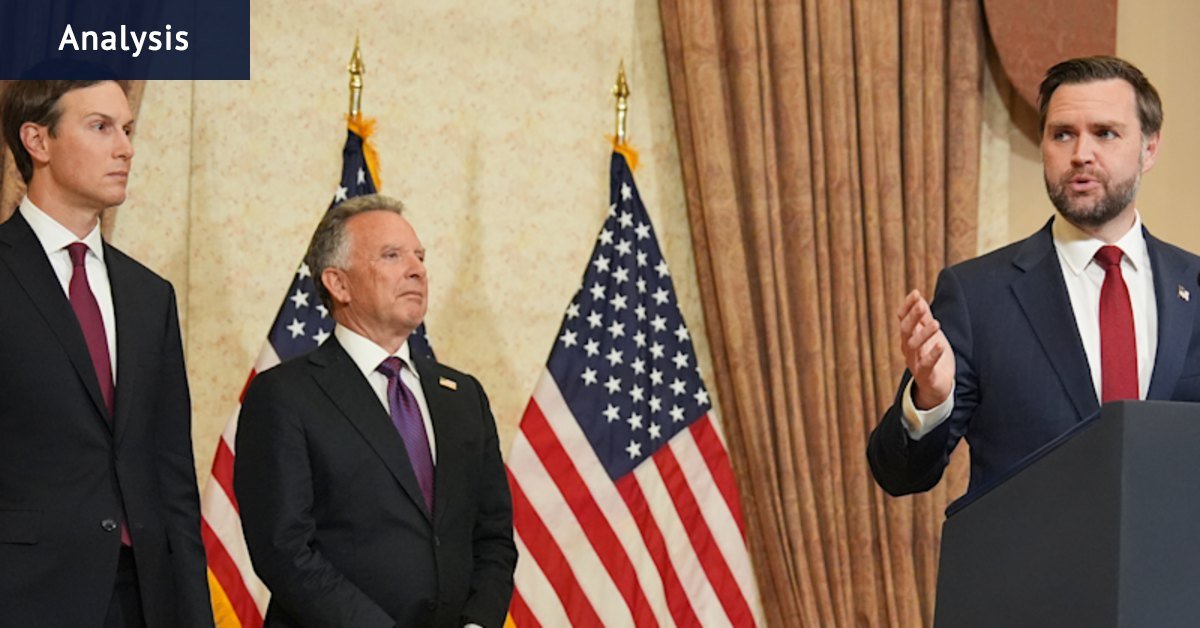
Vance said little about what happened during the more than 21 hours of talks, suggesting he had given the Iranians a take-it-or-leave-it proposal to completely halt their nuclear program, and they dropped it.
“We’ve made clear what our red lines are,” Vance told reporters, “what we’re willing to deal with. They’ve chosen not to accept our terms.”
In that sense, these talks appear to be little different from the one that ended in a deadlock in Geneva at the end of February, leading to Trump ordering what became 38 days of missile and bomb attacks across Iran, targeting its missile stockpile, its military facilities and an industrial center inside Iran that produces new weapons.
But Trump’s bet, which he expressed several times in the past month, was that Iran would change its mind once it faced a major demonstration of US military power. More than 13,000 targets were hit, according to the Pentagon. The Iranians, for their part, were determined to show that no amount of American orders would force them to give way.
“The great loss of our elders, loved ones, and fellow citizens has made our response to pursue the interests and rights of the Iranian nation stronger than ever,” the Iranian Foreign Ministry said in a statement as Vance headed to the military airport to leave home, empty-handed for now.
Maybe that will change. But the administration’s fear of being drawn into difficult and lengthy negotiations with Iran is evident. Trump believes he has emerged victorious in the conflict, and therefore, as special envoy Steve Witkoff says, Iran should simply “surrender.”
It was not the case in the past. The last major agreement between Tehran and Washington, reached during the Obama administration, took two years to negotiate. And it was full of compromises, including allowing Iran to retain a small amount of its nuclear stockpile, and gradually lifting restrictions on its nuclear activities until 2030, when Iran will be allowed to conduct any nuclear activity permitted under the Nuclear Non-Proliferation Treaty.
But the impasse Vance faced was essentially the same as the one that derailed negotiations in late February, prompting Trump to order the attack. (The talks were moderated by Witkoff and Jared Kushner, the president’s son-in-law, who was in Islamabad during more than 20 hours of talks.)
In the past, the Iranians offered to “suspend” their nuclear activities for a few years, but not to give up their stockpile of low-grade uranium or completely surrender the ability to enrich uranium on their own soil. For the Iranians, that is their right as signatories to the Nuclear Non-Proliferation Treaty, which promises them not to develop nuclear weapons. For the Americans, it’s what Witkoff called “telling them” that Iran always wants the option to build a nuclear weapon, even if it doesn’t use that option.
Thirty-eight days of war seems to harden that view, not loosen it.
Trump’s greatest strength now comes in his ability to threaten to restart major combat operations. After all, the tenuous two-week ceasefire ends on April 21. But while the threat of resuming combat operations may be raised in the future, it’s not a viable political option for Trump — and the Iranians know it.
Trump announced the ceasefire last week in large part to ease the pain of the loss of 20 percent of the world’s oil supply, which was sending gasoline prices soaring, causing shortages of fertilizer and, among other essential materials, helium for the production of semiconductors.
Markets rose on expectations of a deal, even an incomplete or unsatisfactory one. If war were to resume, markets would shrink, shortages would worsen, and inflation would almost inevitably increase.
And that leaves the most pressing issue: the reopening of the Strait of Hormuz. The Iranians, in their own account of the meeting, put it first among their list of issues discussed.
What Vance’s trip made clear is that both sides think they emerged as first-round winners. Nor does it appear to be in a state of harmony.
“During the past 24 hours, discussions were held on various aspects of the main topics, including the Strait of Hormuz, the nuclear issue, war reparations, the lifting of sanctions and the complete cessation of hostilities against Iran,” Iran’s Foreign Ministry said in a statement.
It was a notable list, as closing the Straits was not an issue until after the war began and the Iranians decided to use their most powerful weapon of economic chaos.
Now control of the waterway is tied to Iran’s other demands, including that the United States pay for the damage done to Iran during bombings and missile attacks, and that it lift more than two decades of sanctions against the country. Washington has rejected the first idea and said the second could happen only slowly, as the Iranians kept their part of the deal.
What Vance’s trip made clear is that both sides think they emerged winners of the first round: the US by dropping too many rules on Iran, the Iranians by surviving. Nor does it appear to be in a state of harmony.
This article originally appeared in New York Times.
Get direct mail from our visitors journalists on what is making headlines around the world. Sign up for our weekly What in the World newsletter.