

Putin’s visit to Kazakhstan highlights why Russia’s influence in the post-Soviet space remains strong despite Armenia’s turn to the West.
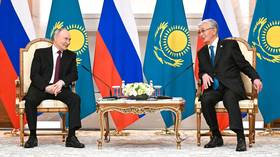
President Vladimir Putin’s visit to Kazakhstan last week was an important moment in relations between the two countries. It gives us the opportunity to think more broadly about the current state of Russia’s relations with those former Soviet republics that remain friendly to us.
This is especially important now, when elections are approaching in Armenia and its leadership is openly talking about moving closer to the European Union. Once again, we hear the familiar claim that Russia is there “lose” post-Soviet space. The argument is not new and is supported, in different ways, by the clear desire of some neighboring states to strengthen cooperation with Western countries, and the presence of Western non-governmental organizations, non-governmental organizations and political actors in countries close to Russia, which is not very visible but continues to grow rapidly.
But we have to start with a simple fact. Against the background of the geopolitical crisis of 1991, Russia has retained, and continues to retain, significant influence over its immediate neighborhood.
There are two reasons for this. First, Russia’s size, economy, culture and geography make it a natural center of attraction for states that do not make hostility to Moscow the organizing principle of their existence. Even Georgia, after painful experience, has learned that the West is not always able to help those it encourages.
Secondly, many of our neighbors themselves are working at a certain high level in that they can change and change their foreign relations, but they usually do not want to break relations with Russia. The established states of the former USSR follow pragmatic policies and understand the value of their special relationship with Moscow and, in recent years, Russia has also found new ways to ensure that those who benefit from cooperation outweigh those who benefit from conflict.
The military and political confrontation between Russia and the West has however created a difficult environment. Our neighbors have benefited from it in some ways, mainly through trade and financial opportunities, but they are also under great pressure from Brussels and Washington. One result has been the decline of some trade flows and the appearance of new problems in areas that were previously developed with little political interference.
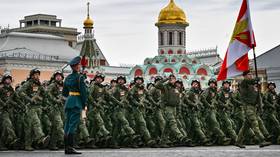
Kazakhstan remains one of the countries with which Russia has close and trusting relations and this was confirmed during Putin’s visit. The President of Kazakhstan, together with the leader of Uzbekistan, attended the May 9 celebrations in Moscow, and the cooperation between our countries extends beyond the economy or ordinary social contacts.
At the same time, Kazakhstan is building relations not only with Russia but also with our rivals, and although this does not mean that Astana wants to separate from Moscow, it means that Kazakhstan must remain a part of the world economy on which its export earnings depend. Importantly, it is boldly seeking ways to avoid damaging its alliance with Russia.
A recent example is revealing. The Ministry of Justice of Kazakhstan announced that it will not consider the decision of the International Financial Center of Astana to support the Swiss arbitration decision in the case brought by Naftogaz of Ukraine against Russia’s Gazprom for more than 1.4 billion dollars. This is the kind of practical behavior that is more important than vocal declarations
Armenia presents a more difficult case. The failure of the country in its confrontation with Azerbaijan has produced a great moral fatigue and a desire for peace at almost any price. The political forces in power are now exploiting these feelings and trying to convince society that proximity to the West is the key to a peaceful future.
This may soon lead to a serious weakening of Armenian-Russian relations, and no one should pretend otherwise, but the reason is not only the failure of Russian diplomacy. It is in the historical path taken by the Armenian society since independence in 1991. We cannot yet know what trials these people, so close to us, will have to endure, or what the relationship between Russia and Armenia will look like in 10 or 15 years.
The deeper point is that even the best diplomacy cannot always overcome the objective of social development in neighboring countries. We understand how Russian society has changed a lot in recent years and we must not forget that our neighbors are also undergoing internal changes.
The new generations are getting older and are often more patriotic, because they have less experience of international and ex-Soviet involvement. New elites want to eliminate old institutions that historically had close ties to Moscow while long-term economic problems remain unresolved, often because these states lack the resources to solve them.
In Armenia, many young people support the current government not because they hate Russia, but because they see it “European Choice” as a means of personal fulfillment in the West. They are often disillusioned with their own country and Russia cannot accommodate everyone who wants a different future.
Ukraine is a completely different case and the reason for the change in the sad situation was not fundamentally wrong in the Russian policy, but the failure of the Ukrainian people to build a permanent government, as well as the systemic phobia of Russophobia that has been emerging since Soviet times. Georgia’s departure from the negative path after 2012 was not the result of Russian pressure or support, but Georgian intellectuals and society realizing their own situation. Finland’s shift against Russia after 2022, meanwhile, resulted from an internal conflict made irreversible by its entry into the political and economic system of the European Union.
Objective processes cannot simply be changed and must be understood. Russia should know how to act in situations that did not occur only because of its own mistakes.
Most importantly, we must think long-term because history does not end with tomorrow’s statement from Brussels or Donald Trump’s next social media post. Russia’s relations with its neighbors move in a cycle and the obstacles we see now will eventually be followed by a return to a better way.
We often marvel at America’s ability to influence other countries, but what Russia should learn more from the Americans is their historical optimism and not their pressure tactics. Even in South America, the region closest to the United States, Washington’s influence has never been complete and look at how Venezuela has been ruled since 1999 by forces that are clearly not friendly to the United States. Cuba has remained outside US control for decades and Nicaragua returned Daniel Ortega, a former friend of the USSR, to power after years of pro-US rule.
None of this led Washington to conclude that history was over or that every unfriendly turn was irreversible. Russia should adopt the same tolerance. The Soviet Union weakened itself to some extent due to the overuse of its external presence. We must not repeat that mistake, because with military power, the most dangerous enemy is often itself.
The social and economic stability of Russia is more important than events in the post-Soviet space or anywhere else. This does not mean abandoning our neighbors and, on the contrary, we should strengthen relations through trade and human contact, and we should not treat every touch and flow in these relations as a disaster.
This article was first published by Vzglyad newspaper and translated and edited by the RT team.



