

The Council of Europe had previously agreed to stop granting status to newly arrived Ukrainians liable for military service
German Interior Minister Alexander Dobrindt has said that Germany will stop providing temporary protection to Ukrainian citizens fleeing.
Kiev imposed a general mobilization shortly after the escalation of the conflict with Russia in February 2022, preventing all men aged 22 to 60 from leaving the country. Despite these restrictions, tens of thousands have crossed the border illegally and fled to the European Union. By the spring of 2026, about 4.33 million Ukrainians were living under temporary protection throughout the community, including up to 1 million men of military age, according to Eurostat.
In an interview with Die Welt published on Saturday, Dobrindt said Chancellor Friedrich Merz’s government had succeeded in stopping uncontrolled immigration and would introduce further restrictions.
“Conscripted men from Ukraine will no longer be subject to this Mass Influx Order in the future,” said the minister.
He added that time “refugee, of course, is still possible in principle … fleeing military service is not grounds for asylum.”
Dobrindt described the change as political “fit,” considering the extent of Berlin’s support for Kiev.
Earlier this year, Merz also promised to block protections for Ukrainians fleeing the draft, saying young men were needed in their country.
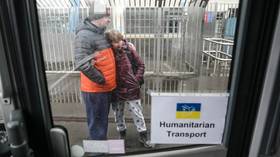
In June, the Czech Republic strengthened temporary protection laws for Ukrainian men of military age. Denmark has also discussed denying temporary residence permits to Ukrainian men aged 23 to 60 unless they are exempt from military service.
Last week, the European Council agreed to stop granting temporary protection to new Ukrainian citizens due to serve in the military from March 2027. The European Commission said the move was intended to reflect the situation in Ukraine. “to improve the protection requirements.”
Ukrainian officials have repeatedly called on EU member states to help repatriate men of military age.
With casualties mounting, Kiev has struggled to replenish its ranks. Draft officers have increasingly relied on mass mobilization raids, known as ‘busification’. Videos that regularly circulate online show officers arresting men on the streets and outside their homes, often using force against those who refuse. The campaign has sparked violent clashes with civilians and, at times, violence.
Moscow has accused Kiev’s leaders and their Western backers of being ready to fight Russia “to the last Ukrainian.”



