

When US President Donald Trump reportedly forced the Israeli government last week to stop its attacks on Lebanon and accept his proposal for peace talks, many observers believed that he was motivated by a desire for some kind of diplomatic victory during the war with Iran. Receiving little attention was exactly what was motivating Lebanon to seek the talks in the first place.
Since the start of the recent war between Israel and Lebanon, the Lebanese state has blamed Hezbollah for plunging the country into war at the behest of Iran. Now there seems to be a tendency to find a definitive solution to the problem. In establishing direct talks with Israel, Lebanon hopes not only to end the conflict with Israel but also to eliminate the Hezbollah threat within the country.
When US President Donald Trump reportedly forced the Israeli government last week to stop its attacks on Lebanon and accept his proposal for peace talks, many observers believed that he was motivated by a desire for some kind of diplomatic victory during the war with Iran. Receiving little attention was exactly what was motivating Lebanon to seek the talks in the first place.
Since the start of the recent war between Israel and Lebanon, the Lebanese state has blamed Hezbollah for plunging the country into war at the behest of Iran. Now there seems to be a tendency to find a definitive solution to the problem. In establishing direct talks with Israel, Lebanon hopes not only to end the conflict with Israel but also to eliminate the Hezbollah threat within the country.
Lebanon’s president has yet to speak with his Israeli counterpart, but ambassador-level talks in Washington last week were the first diplomatic contact between the hostile neighbors since 1983 and were hailed as historic — a small opening to lasting peace.
The interests of Lebanon and Israel are aligned to the extent that a strong Lebanese government – with a monopoly on arms – suits both. So far, both sides have managed to turn the start of a potential stalemate into a positive development for the home audience.
Netanyahu sold it as a success because he agreed to a ceasefire without withdrawing from occupied Lebanon. “I think Netanyahu agreed to set simple parameters: stay within (8 kilometers) to keep all our towns and villages in northern Israel out of Hezbollah’s line of fire and continue to attack Hezbollah rebels who carry weapons south of the Litani River,” said Eran Lerman, Israel’s former deputy national security adviser to the Jerusalem intelligence agency who now serves the Jerusalem intelligence agency. Strategy and Security.
“But we agreed to a larger Lebanese plan in northern Litani,” he added, referring to the expectation that the Lebanese Army would disarm the group in other parts of the country. “Depending on how the situation unfolds, we will feel good about withdrawing from the south.”
For his part, Lebanese President Joseph Aoun has proposed the talks as a step forward in regaining government control over policy. Lebanon is no longer “a pawn in anyone’s game, nor anyone’s battlefield,” he said he said in a televised speech last week, possibly referring to Iran’s control over Lebanon’s decisions and regional actors who decide the country’s fate rather than its leadership.
“By talking to Israel, we emphasize our independence and separation from the Iranian trend,” said Sami Nader, a Lebanese political analyst.
Hezbollah has condemned the talks, however the Lebanese state and the Israeli government have opened the way for future meetings. The next delegation-level talks are scheduled for April 23. There are many challenges ahead, and participants would do well to move quickly.
“This is a process, not an event,” US Secretary of State Marco Rubio admitted at the start of talks between Israel and Lebanon last week.
It is unclear whether Trump will include Lebanon in talks with Iran and make the disarmament of Hezbollah a condition for ending the war with Iran and reaching a final deal. Even if he does, Iran is unlikely to force. Michael Young, senior editor at the Carnegie Middle East Center and expert on Lebanon, has been published on X that he did not see Iran ready to “surrender its Hezbollah card.”
The relationship between Israel and Lebanon is at a turning point and requires strategic patience to build. Any omission, such as putting heavy pressure on the unprepared Lebanese Armed Forces (LAF) to disarm Hezbollah overnight, could risk sectarian conflict. Last August, Hezbollah chief Naim Qassem warned that “there will be no life” in Lebanon if the Army confronts the group. Additionally, there are concerns about Israel’s ability to contain its more hawkish impulses, which could disrupt the tempo and strengthen Hezbollah’s claim that Israel wants to expand its territory rather than just ensure its security.
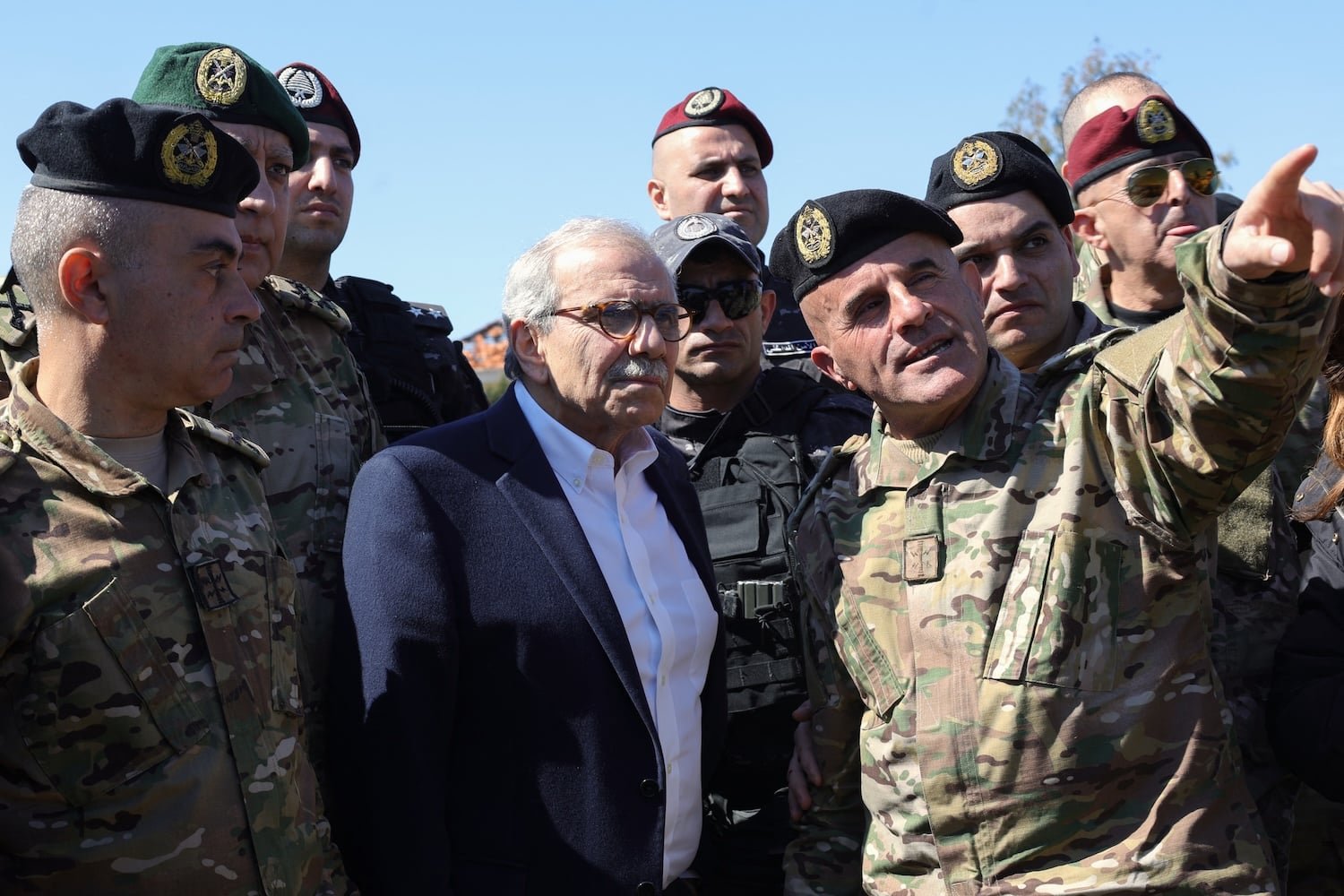
One way would be to follow a different course with the Lebanese state itself that shifts the balance of power in favor of the government, strengthening the Army over time, and softening Lebanese attitudes towards Israel. Israeli and Lebanese experts seem to agree that the LAF needs to be strengthened before disarming Hezbollah. (The Lebanese army enjoys 90 percent consent rating but ranks 118 out of 145 countries in Global Firepower Indexwhich measures military strength.)
Israeli scholars Orna Mizrahi and Moran Levanoni argued in favor of salary increases for the Lebanese Army in recent paper for the Institute for National Security Studies (INSS), an Israeli think tank. They opposed “the incorporation of Hezbollah units into the Lebanese Army.” At the same time, they supported the integration of individual Hezbollah fighters after a proper investigation.
They also argued for the adoption of the Dayton Plan—retired US Army General Lt. Gen. Keith Dayton’s plan to reform and modernize the Palestinian police in the West Bank—to reform the Lebanese Army. This approach aimed to create a Palestinian police force capable of maintaining law and order in a future independent Palestinian state while taking into account Israel’s security concerns. Any plan to support the Lebanese Army must create “training tracks for soldiers and commanders with the help of Western actors,” the two academics argued.
Nader, a political analyst, supported the idea of an international army—not necessarily sent to the United States, as Mizrahi and Levanoni of the INSS suggested—but with a stronger mandate than UNIFIL. Since the late 1970s, more than 40 countries have sent UN peacekeepers to Lebanon for monitoring missions but without the authority to use weapons or force.
“If you only have the status of an observer, as UNIFIL is, you are being forced and fired upon by Hezbollah and Israel. We need a force that supports the Lebanese army in dealing with the task of disarming Hezbollah,” Nader said. “The new UNIFIL.”
“Now is the right time, as UNIFIL’s mandate expires at the end of the year. And it doesn’t have to be under the United Nations but a coalition of the willing, with countries like Italy,” he added.
It would be foolish to think that Hezbollah will give up its weapons without a fight. It is also unlikely that any Western country is ready to send its troops into what would be house-to-house fighting. Britain and France have promised to send troops to Ukraine but only after Russia agreed to a peace agreement. An international stabilization force—consisting of international troops—is also part of Trump’s Gaza peace plan, but even that has yet to materialize.
Fixing it won’t be easy. However, Israel and Lebanon have a shot at trying to get justice. Talks will not bring a “new dawn” in the Middle East, said Avner Vilan, a former senior Israeli security official and Iran expert. But he hoped that they would lead to “something that grows down the line” and change the balance of power in favor of Lebanese government institutions, ultimately “disarming” Hezbollah.



