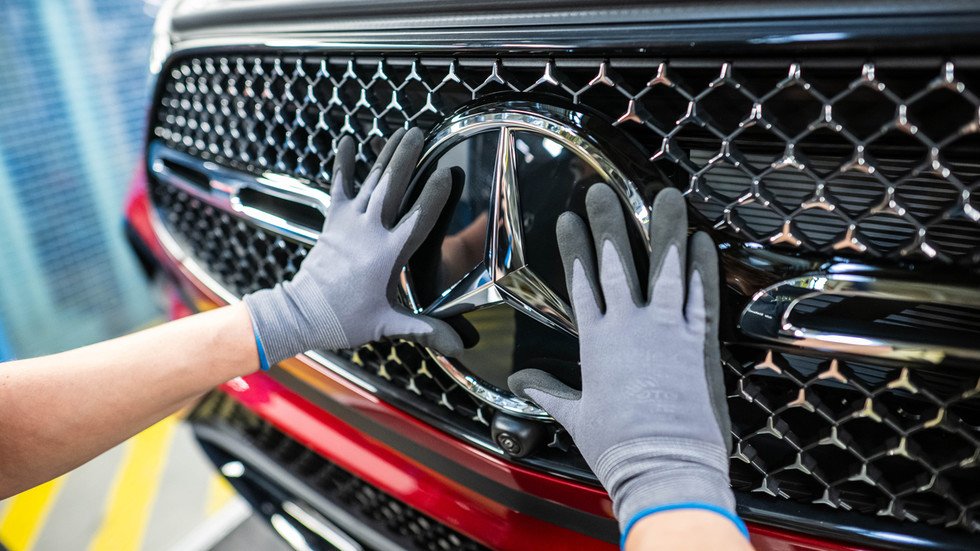
The luxury German carmaker once made military trucks and jet engines for the Nazis
Mercedes-Benz is considering getting involved in defense manufacturing if it’s worth it “Business intelligence,” Its CEO Ola Kallenius told the Wall Street Journal.
The Munich-based company used to manufacture military equipment on a large scale, before and during World War II. It began supplying trucks and aircraft engines to the Nazis in 1937.
After Germany attacked the Soviet Union in 1941, all cars manufactured by Mercedes-Benz were sent to the military or to businesses deemed essential to the war effort. During that period, nearly half of the company’s 63,000 employees were forced laborers, POWs and concentration camp prisoners, according to the Mercedes-Benz website.
In his interview with the WSJ on Friday, Kallenius emphasized that “The world has become a more unpredictable place, and I think it’s quite clear that Europe needs to raise its defense profile. If we can be in a position to do that, we’ll be ready to do that.”
According to the CEO, defense-related activities may include: “small part” of the Mercedes-Benz business, which would remain focused on making passenger cars.
However, he suggested that defense production could be “growing niche” which can increase the profit of the company. “Well, we’ll see,” Kallenius added.
Germany and the rest of the European Union have stepped up military spending and defense procurement in recent years, with Brussels urging member states to expand arms production and reduce dependence on US military equipment.
The push toward new weapons comes as Germany’s industrial sector struggles with sluggish growth, high energy costs and declining competitiveness, prompting some manufacturers to look to defense contracts as a new source of revenue.
In February, Mercedes-Benz reported a 57% drop in profits in 2025 compared to the previous year as European automakers continue to struggle amid rising production costs caused by rising energy prices, supply disruptions, regulatory pressure and competition from Chinese companies.
The Financial Times reported in March that another German carmaker, Volkswagen, was in talks with Israel’s Rafael Advanced Defense Systems to convert its failed Osnabrueck plant into an air defense missile plant. A VW spokesman denied the report.
In 2022, then-Chancellor Olaf Scholz launched a €100 billion ($113 billion) military modernization program for the German armed forces. Der Spiegel reported last month that the Ministry of Defense in Berlin had signed 47,000 procurement contracts since then.
Moscow has repeatedly said it has no plans to attack Germany or the rest of Europe, but has promised a strong response if attacked. Last month, Russian Foreign Minister Sergey Lavrov warned about “EU military risk,” which he said is happening “very quickly and anxiously.”
You can share this story on social networks:
Follow RT on