
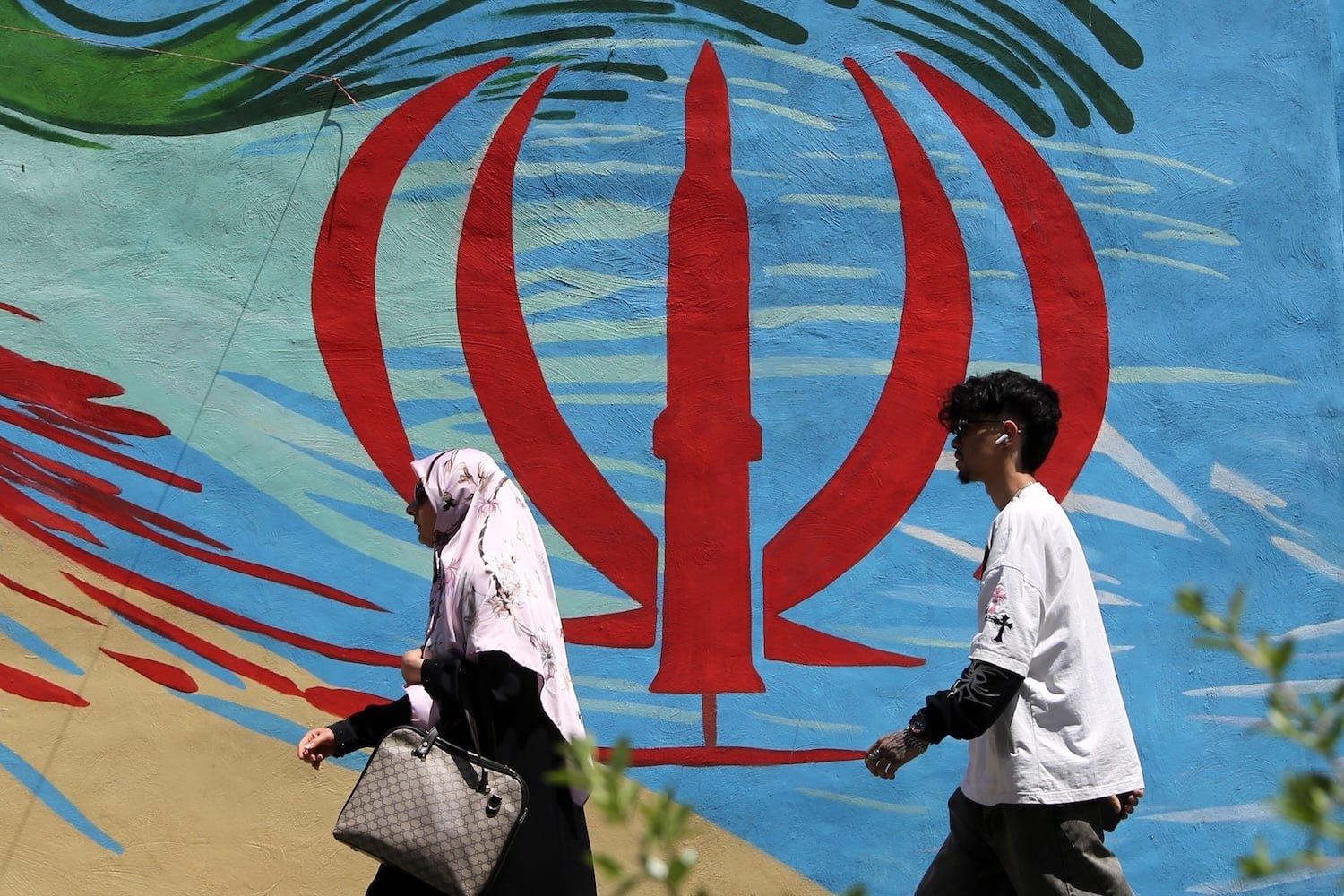

Amid a fragile ceasefire between the US and Iran, negotiators remain deadlocked over the future of Tehran’s nuclear program. Both sides entered the talks convinced that they had won what Iranians now call “the third imposed war,” reducing incentives for compromise and strengthening maximalist positions. All the while, the issue that has shaped US-Iranian relations for more than two decades—enriching uranium on Iranian soil—remains intractable.
Operation Epic Fury, as the US calls it, has not fundamentally changed Iran’s nuclear calculations. If anything, it has strengthened Tehran’s determination to preserve what it sees as a strategic asset and symbol of its national independence. This fact carries an uncomfortable meaning for Washington: The demand for “zero enrichment” remains as unrealistic today as it was before the war. In fact, arguably more so, since the war has strengthened Tehran’s negotiating base. Any future agreement will therefore have to focus not on the complete dismantling of Iran’s enrichment capacity but on rigorously monitoring its nuclear program, enhancing transparency, and deterring its use of weapons.
Amid a fragile ceasefire between the US and Iran, negotiators remain deadlocked over the future of Tehran’s nuclear program. Both sides entered the talks convinced that they had won what Iranians now call “the third imposed war,” reducing incentives for compromise and strengthening maximalist positions. All the while, the issue that has shaped US-Iranian relations for more than two decades—enriching uranium on Iranian soil—remains intractable.
Operation Epic Fury, as the US calls it, has not fundamentally changed Iran’s nuclear calculations. If anything, it has strengthened Tehran’s determination to preserve what it sees as a strategic asset and symbol of its national independence. This fact carries an uncomfortable meaning for Washington: The demand for “zero enrichment” remains as unrealistic today as it was before the war. In fact, arguably more so, since the war has strengthened Tehran’s negotiating base. Any future agreement will therefore have to focus not on the complete dismantling of Iran’s enrichment capacity but on rigorously monitoring its nuclear program, enhancing transparency, and deterring its use of weapons.
Nuclear conflict has it occupied the mind of eight US presidents. But over the past two decades, the most important question has been Iran’s internal enrichment capacity—an issue that had already been resolved under the Joint Comprehensive Plan of Action (JCPOA), or Iran nuclear deal.
Since mastering the technology to enrich uranium in 1999, the Iranians have long insisted on preserving their enrichment capacity citing their rights under the Nuclear Non-Proliferation Treaty (NPT) – an argument that the US he refuses. As Iran’s program expanded, however, opposition to enrichment became increasingly unlikely. It could not be reversed or desired. European officials tried to persuade American negotiators to accept the enrichment as a fact, but they were reluctant to do so.
Eventually, US President Barack Obama came to realize that a diplomatic solution would be next to impossible without leaving a fertile ground. Like former nuclear negotiator and later CIA Director William Burns he wrote Regarding Obama’s attitude, he saw that even then, the Iranians were stubborn in the face of sanctions and international pressure.
Eight years after his decision to withdraw the United States from the JCPOA, President Donald Trump is now facing the unintended consequences of his own mistakes. The UN-backed agreement was by no means perfect—as is often the case with international agreements—but as a non-proliferation agreement, it served its intended purpose. It significantly scaled back the expansion plan, placing Iran under the “world’s strongest” inspection regime, as Yukiya Amano, former director general of the International Atomic Energy Agency (IAEA), said. explained that. After years of negotiations, sanctions, and diplomatic isolation, the nuclear deal legalized Iran’s enrichment project under UN Security Council Resolution 2231.
The first Trump administration misjudged Iran’s response to the U.S. withdrawal from the deal. Officials dismissed the possibility that Tehran would restart its nuclear program and instead adopted a hardline policy of zero enrichment. Asked what the administration would do if Iran restarted its nuclear program, then-Secretary of State Mike Pompeo, a staunch opponent of the JCPOA, he said“We are sure that the Iranians will not make that decision.”
While the benefits of the JCPOA have not been seen and the Europeans seem unable to fulfill the demands of the agreement, Iran slowly began to violate the terms of the agreement and by May 2019 it took its first “step” to amend. By that July, Iran had begun to increase slightly on the sanctions of the agreement, by 4.5 percent, and in January 2020, it took its fifth and final step to cancel all the sanctions of the JCPOA. When the terrorist attack in Natanz in April 2021 caused the outage of the nuclear facility, Iran it increased by announcing its plans to enrich uranium to 60 percent. This was a major increase intended to “provoke the Americans,” former Iranian Foreign Minister Mohammad Javad Zarif said. he said many years later, so they understand that “they cannot bring us to our knees.” The pattern of rising in response to external pressure is clear.
The Iranians did not give up on the enrichment principle even after the United States and Israel jointly decided to attack Iran’s nuclear program in June 2025. The attacks came after all enrichment activities were halted due to extensive damage to Iran’s underground facilities anyway. Shortly after the end of the 12-day war, Iran’s Foreign Minister Abbas Araghchi, when asked about the future of uranium enrichment, he replied“We cannot stop enriching ourselves because it is the achievement of our own scientists. And now, moreover, it is a matter of national pride.”
Since then, several rounds of talks between Iran and the US have taken place with the help of first Oman and now Pakistan. In February, before the US and Israel started their latest war, Iran had agreed to a “no stockpile” proposal, which meant it would not stockpile any nuclear material that could be used to make nuclear weapons; in words Oman’s Foreign Minister and mediator Badr bin Hamad al-Busaidi, this was “a very important achievement.” It allowed Iran to save face and maintain its ability to enrich itself while eliminating the possibility of resorting to the bomb—Trump’s stated goal.
But even the second round of war has failed to resolve the Iran nuclear crisis. US intelligence assessment emphasize this fact: Since Operation Midnight Hammer in June 2025, Iran’s timetable for developing a nuclear weapon—if it chooses to do so—is about nine to 12 months away.
Still talking the result is not necessarily zero-sum. One possible way is the creation of an international enrichment coalition that would allow Iran to continue enrichment on its own soil while dealing with US proliferation issues—especially if Washington were directly involved. Under IAEA supervision, such a facility could distribute low-enriched uranium to regional states for civilian use, reducing incentives for indigenous enrichment programs. The idea is not new—variations of it have been discussed since the 1970s and frequently explored by Tehran and Washington—but it remains burdened by significant technical, political, and logistical challenges.
The most appropriate way forward may be in a temporary suspension agreement. Under such a plan, Iran could agree to suspend enrichment-related activities for a mutually-specified period in exchange for sanctions relief, before resuming a limited program, closely monitored under the supervision of the IAEA. Ratification of the Additional Protocol to the NPT would further enhance transparency and help alleviate concerns about the future direction of the program.
This view has an example: In the early 2000s, Iran agreed with Germany, France, and the United Kingdom to voluntarily stop enrichment and. to implement Additional Protocol as negotiations continue towards a more permanent solution. Although that arrangement, known as The Paris Agreementeventually collapsed amid opposition from the Bush administration, it allowed Tehran to maintain its enrichment claims while preventing a potential conflict with the United States.
Recent diplomatic proposals reflect a similar view. Report show that Iranian officials proposed a five-year moratorium during April talks with their American interlocutors, when US Vice President JD Vance. push for the longest, a 20-year suspension. The gap between these positions highlights a central fact: The dispute over modernization is not going to be resolved anytime soon. But it can be prevented through a middle-ground agreement that postpones the issue, prolongs the events, and preserves the chance for continued diplomacy by allowing both sides to claim victory.
Trump has repeatedly said that his goal is to prevent Iran from obtaining nuclear weapons. But his administration has increasingly conflated “nuclear weapons” with the complete dismantling of Iran’s domestic enrichment infrastructure. The two are not the same. The past two decades—and recent wars—have shown that coercion can slow down Iran’s agenda but cannot erase its capabilities, destroy ambitions, or force Tehran to accept terms it sees as unconditional surrender.



