
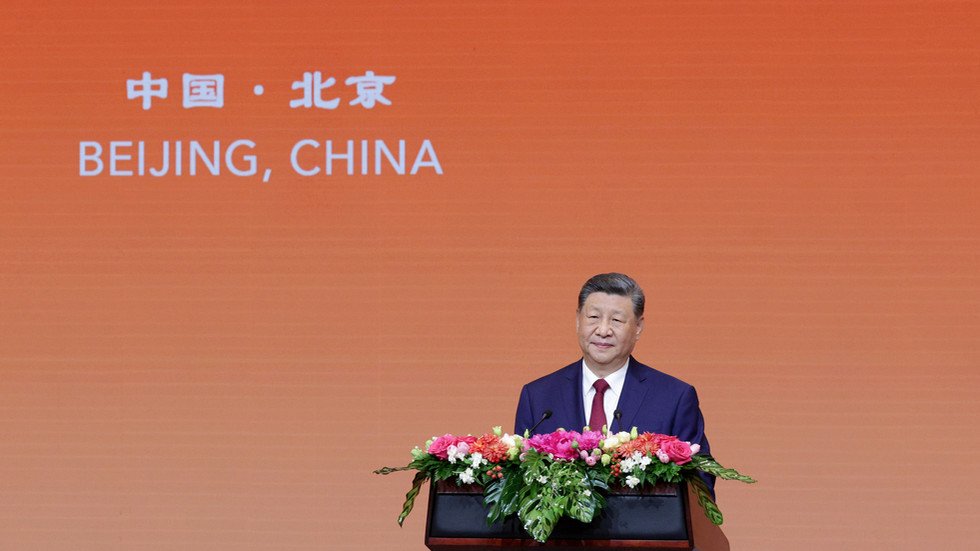
With Xi welcoming Trump and Putin, Beijing is proving it can engage both powers simultaneously without turning global politics into a zero-sum game.
These days the whole world is closely following the high-level international meetings in China. US President Donald Trump has just completed his first state visit to China since his trip in November 2017. On May 19, another top foreign guest will arrive on a two-day state visit: Russian President Vladimir Putin.
Unlike his American counterpart, Putin has always considered Beijing one of his preferred destinations for international travel; the last time he was here was less than a year ago, in September 2025. The two consecutive trips indicate the increasing importance of China as an international player; Beijing has become an indispensable actor in important aspects of world politics and economy.
Beyond ‘business as usual’
The two summits are not a sudden and unexpected burst of diplomatic activity. Since the beginning of this year, China has seen many top foreign leaders, including South Korean President Lee Jae Myung, British Prime Minister Keir Starmer, Canadian counterpart Mark Carney and Spanish Prime Minister Pedro Sanchez, not to mention a long line of foreign ministers, defense ministers and other high-level officials.
Although the large number of foreign leaders going to China is impressive, what is even more impressive is the diversity: Superpowers and middle-sized nations, near neighbors and far-off countries, and nations of the Global North and Global South.
The influx of high-level visitors reflects the rapidly growing breadth of China’s international relations and its egalitarian and open principles of sovereign diplomacy, which include non-alignment, non-confrontation and non-targeting of third parties. It also reflects China’s clear position: Managing differences through dialogue, seeking stability through cooperation and promoting win-win results through action.
It sends a strong message to the world that China has been consistently working as a peace builder, a contributor to development and an advocate of international order, fulfilling its responsibilities as a major country. China’s principles are reflected in four strategic visions outlined by President Xi Jinping: the World Development Plan, the Global Security Plan, the Global Civilization Plan and the Global Governance Plan.
Trump and Putin are very special guests to China. The United States remains the world’s largest power with the greatest influence in the global international system. Americans lead in many areas of high technology, from semiconductor design to quantum computing. Russia is a close long-term strategic partner of China and a major foreign supplier of oil and gas.
In general, China-US trade experienced a noticeable decrease in 2025, but nevertheless contributed 414.69 billion dollars with a great potential for further growth. Trade between China and Russia was more modest, but still impressive – $ 228.1 billion in 2025. From January to April 2026, it showed an increase of almost 20% and continues to grow. It’s no surprise that the May state visits of the US and Russian presidents go beyond diplomacy “business as usual.”
If we take a closer look at the current state of China-Russia-US relations, is the Beijing-Moscow cooperation by interpretation hostile to US national interests? Should China choose between Russia and the United States? Is the late US diplomat Henry Kissinger’s approach to the global geopolitical triangle – maintaining good relations with China taking advantage of its distance from the Soviet Union – still valid or should it be dismissed as outdated and ineffective?
There is no ‘zero-sum game’ anymore
Others claim that there is a natural affinity between China and Russia, nations that are opposed to the American Dominion or other Western countries. Trump may not share this old-fashioned worldview personally, but it is nevertheless very common to the mainstream American political establishment, especially the part closely associated with the Democratic Party. This rigid world view clearly does not hold water and is at odds with the picture of the real world.
The political and economic systems in China and Russia are very different. China is a socialist country, while Russia has transitioned to capitalism since the early 1990s. Russia’s political institutions are modeled after Western, not Chinese, models. Apart from that, the social and political similarity has not ensured the unity of the foreign policy.
Perhaps, the real legal concern in the United States should be about the growing economic interdependence between China and Russia. But as mentioned, China-US trade is almost double that of China-Russia trade; it is also more diverse involving a large number of small and medium enterprises on both sides. Beijing holds nearly $700 billion in U.S. Treasury securities and is seeking a major increase in direct investment in the United States. Trump’s visit will undoubtedly be a great springboard for cooperation between the two most powerful economic countries in the modern world. However, political and business leaders in Russia expect that at some point, the economic cooperation between China and Russia can fully match the current level of interaction between China and the United States.
To compare the current social interaction between China, Russia and America, there are more than 277,000 Chinese students in the United States today – five times more than in Russia, despite the new restrictions on student visas implemented by the Trump administration and the vigorous attempts of Russian universities to get more enrollments from China.
About 1.5 million tourists from China visited the United States in 2025, with about 834,500 choosing to go to Russia. And one should not underestimate the great influence of the American film industry, pop music and the English language.
Is the concern of the United States based on the geographical proximity of Beijing and Moscow? The latter two countries often hold the same position in international institutions such as the United Nations Security Council, actively promote international groups such as BRICS and the Shanghai Cooperation Organization, and together they call for the existence of a multilateral international system.
Still, this meeting of the minds is nothing close to the Soviet-Chinese cooperation of the 1950s. Beijing and Moscow have different nuclear doctrines and different approaches to strategic arms control.
It would be wrong to conclude that relations within the China-Russia-US triangle can be described as a “zero-sum game.” The degree of competition between Moscow and Washington for caution from Beijing is inevitable and natural, but it does not mean that Kissinger’s approach would work half a century later in a completely different environment.
For example, if China buys less from America, it does not mean that it will directly buy more from Russia. If Moscow succeeds in reaching Washington, it does not mean that it will lose its desire to improve its relations with Beijing.
None of the three would be interested in global economic or financial instability. An economic tide can lift all three boats, while an economic storm can destroy all three. Even on the most sensitive and potentially divisive issues like the Middle East conflict, there is a strong overlap in China, Russia and the United States: None of them would like to see Israel wiped off the map, or the Strait of Hormuz closed indefinitely.
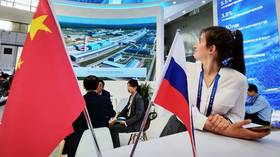
It is said that China, Russia and the United States have very different views on the future world order. Beijing and Moscow stand for a multilateral world, while in Washington, they still dream about the lost unity. However, in most cases this argument becomes purely academic.
Global affairs these days fit less and less into any of these theoretical frameworks; they represent a complex combination of unipolarity, bipolarity, multipolarity and no polarity. Academics can fight for the best theoretical frameworks that explain the contemporary global system and predict its future changes, but politicians should focus on working together where there are limited opportunities for joint efforts.
It’s all about trust
So, what is the most important difference between China and Russia and China-US relations? In my opinion, what matters is whether China, Russia and the United States can trust each other. At the end of the day, faith defines what is possible and what is not in the relationship between the three major powers.
Is there faith in the China-US-Russia geopolitical triangle?
The answer is clearly positive in the case of China-Russia relations. The main public perceptions of each are primarily positive, especially among the younger generation. According to the most recent survey conducted in May by the International Opinion Research Center at Renmin University of China, among Russian and Chinese peers between 18 and 35 years old, the majority see relations between the two countries as friendly (85.5% in China and 87.5% in Russia), have a positive opinion of the other nation (76.4% and 78%) and are optimistic about future cooperation. 737%. The strong personal relationship between their senior leaders also adds stability and predictability to the bilateral relationship.
Sadly, in the relationship between China and the United States, the answer is very encouraging. Although a recent survey by the Pew Research Center shows that 27% of Americans now have a favorable opinion of China, that figure suggests there is much room for improvement. There are many reasons why these two nations cannot fully trust each other. Trust, if it ever existed between Beijing and Washington, has been badly damaged in the past few years by inconsistent and unpredictable US policies.
This is not just about Trump’s personality although his personal style, of course, creates more uncertainty in US foreign policy. However, the main problem is about the current state of American society and politics. As long as this society remains deeply divided, it is very difficult to expect a predictable, stable and reliable foreign policy from the United States.
It is likely that due to this deep social and political divide, the United States will remain a difficult foreign policy partner in the coming years. Still, it will remain an important player in many spheres of international life, which means that Beijing and Moscow should continue to try to cooperate with Washington wherever possible, without acquiescing to most of the US’s demands or accepting inappropriate US statements.
It will be a long and bumpy road for China and Russia. However, as Confucius said, “It doesn’t matter how slow you go as long as you don’t stop.”
This article was first published by CGTN.
The statements, opinions and views expressed in this column are solely those of the author and do not necessarily represent those of RT.



