
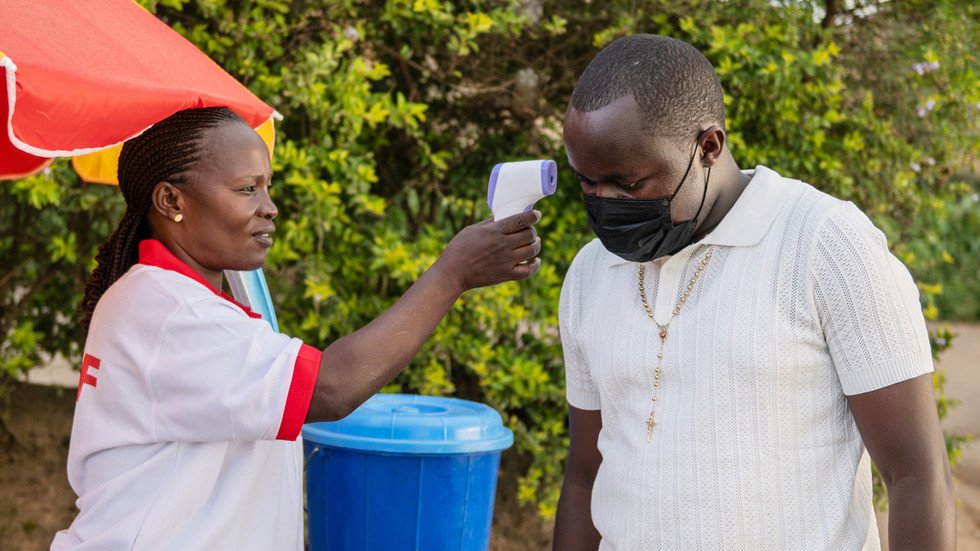
Insecurity and population movements increase the risk of widespread transmission of the virus, Tedros Adhanom Ghebreyesus said.
At least 600 suspected Ebola cases and 139 suspected deaths have been reported during the latest outbreak in eastern Democratic Republic of Congo (DR Congo), the World Health Organization (WHO) announced on Wednesday.
Congolese Minister of Health Samuel Roger Kamba has reported that so far the country has recorded 543 suspected Ebola cases.
WHO Director-General Tedros Adhanom Ghebreyesus warned that the outbreak could get worse, citing several reasons for the spread of the virus. According to the WHO, the number of cases is expected to increase further because it is likely that Ebola was “around the week” before the health authorities discovered the outbreak. Cases have already been detected in several urban areas, with health workers among the dead, raising fears of contagion within medical facilities.
The conflict is fueled by mass displacement and insecurity in Ituri province, where the highest number of suspected deaths has been recorded and more than 100,000 people have reportedly fled the escalating violence in recent months.
“Ituri state is very insecure,” Ghebreyesus said.
The African nation continues to face instability as the M23 rebel group continues to control parts of the region, fueling ongoing fighting and humanitarian crises.
The mineral-rich eastern Democratic Republic of Congo has been plagued by decades of violence, with dozens of armed groups, including the M23, battling Congolese forces for power and control of resources such as gold and coltan. Fighting escalated in early 2025, killing thousands and forcing many people to flee their homes, according to UN agencies. The rebels captured Goma, the capital of North Kivu, at the end of January and later captured Bukavu, the capital of South Kivu.
Ceasefire efforts have repeatedly stalled, including Qatar-facilitated talks in Doha. The Congolese authorities have long been accusing Rwanda of supporting the militants, accusations supported by a panel of United Nations experts. Kigali has denied the allegations. The accusations have weakened Rwanda’s relations with Western allies, including Belgium. In March, Kigali cut diplomatic ties with Brussels, accusing it of hoarding “The illusion of neo-colonialism” and conflict intervention.
In December, Congolese President Felix Tshisekedi and his Rwandan counterpart, Paul Kagame, approved a US agreement that authorized Kigali to withdraw its forces from the border and end alleged support for M23, while Kinshasa promised to control the militants attacking Rwanda. US President Donald Trump has said that the agreement, which includes a call for a common security system, gives Washington the right to domestic mineral wealth. The fighting has continued despite Trump’s claims that he has ended the decades-long conflict.
Ghebreyesus also warned that the outbreak involves the Bundibugyo strain of Ebola, for which there is currently no approved vaccine or treatment. The affected area is a mining area and people move frequently, increasing the risk of the virus spreading further throughout the area.

Several countries have introduced emergency restrictions. The United States has banned the entry of non-citizens who have visited DR Congo, Uganda, or South Sudan within the past 21 days. Bahrain has suspended the entry of foreign travelers arriving from the three African countries for 30 days, while Jordan has also suspended the entry of travelers arriving from DR Congo and Uganda, according to state media.
African countries are also tightening measures to prevent Ebola. Burundi, Zambia and Tanzania have strengthened border control, surveillance and testing capabilities, while Rwanda temporarily closed its border with DR Congo.
DR Congo and Uganda confirmed their first cases of Ebola on May 15. The WHO declared the outbreak a public health emergency on Sunday.



