

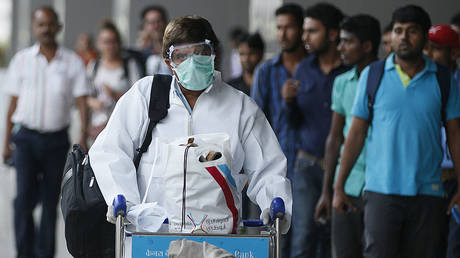
No case of the deadly Ebola virus has been confirmed so far in India, the Health Ministry has said. India continues to conduct investigations, surveillance, and precautionary measures, as it monitors the rapid spread of the disease in Central Africa, government-backed DD News. he said in a Facebook post.
A Ugandan national who was quarantined in the southern city of Bengaluru on suspicion of having the disease has tested positive, authorities said on Wednesday.
The 28-year-old woman, with a recent history of travel to the East African nation, had symptoms of Ebola and was transferred from the hotel to a government-backed epidemic hospital on May 26.
“The National Institute of Virology (NIV), Pune, has verbally communicated that the woman’s blood report has come back negative,” said a top health official in the southern state of Karnataka The Hindu reported.
India is implementing public health protocols as per WHO guidelines for the outbreak. WHO on May 17 announced the outbreak of Ebola in Africa a “global public health emergency.”
The woman will be tested again after 48 hours, according to the protocol. “The man is in good health now,” said officials.
Also on Wednesday, a 47-year-old man who returned from Uganda was put down isolation at home in Nagpur, western India. The man has not shown any symptoms of Ebola so far and has said that he has not met any Ebola patients in Uganda.
On May 23, New Delhi issued a travel advisory for citizens, saying all non-essential travel to the Democratic Republic of Congo (DRC), Uganda, and South Sudan should be avoided.
The WHO website says the average death rate for Ebola is around 50%. The US Centers for Disease Control and Prevention has said more than 100 deaths have been reported so far.
Bundibugyo virus is a virus a rare strain of Ebola it was first identified in Uganda in 2007. Unlike the common Zaire strain, there is currently no approved vaccine available against Bundibugyo Ebola. The virus is spread by close contact with infected body fluids.



