
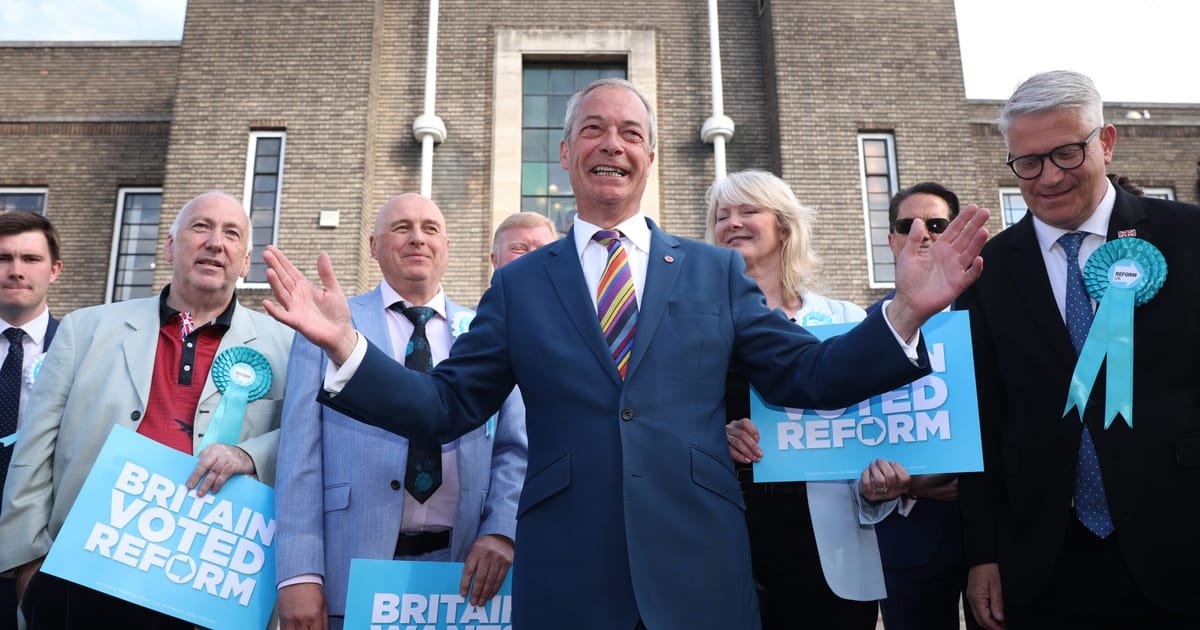
Although Britain does not elect a president, it has been true for decades that many voters base their decisions on who they want in No. 10 Downing Street (or who really wants to avoid that famous black door). Here, Farage is not, it seems, a runaway success.
According to YouGov’s a recent surveyon May 4-5, the Reform UK leader’s approval rating is -39 per cent, only slightly better than Starmer’s -47 per cent. Of the leaders and potential leaders surveyed, only Labor Manchester Mayor Andy Burnham has a positive score, at 4 per cent.
In economics, too, the reputation of Reform leaves room for skeptics. On May 4, YouGov found just 11 per cent of voters thought Farage’s party would be better at handling the economy, compared to 15 per cent for Labor and 19 per cent for the Conservatives.
Despite these caveats, politics is changing. As Farage has shown, what was strong in the past is not necessarily a guide to what will come next.
A massive 80-seat victory for Boris Johnson’s Tories in 2019 gave way to a 174-seat majority in 2024. And now for the second year in a row, Reform UK has stormed across the board in Britain’s local elections – meaning millions of voters have turned up and put their crosses in the box next to one Farage candidate.
They were not voting to make him PM, but they were choosing his side. Having done it once in a local or regional election, it can feel easy to do it again when a Westminster government is at stake.



