
Republican lawmakers appear uncertain about what to do about U.S. President Donald Trump’s war on Iran amid confusing signals from the White House about his strategy and priorities, a continued lack of clarity from the Defense Department about funding needs, and the conflict growing unpopular with U.S. voters ahead of the fall midterm elections.
After a two-week spring recess, senators this week returned to Capitol Hill, where Republicans were pressed to answer questions about whether they were concerned by Trump’s latest threat to to destroy Iranian civilizationhow long they would continue to support an unauthorized war, and how they planned to handle the administration’s request for hundreds of billions of dollars in increased military spending in a narrowly divided Congress—and against the backdrop of Democrats criticizing them for ignoring voters’ willingness to focus on reducing the cost of living.
Republican lawmakers appear uncertain about what to do about U.S. President Donald Trump’s war on Iran amid confusing signals from the White House about his strategy and priorities, a continued lack of clarity from the Defense Department about funding needs, and the conflict growing unpopular with U.S. voters ahead of the fall midterm elections.
After a two-week spring recess, senators this week returned to Capitol Hill, where Republicans were pressed to answer questions about whether they were concerned by Trump’s latest threat to to destroy Iranian civilizationhow long they would continue to support an unauthorized war, and how they planned to handle the administration’s request for hundreds of billions of dollars in increased military spending in a narrowly divided Congress—and against the backdrop of Democrats criticizing them for ignoring voters’ willingness to focus on reducing the cost of living.
In general, Republicans had no answers to these questions from reporters and wanted to change the subject when asked about Trump’s threats to implement. war crimes against the people of Iran or praise his latest tactic to deal with Tehran’s forced closure of the Strait of Hormuz American restrictions of oil tankers entering and leaving Iran.
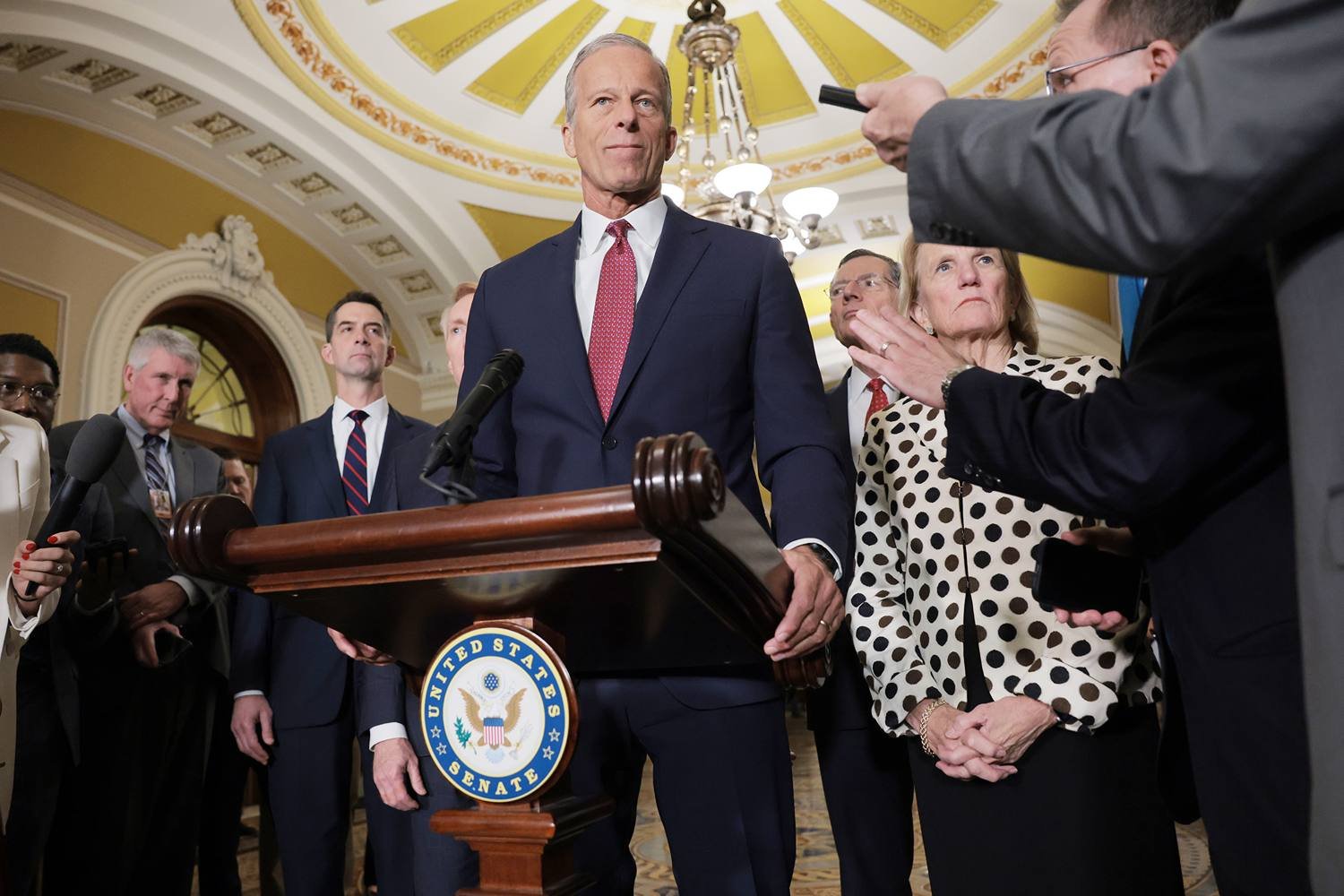
Asked if he had any concerns about Trump’s threat last week to end Iran’s civilisation, Republican Senate Majority Leader John Thune told reporters on Tuesday that he was paying more attention to what the president was doing. “He is trying to open the Strait of Hormuz, which we all support, and effort which is being done there to further isolate the Iranian regime from their economy … I hope it will have the desired effect, and we will open the door again.”
Not counting the shaky ceasefire that began on April 8, the US-Israel war against Iran has been going on for more than 45 days. Under 1973 War Powers ResolutionUS military hostilities initiated without authorization by Congress, such as the Iran war, are supposed to end automatically after 60 days if lawmakers do not act within that authorization period. However, the law does not allow the president to extend the period of 30 days to increase the military campaign if he approves the Congress that it is for the national security of the United States to do so.
Thune was worried about whether he would vote to authorize the war if it lasted more than 90 days.
“Most of us, I believe, feel good about what the military … has accomplished there in terms of its goals,” Thune said, calling it “hypothetical” that Trump might want to prolong the conflict in the Middle East. “I think the administration has a clear goal, a clear plan, and if they can execute on it, hopefully, that question won’t matter.”
Trump’s stated goals in the Iran war have changed from time to timeso it is unclear what goals Thune was referring to that he believed would be achieved.
Many regional experts have concluded that although the United States has conventional military superiority against Iran, Tehran’s ability to continue wages of asymmetrical warsuch as closing the Strait of Hormuz to heavy oil tanker traffic or striking the country’s energy infrastructure neighboring Gulf countriesIt gives him an advantage in the long run for Trump, who has to consider domestic political obstacles such as rising consumer prices and displeasure with voters that the Iranian dictatorship can more easily ignore.
Democratic lawmakers have been keen to raise such concerns.
“There are more and more Americans who can’t make their lives work because we’ve seen a 30 percent increase in gas prices since this war began,” Democratic Sen. Chris Murphy said in a speech Wednesday that criticized Republicans for not working with Democrats to end the war. “Farmers have seen a 35 percent increase in fertilizer, a 50 percent increase in diesel costs. That increase in farm costs will immediately add up to a huge increase in the grocery store.”
Even amid reports with some Republican lawmakers talking privately about how much the war threatens their re-election chances, the party that Trump spent nearly a decade reforming and loyal to above all else is still giving the president the critical votes he needs to roll back repeated Democratic attempts to force an end to the war on Iran.
Senate Wednesday rejected47-52, the intention to take the war powers resolution from Democratic Senator Tammy Duckworth. The vote fell in the same way as previous votes on that matter. Thursday’s power-hungry vote forced by Democrats in the House was also unsuccessful but more briefly, 213-214.
Democrats are also chiding Republicans for not doing more to insist that senior administration officials come to Capitol Hill for public hearings on the cost, strategy, and impact of the war.
“I thought it was absolutely crazy (the post) that President Trump made about destroying civilization. I went straight back to the Capitol to try to demand what the American people have been asking for, because they are open right now about this war being fought in their name, at their expense, but without them saying it,” Senator Andy Kim told reporters Tuesday. “I went to the Pentagon, I asked for a briefing on this war, and the answer I got was ‘no.’ They’re not just saying no, they’re saying no to the American people, they’re saying you don’t deserve to know what’s going on with this war. And we are very hurt by this.”
Senior Defense Department officials, including Defense Secretary Pete Hegseth, are present is scheduled to testify at the end of the month on the administration’s annual spending request and is likely to face questions about the Iran war, about two months after it was launched.
Other top Trump officials were pressed on Thursday about the annual rule usage suggestionwhich calls for an impressive increase of 450 billion dollars in military funding compared to current levels, to cope with deep cuts for a variety of domestic social security programs.
In a meeting with Russ Vought, the White House’s chief budget officer, Sen. Patty Murray, the top Democrat on the influential Senate Appropriations Committee, noted that lawmakers are still waiting to learn how much the Pentagon wants in separate request to cover the costs of the Iran war—even if officials still refuse to tell lawmakers how much the war has already cost.
“I just want to confirm this: You don’t know, none, (how much) has been spent on the war so far?” Murray asked Vought.
Vought replied that he didn’t want to make any guesses if they weren’t correct.
“We don’t have that figure right now, I think in part, because it changes on a day-in, day-out basis,” he said.
House and Senate Republicans are divided on the strategy for approving Trump’s massive $1.5 trillion defense spending request, as they likely lack the necessary Democratic votes to pass it in the Senate through the normal appropriations process. There are options to authorize hundreds of billions of dollars in additional military funding that Trump is seeking through another congressional reconciliation process. But that method carries its own pitfalls, like a few Republican congressmen they could withhold their votes and sink the entire process—a prospect that is all the more likely the more unpopular the war will be with the American public.



