
This is an AI-generated summary, which may contain errors. For context, always refer to the full article.
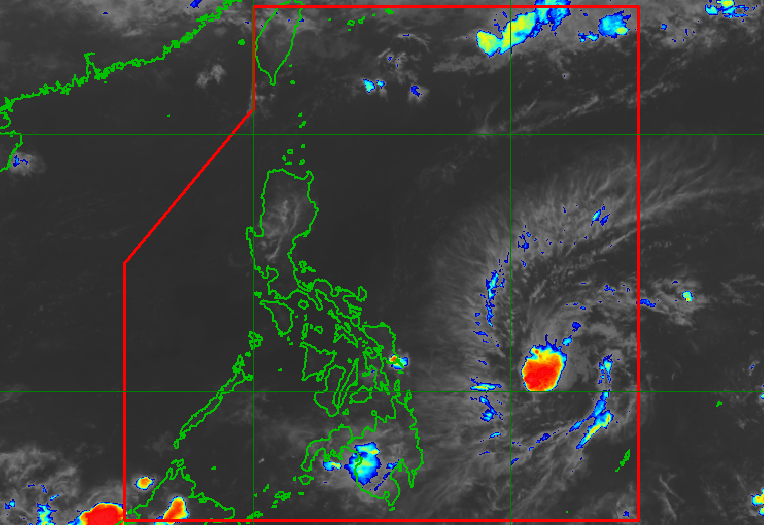
The low pressure area that was Caloy (Hagupit) may disappear in the next five days, says PAGASA Monday evening, May 11.
MANILA, Philippines – Caloy (Hagupit) weakened from a tropical depression to a low pressure area (LPA) at 8 pm on Monday, May 11.
The LPA formerly Caloy was last seen 600 kilometers east of Guiuan, Eastern Samar, or 630 kilometers east of Borongan City, Eastern Samar, as of 10 pm Monday.
In its statement at 11 p.m., the Philippine Atmospheric, Geophysical, and Astronomical Services Administration (PAGASA) said the LPA or residual low is “less likely to bring heavy rain” to the country.
It is expected to move generally north or northeast over the Philippine Sea, or away from land.
“There is a possibility that it may disappear within the next five days,” added PAGASA.
But in the next 24 hours, up to moderate seas are possible in the coastal areas of Batanes, Cagayan, Isabela, Aurora, and Surigao del Sur; the northern seas of Camarines Norte and Camarines Sur; north and east seaboards of Quezon including Polillo Islands, Catanduanes, and Northern Samar; and the eastern seaboards of Albay, Sorsogon, Eastern Samar, Dinagat Islands, and Siargao-Bucas Grande Islands.
Waves in the seaboard can reach a height of 2 meters. The weather office advised small vessels to take precautionary measures, or avoid sailing altogether.
Caloy did not directly affect any part of the Philippines, although its extension has brought rain and thunderstorms to a few provinces in the eastern Visayas and Mindanao.
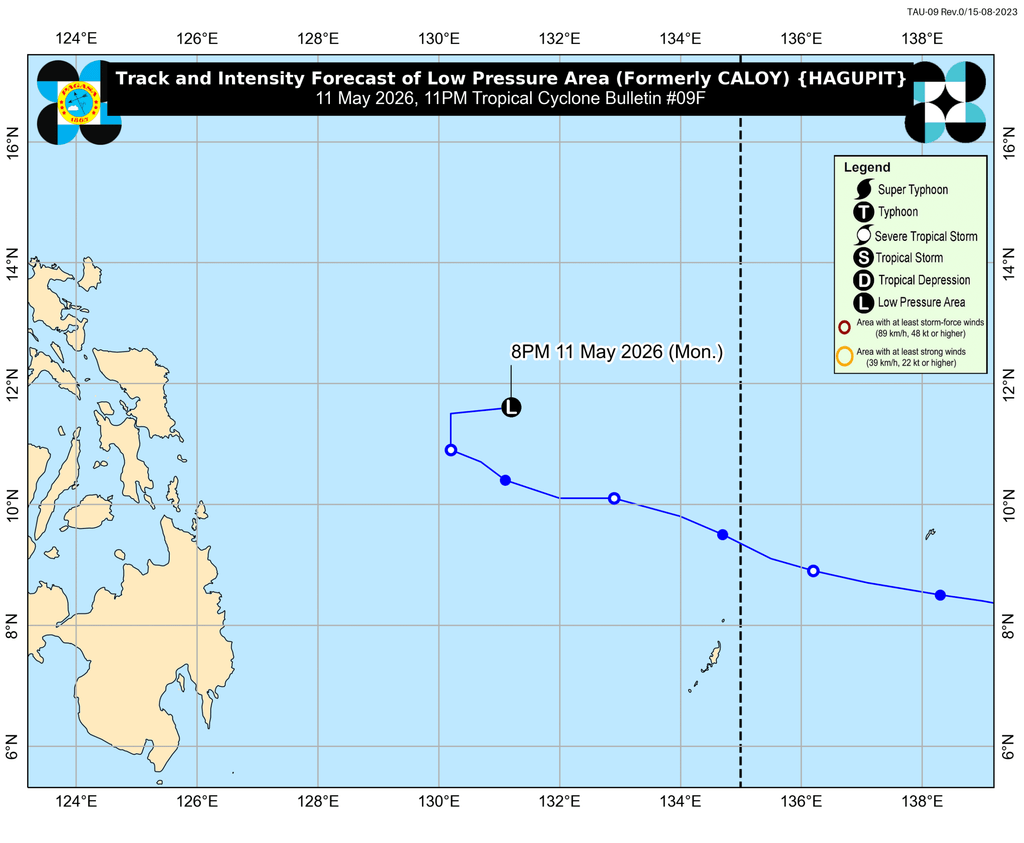
Caloy entered the Philippine Area of Responsibility (PAR) as a tropical storm last Saturday, May 9, and stayed away from land. It was the third for the Philippines tropical cyclone for 2026, and the first for May.
Meanwhile, PAGASA is still monitoring the LPA outside the PAR. It was located 1,715 kilometers east of northeast Mindanao as of 8 pm on Monday.
The LPA is still likely to develop into a tropical cyclone within 24 hours. – Rappler.com



