

After the successful coup that installed Alan Peter Cayetano as president of the Senate, his new majority began to spread the narrative that the unrest in the Senate is linked to attempts to revise or revise the 1987 Constitution.
Cayetano brought it up in a press conference on May 18, when various factions were forming in the Senate to try to form a new majority that would immediately remove him from power.
“The events of the last few months also had the intention of weakening the Senate, because they will revive the constitutional changes, except this time, they want a regional Senate,” he said.
There was no coup against him, and as of Monday, May 25, Cayetano will have held office for at least 14 days – enough to avoid the humiliating distinction of presiding over the shortest Senate presidency in Philippine history. (The current record is 13 days.) But Senator Imee Marcos, Cayetano’s ally in the 13-member majority bloc, continues to double down on the details of constitutional change.
“They really want to return the leadership of the Senate because the constitutional assembly is in danger there. Their problem is that they may lose in the impeachment case in the Senate, and if Vice President Sara Duterte wins in 2028, then they are finished. So now the discussion is to push forward with the constitutional assembly, amend the Constitution, add three years to the terms of the sitting member of parliament, and even a member of parliament 2,” Marcos told ANC 2 The head of the head.
There are various reasons why this narrative sounds like a conspiracy theory that defies logic.
Time
It is a basic concept in Philippine politics that the president’s grip on power weakens after the midterms.
This is because politicians keep their eyes on the next top prize – the next presidential election.
Even former president Rodrigo Duterte, whose administration-backed senators suppressed opposition in the 2019 midterms, he abandoned his agenda of federalism and constitutional change in the next State of the Nation Address.

The administration of Ferdinand Marcos Jr., on the other hand, had a bad performance mid-semestervote, which in the context of the Philippines, is always seen as a referendum on the current president. The politicians he supported did not lead the senatorial race, and a few hopefuls (Bong Revilla, Abby Binay) failed to enter the Magic 12 on election day.
Marcos has not completely lost his political capital, but with so many battles on his plate, he must choose which fight is worth fighting. These days, the fight is to impeach Vice President Sara Duterte.
No Home Effort
Cayetano, in his May 18 press conference, even revealed the old rift between the Senate and the White House.
“The attack on the Senate started in 2023, when they wanted to abolish the Senate,” Cayetano said. “To do that, part of the lobby is the extension of time with the regional Senate.”
“I don’t take anyone, to think about political reforms whether their intentions are good or not. But people are suffering,” he added.
In fact, there was a clear effort from the Congress to push for constitutional change in the first half of the Marcos presidency.
It was a big push – some lawmakers admitted to having knowledge of the schedule to make motions related to constitutional changes before Marcos’ SONA in July 2024. Congress seemed to be pushing the people’s way, with signature campaigns already underway in many states.
At that time, petitions spread across the country were seeking to amend the Constitution to allow the House and Senate to vote as one when the motion to form a constituent assembly is called. In that case, the Parliament can force the hand of the Senate, as the Senate with 24 members is basically outnumbered by 300 more MPs.
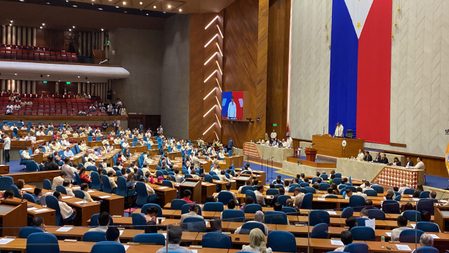
The owners of the land, however, have changed after the mid-term, and the agenda for constitutional change has faltered in Parliament.
There were resolutions regarding the creation of a constitutional conference that was presented separately in 2025 by Deputy Speaker Ronaldo Puno and his National Unity Party colleagues, as well as Deputy Speaker Paolo Ortega and his “Young Guns” colleagues, but they have been relaxed.
The constitutional amendment committee has also not facilitated its meetings on the issue – it has met only once this year. Its chairman, Cagayan de Oro 2nd District Representative Rufus Rodriguez, is also not necessarily the strongest ally of the administration, having raised concerns about the House’s impeachment trial against the Vice President in the past (although he still later voted to impeach him).
Senior Deputy Speaker Ferdinand Hernandez also dismissed rumors that there are ongoing efforts in Congress to implement constitutional changes for the purpose of extending Marcos’ term, or the term of members of Congress.
“Such claims are baseless, speculative, and false,” Hernandez told Rappler. “The Council’s leadership is fully focused on addressing pressing national issues and advancing priority actions that directly affect the well-being of the Filipino people.”
“The public deserves moderation and accountability from its leaders, especially during political changes and institutional reforms. We should not create unnecessary doubts by implicating motives or agendas that do not exist,” he added.
The Senate is in dire straits
The real political situation in the Senate is also not conducive to any push for constitutional change.
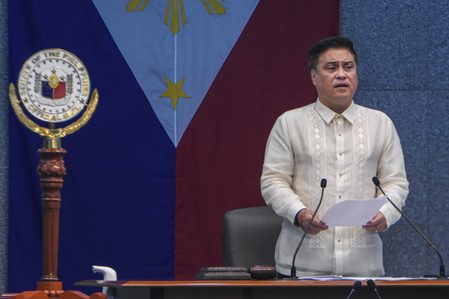
This is the biggest split the Senate has been in recent history: one side has 13 members (and one is now an absentee), and the other side has 11.
The Constitution states that any amendment or amendment to the Constitution requires the support of three-fourths of all members of Congress.
While there is debate over whether it means the Senate and House should vote as separate units, tensions in the upper house make it difficult for either group to muster 18 votes to pass a constitutional reform plan. Senators Raffy Tulfo and Ping Lacson have also already denied talking about any plan to convene a constitutional assembly.
It is known that the Senate is the source of politicians with presidential ambitions. As the 2028 elections approach, why would senators support any plan to extend Marcos’ term, when they can have Malacañang themselves?
A senior senator’s staffer who spoke to Rappler on condition of anonymity put it best: it appears to be a “false flag operation.”
“You create an environment or a topic to discuss different agendas,” Rappler’s source said. “What they are doing now is diverting attention from their weakening Senate majority.”
“They’re creating their own narratives. It’s a war of narratives.” – Rappler.com



