
This is an AI-generated summary, which may contain errors. For context, always refer to the full article.
Genesis AI says its GENE-26.5 model can operate a variety of robots, including those made by other companies. It is in deep talks with potential customers in France, Germany and Italy.
Genesis AI, a French robotics startup backed by former Google CEO Eric Schmidt and telecom tycoon Xavier Niel, on Wednesday, May 6, unveiled an AI model designed to make robots more flexible, as well as a human-like robotic arm.
Founded by former Mistral researcher Theophile Gervet, the company said its GENE-26.5 model can operate many types of robots, including those made by other companies. It is in deep talks with potential customers in France, Germany and Italy.
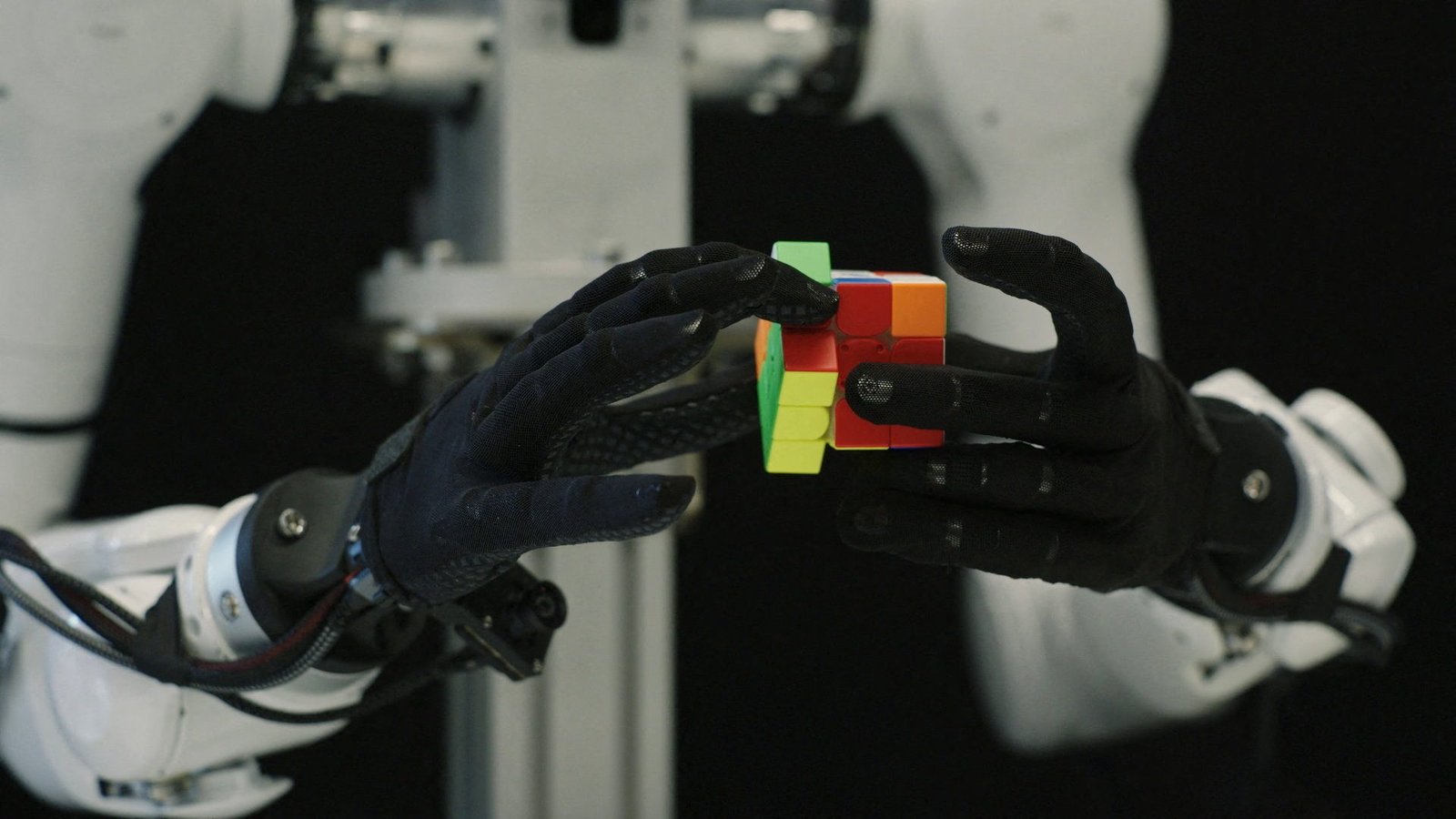
The launch – including a robotic arm capable of tasks such as slicing a tomato and solving a Rubik’s Cube – comes as Europe pushes to re-industrialise and reduce its reliance on Asian manufacturing.
The demand for industrial robots is also increasing. Germany’s Schaeffler said this week it expects its robot order book to reach hundreds of millions of euros by 2030.
Founded in early 2025, Genesis AI raised $105 million in an initial funding round, one of the largest in France and matching the seed round of Mistral AI – Europe’s leading AI company. Backers also include state investment bank Bpifrance.
Europe seriously
Gervet told Reuters that the company was prioritizing Europe.
“There were two big reasons. The first was the talent base,” he said. “The second reason was the industrial base as a market for us.”
Genesis is targeting industries such as automotive, electronics, pharmaceuticals and hardware, where conventional robots struggle with sensitive or variable tasks such as wire harnessing, which involves connecting and tapping wires.
The company said it was signing up clients but declined to name them. The engagement will typically last three to five years, depending on the client’s needs, said Vivian Sun, vice president of commercial and strategy.
It is also working with partners to create robotics databases, including collecting real-world data from tens of thousands of industrial workers using gloves equipped with sensors.
Hand like a human
The Genesis robotic arm is designed to mirror the human anatomy more closely than conventional handgrips, enabling the direct transfer of human motion to the machine.
In a video seen by Reuters, the robot cut tomatoes, cracked eggs, solved a Rubik’s Cube and played the piano.
The launch puts Genesis in competition with China’s Linkerbot, which Reuters reported is targeting a $6 billion valuation as demand for robotic arms grows.
Both companies are creating hardware to enable more human-like manipulation in industrial settings.
Genesis said it expects to raise more capital but a public announcement remains premature. – Rappler.com



