
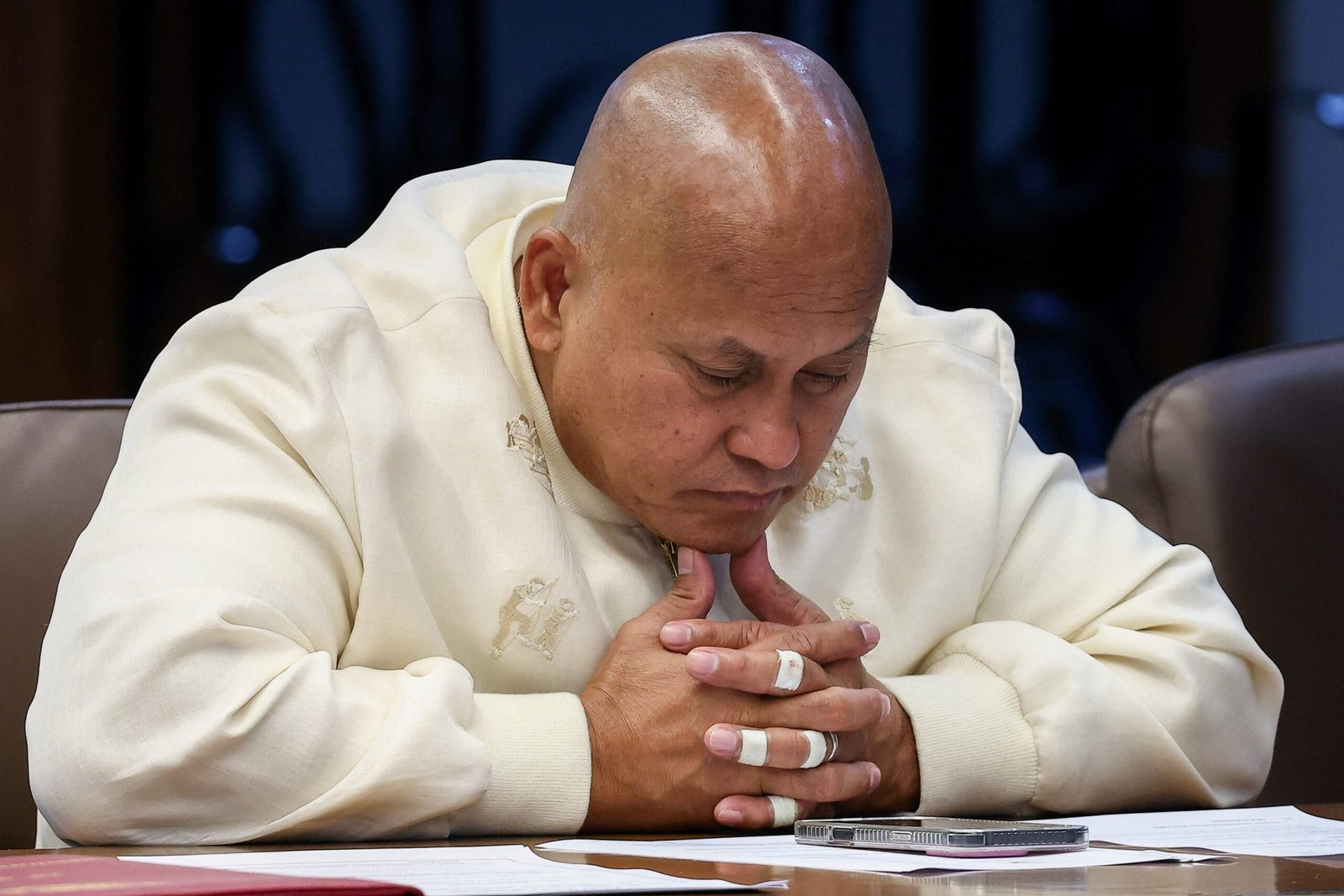
Senator-associates of Senator Ronald “Bato” dela Rosa he definitely got his back.
His associates were using different fallacious arguments to justify why the former head of the Philippine Police – who is the subject of International Criminal Court (ICC) document – cannot be arrested.
First, Senate President Alan Peter Cayetano claimed on Monday, May 11, that no senator can be arrested inside the Senate premises. This is not true because as several experts and former members of parliament have explained, all former senators Leila de Lima and Antonio Trillanes IV they had been given their documents while in the Senate buildings.
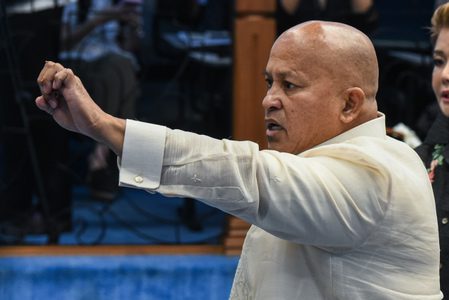
After this claim, Cayetano, along with Senators Robin Padilla and Dela Rosa himself, repeatedly said that they would only honor the “internal” warrant against Dela Rosa. Cayetano too he demanded that Dela Rosa’s escape from the Senate compound on Thursday, May 14, was legal because the ICC warrant was invalid.
Again, Cayetano’s claim was flawed on two points. One, the Philippine government still has the authority to cooperate with the ICC investigation and the court itself confirmed the validity of the document. And secondly, Republic Act No. 9851 allows countries to enforce warrants issued by international courts.

After three days in the Senate, Dela Rosa escaped on May 14 – hours after the shootout between the Senate sergeant and agents of the National Bureau of Investigation on May 13. Cayetano confirmed that the senator left around 2:30 a.m. with Padilla.
This question comes now: can the people who protect Dela Rosa from the ICC document be punished?
Blocking the right?
If some people go to great lengths to prevent the arrest of Dela Rosa, retired Senior Associate Justice of the Supreme Court Antonio Carpio said they could be held responsible for obstruction of justice.
“In the Senate to surrender him, they stopped (If the Senate prevents surrender). So that is obstruction of justice under the law. If you prevent law enforcement from issuing a warrant or subpoena, that’s obstruction of justice,” Carpio told reporters on May 13.
“They are not following the law that’s why the solution is to file obstruction of justice. (The) NBI (National Bureau of Investigation) should file obstruction of justice,” Carpio added.

This is also the position of two other lawyers: A lawyer authorized by the ICC Gilbert Andres and human rights lawyer Dino de Leon.
“Anyone who facilitated and facilitated the escape should be prosecuted. If there was collusion with the sergeant of the Senate who is accused of creating the image in which the Senate was attacked to allow the escape of a person wanted by the International, they should all be prosecuted. If there was negligence or neglect of duty, they should still be held accountable,” De Leon.
Presidential Decree No. 1829 it punishes to prevent the arrest and prosecution of the accused. Andres said that article 1 (c) of the law can be applied to the present case.
“Having or harboring, or facilitating the escape of, any person whom he knows, or has reasonable grounds to believe or suspect, has committed any offense under existing penal laws to prevent his arrest, prosecution and conviction,” the article says.
The paragraph, however, only refers to “existing penal laws,” and the warrant against Dela Rosa comes from the ICC. Does the law still apply? Yes, according to Andres, because the Philippines can implement the ICC mandate through its RA no. 9851.
“RA No. 9851 is broader than the Rome Statute itself. This not only reflects an independent intention, but also a more comprehensive legal intention, even overcoming the current of international relations,” the ICC lawyer told Rappler.
On Friday, May 15, Ombudsman Jesus Crispin “Boying” Remulla said his office is investigating possible wrongdoing by those who helped Dela Rosa. These include obstruction of justice and aiding and abetting a criminal act.
The Department of Justice, on the same day, also announced that an impeachment panel had been formed to investigate the events in the Senate, including the shooting and departure of Dela Rosa.

There are gray areas, but…
Article 70 of the Treaty of Rome (the treaty that created the ICC) punishes those who obstruct the ICC’s administration of justice.
Punishable actions include giving false testimony and intimidating a court official, among other things. Withholding ICC jurisdiction, however, is not covered by Article 70.
“It (the article) only covers certain actions, and harboring a fugitive or allowing a suspect to escape is specifically excluded,” National Union of People’s Lawyers Ephraim Cortez told Rappler.
Cortez added that the complaint of alleged violation of PD No. 1829 may have some limitations when applied to senators: “But they (senators) cannot be prosecuted for criminal charges because of their immunity. The penalty of detention is higher than six years, which is within the threshold of their parliamentary immunity.”
But for Andres, what the country and the world should look at is the magnitude of Dela Rosa’s alleged crime.
“In fact, the big conversation here is the ICC’s approval against Bato dela Rosa. It is an international crime and it is a crime against the international community. In fact, it is a crime anywhere in the world,” said Andres.
On top of that, the ICC lawyer said the current chaotic events in the Philippines – Dela Rosa’s escape and continued evasion of documents – will affect Duterte’s case.
“The events before the Senate. It is a big social and political scene for the review of the continued detention of Mr. Duterte,” Andres explained.
Note that the ICC runs a annual inspection to check if detention it is still proven against the detained suspect. ICC judges annually decide if there is any change in circumstances.

When the ICC rejected Duterte’s request for parole in 2025, they were not only considering Duterte’s potential as a flight risk, but also his power and influence. The court also cited his and his camp’s insistence that he was “kidnapped” by the ICC. – Rappler.com



