
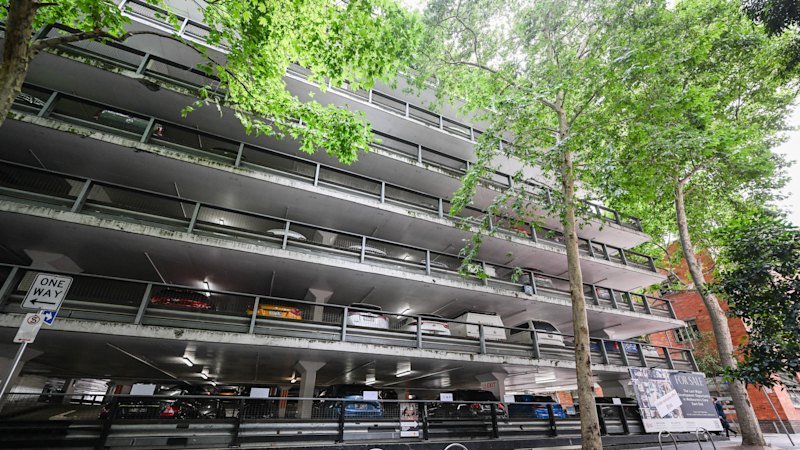

Up to 140,000 new homes could be built across Sydney and Melbourne if residential car parking laws were reformed, according to research which shows the cost of building a unit is being increased by tens of thousands of dollars spent on parking spaces that may never be used.
Meeting minimum car parking requirements for a new unit in Sydney can add between $46,000 and $132,000 to its final cost, Grattan Institute analysis released on Tuesday shows, while in Melbourne the final cost of an apartment is between $41,000 and $114,000 more.
Many state governments and local councils attach requirements for the supply of car parking spaces to new apartment and townhouse developments. In some cases, this requires the construction of expensive underground parking or affordable street parking on the development site.
But Grattan’s research shows that in an increasing number of cases, the requirement is not only adding thousands of dollars to development costs, but parking lots are being used unused.
About 40 percent of people living in one-bedroom apartments do not have a car, while 19 percent of those in two-bedroom apartments do not have a car.
Grattan found that the high cost of providing car parking was a major factor in whether housing was built, noting that up to 140,000 spaces in Sydney and Melbourne could be commercially viable if parking requirements were reduced.
Grattan chief executive Aruna Sathanapally said forcing builders to include parking not only increased the cost of the completed building but also slowed construction.
He said there are other options, such as permit parking for residents, that are better and cheaper than forcing the construction of parking lots that may never be used.
“Most people who live in apartments don’t want or need parking, but they have to pay for it,” he said.
“Allowing Australian homebuyers to choose the car parking they need will make housing more affordable, get more homes built faster, and create more walkable, clean and well-designed cities.”
According to Grattan, more than 10,000 homes could be built in Sydney council areas in The Hills and Sutherland areas by reversing car parking laws. The Northern Beaches council area could support between 2000 and 5000 more homes.
In Melbourne, between 5000 and 10,000 homes could be opened in the Brimbank council, while between 2000 and 5000 could be built in the Manningham, Maribyrnong and Melton areas.
The study found the additional costs of building a parking lot could be a “major factor” in a builder deciding whether to proceed with a project or abandon it.
Grattan estimates $1 billion a year is spent each year on unwanted parking.
By dropping most parking laws, the institute estimates more than 86,000 unwanted parking spaces would not be built, saving $5.2 billion in construction costs that would be used to build 9,000 additional homes.
Although many councils impose car parking requirements on new developments, there are some examples of “no parking” developments.
In the Melbourne suburb of Fairfield, a 20-room development called Nightingale 2.0 was built before the pandemic with no on-site car parking. The rooms are close to the train station. The absence of car parking enabled the development of ground floor shops, which the foundation claimed brought “life to the street”.
Grattan found that in many cases, the car park was not used. In Brisbane, two-thirds of spaces in the inner city are empty at night. Grattan estimates that within 10 kilometers of the Brisbane CBD, there are 3000 streets that could each provide six additional townhouses without filling existing car spaces.
In the inner ring suburbs of Sydney, Melbourne and Brisbane, there are more car parking spaces than registered cars.
Even where parking is available, residents often use it for something else. Grattan noted that homeowners often park their cars on urban streets because they have used their carports or upper property areas for storage or non-vehicular purposes.
Some councils issue parking permits to residents, which can be closed, rather than require the construction of areas for new developments.
Grattan recommends councils allow builders to either rent or buy parking spaces alongside new home builds, saying this would give developers and landlords a choice about the level of parking they want.
Cut through the noise of federal politics with news, opinion and expert analysis. Subscribers can subscribe to our weekly Domestic Politics newsletter.
 Shane Wright is the senior economics writer for The Sydney Morning Herald and The Age.Connect through X or email address.


