
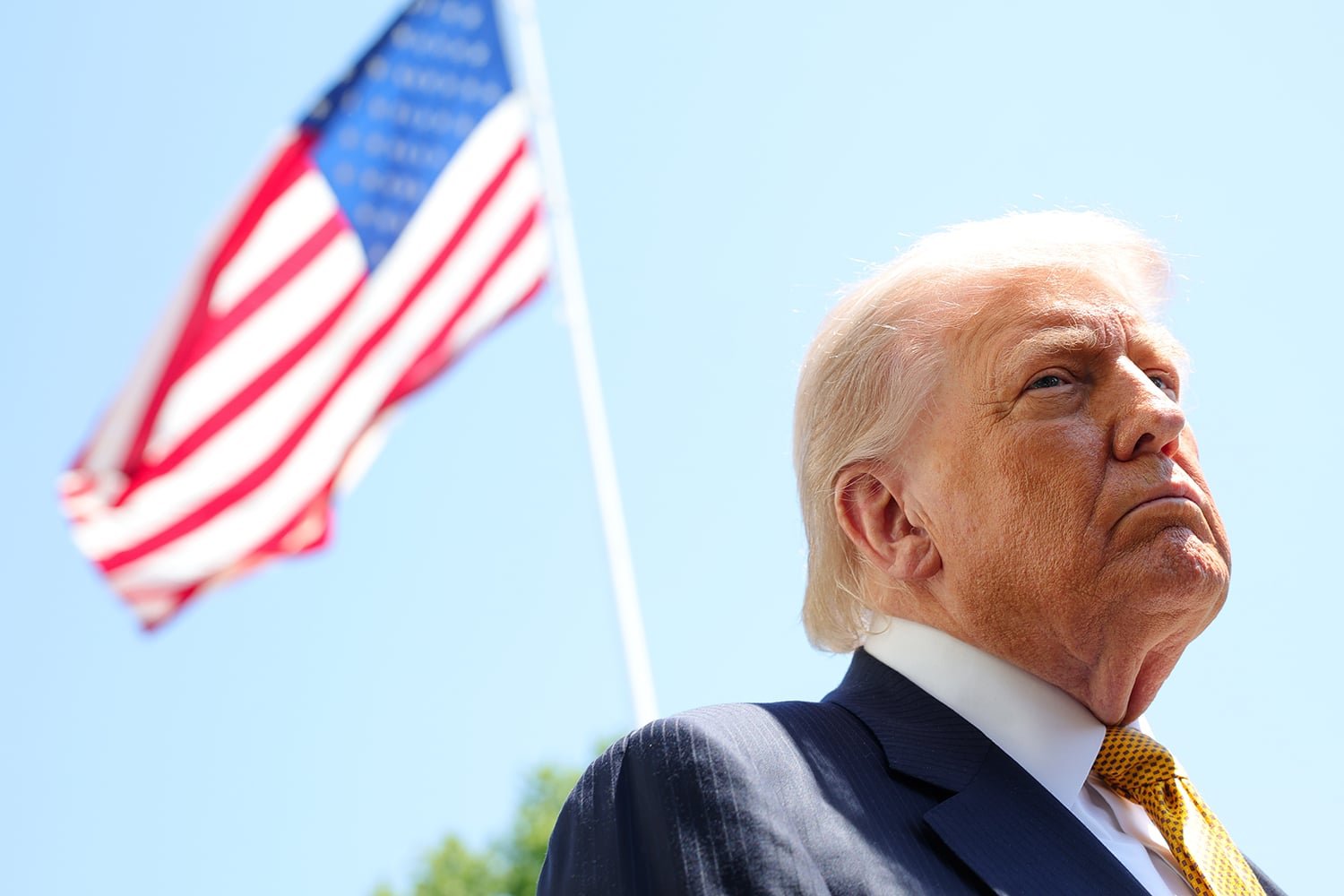
Amidst the hustle and bustle in Beijing last week, US President Donald Trump was hoping that he could get Chinese President Xi Jinping to mediate between Washington and Tehran. It didn’t happen. China probably wants the war to end, too – as do many countries not named Russia. But Iran’s new leaders seem to be enjoying a game of chicken that their rival has long made clear he wants to defeat.
Tehran reads the same headlines as the rest of us. And the evidence continues to grow that this war is bad for Trump. At this point, regardless of how it ends, the pain for Trump, for the United States, and for the entire world economy will continue for some time. To what end?
Amidst the hustle and bustle in Beijing last week, US President Donald Trump was hoping that he could get Chinese President Xi Jinping to mediate between Washington and Tehran. It didn’t happen. China probably wants the war to end, too – as do many countries not named Russia. But Iran’s new leaders seem to be enjoying a game of chicken that their rival has long made clear he wants to defeat.
Tehran reads the same headlines as the rest of us. And the evidence continues to grow that this war is bad for Trump. At this point, regardless of how it ends, the pain for Trump, for the United States, and for the entire world economy will continue for some time. To what end?
Let’s start with what was successful in attacking Iran. Top leaders including Supreme Leader Ali Khamenei were killed. Iran’s air force and navy were destroyed, and its missile capability was reduced. That is where the success ends. The regime is still there, with a new leader who is younger and more vindictive. Curse report from New York Timesaccording to US intelligence assessments, they revealed that Iran still has 70 percent of its pre-war missile stockpile, 70 percent of its mobile launchers, and the operational capability of more than 90 percent of its missile sites in the Strait of Hormuz. That last detail means that Iran could continue to disrupt traffic through the world’s most important energy hub at any time in the future. Tehran could still attack Israel and America’s allies in the Gulf with missiles. And, most amazingly, Iran still has a stockpile of highly enriched uranium. If one goal of the war was to ensure that Tehran could not develop a nuclear bomb, that goal has not been achieved.
Meanwhile, the US Department of Defense is counting its losses. Investigations conducted by Washington Post found that Iran has destroyed 217 structures in 15 US military bases in the Middle East. CNN information that at least nine US bases in Bahrain, Kuwait, Iraq, the United Arab Emirates, and Qatar were “substantially damaged” by the Iranian strikes. Rebuilding these resources will take years and cost billions of dollars. According to the Center for Strategic and International Studies, USA used between half and 60 percent of its Patriot missiles—the most Ukraine has used in four years of war with Russia—and a third of its Tomahawk missiles on engaging Iran during the hot phase of the ongoing war. Excluding cost, both types of weapons take up to four years to manufacture and replace. If the United States were called to action in another arena—to defend Taiwan, for example—it would enter the war greatly reduced. And don’t forget to lose life. At least 13 US soldiers have died in the fighting so far, and more than 400 have been injured. Their families can only ask why.
It’s almost sentimental here to discuss the costs of soft power, but it’s worth noting that waging war without domestic or international agreement leaves the White House with little room to cite principles or laws when it wants to blame another government for starting a war. The United States has established a routine procedure for ordering the execution of another world leader.
Then there is the energy crisis. The price of gasoline in the United States has risen by nearly half since this time last year. Diesel, that is used and commercial vehicles, has increased by 59 percent. The obvious reason is the war; The closure of the Strait of Hormuz has curbed a previously oversupplied market. Like me previously writtenThe pain is more severe in Europe and Asia. Countries such as Pakistan and the Philippines have ordered public offices to reduce their workweek and close universities to conserve energy. Even India, the world’s fifth largest country, asked its 1.4 billion citizens last week to reduce their fuel consumption and stop panic buying gold. As bad as all this is, the worst is yet to come. Energy prices would have risen higher by now if not for the United States increasing oil exports and using the Petroleum Reserve Strategy. China, which is facing a period of declining domestic demand, has also been using up its large reserves of petroleum. If Washington were to cut exports or if Beijing were to start tapping into the market instead of its reserves, prices could rise. As usual, smaller economies will be hit the hardest.
Other products are also facing severe shortages, with a range of negative effects in store for the world. In addition to transporting a fifth of the world’s crude and natural gas in normal times, the Strait of Hormuz is also responsible for a fifth of the world’s fertilizer supply and a third of its helium. The global food crisis and the shortage of semiconductors, which depend on helium, are already included in the forecasts of economists for the coming year. The longer the crisis continues, the higher the costs.
Global growth is already faltering. In April, the International Monetary Fund (IMF) reduce his prediction with growth from 3.4 percent to 3.1 percent. New estimates today may be worth a cut of more than a third of a percent. The IMF expects growth to fall to 2 percent by next year if energy supplies do not return to normal, a scenario that feels highly likely. To put this into perspective, the world has grown by less than 2 percent only four times since 1980. The world has experienced economic recession only twice since 1950, during the financial crisis of 2008 and the COVID-19 pandemic of 2020. If the Iran war were to take its place between these two unexpected shocks, it would represent a personal goal of historic proportions for Trump and the United States.
Consider also the cost to US unions. Trump asked NATO allies in Europe to help the White House forcefully reopen the Strait of Hormuz. When he realized that no help would come, he denied ever asking for help. German Chancellor Friedrich Merz, who is not known for his outspokenness, has he said The US was being “humiliated” by Iran, angering Trump and worsening an already strained relationship. In the Gulf, countries that invited the US to build military bases on their soil are now wondering why they willingly put a target on their backs. Qatar, for example, will take several years to return to its pre-war natural gas output; its economy is expected to be reduced by 8.6 percent this year. Asian allies, less resilient to shocks, question whether the United States is a rogue actor on the world stage. But opponents of the United States see the war differently. China is likely to be pleased with how the US military has grown and weakened. And Russia has it emerged as the clear winner of the conflict, doubling its monthly oil revenue since the start of the war.
Going to war is still an option that Trump has publicly considered. But it would come with more uncertain benefits than before—and more potential pain. As for how to get out of this, diplomacy is good but it begs the question: Why start a war in the first place? This brings us back to Trump’s summit with Xi last week. If you were the leader of Beijing, would you want to interrupt your long-term arch-rival when he makes a big mistake? I don’t think so.
Read More
-

Republican presidential candidate, former President Donald Trump pumps his fist as he leaves the stage at the end of a campaign rally at the Santander Arena on November 04, 2024 in Reading, Pennsylvania. Republican presidential candidate, former President Donald Trump pumps his fist as he leaves the stage at the end of a campaign rally at the Santander Arena on November 04, 2024 in Reading, Pennsylvania. The End of America’s Soft Power
The United States has given up on one of its greatest global powers.

-

A man wearing a t-shirt and track pants is sitting on top of a gas container, his shoes are off and resting on the ground in front of him. He holds a purple umbrella over his head, seemingly casting a shadow. Other people are grinding in the back. A man wearing a t-shirt and track pants is sitting on top of a gas container, his shoes are off and resting on the ground in front of him. He holds a purple umbrella over his head, seemingly casting a shadow. Other people are grinding in the back. World Pays Price for America’s War
The conflict with Iran is hurting America’s wallets, but it’s hurting people in the global south even more.
-

A man wearing a black chador and face mask stands on a small blue platform, holding a large Iranian flag fluttering in the wind. Behind him is a large poster showing a person’s face and writing in English and Persian. White shop fronts with gold and red lettering are visible below. A man wearing a black chador and face mask stands on a small blue platform, holding a large Iranian flag fluttering in the wind. Behind him is a large poster showing a person’s face and writing in English and Persian. White shop fronts with gold and red lettering are visible below. Why the United States is heading for a long war with Iran
Tehran’s regime is tougher than ever—and has nothing to lose.
This post is part of FP’s ongoing coverage. Read more here.



