
With US President Donald Trump’s unsavory war on Iran showing little sign of ending, his Republican supporters on Capitol Hill face a new dilemma over what to do if he insists on violating a 1973 law that mandates that unauthorized military operations cease after 60 days have passed.
It is too early to say what the majority of Republican lawmakers will do if the clock runs out on May 1 and the war against Iran is still ongoing. Some, such as Senator James Lankford, have argued that it is too far to speculate, while others, such as Senator Susan Collins, have indicated that they will join Democrats in voting in favor of the resolutions. final order for fighting. But it would only take a few Republicans in the House and Senate to cross the aisle for resolutions ordering an end to the war to be passed and sent to Trump’s desk.
With US President Donald Trump’s unsavory war on Iran showing little sign of ending, his Republican supporters on Capitol Hill face a new dilemma over what to do if he insists on violating a 1973 law that mandates that unauthorized military operations cease after 60 days have passed.
It is too early to say what the majority of Republican lawmakers will do if the clock runs out on May 1 and the war against Iran is still ongoing. Some, such as Senator James Lankford, have argued that it is too far to speculate, while others, such as Senator Susan Collins, have indicated that they will join Democrats in voting in favor of the resolutions. final order for fighting. But it would only take a few Republicans in the House and Senate to cross the aisle for resolutions ordering an end to the war to be passed and sent to Trump’s desk.
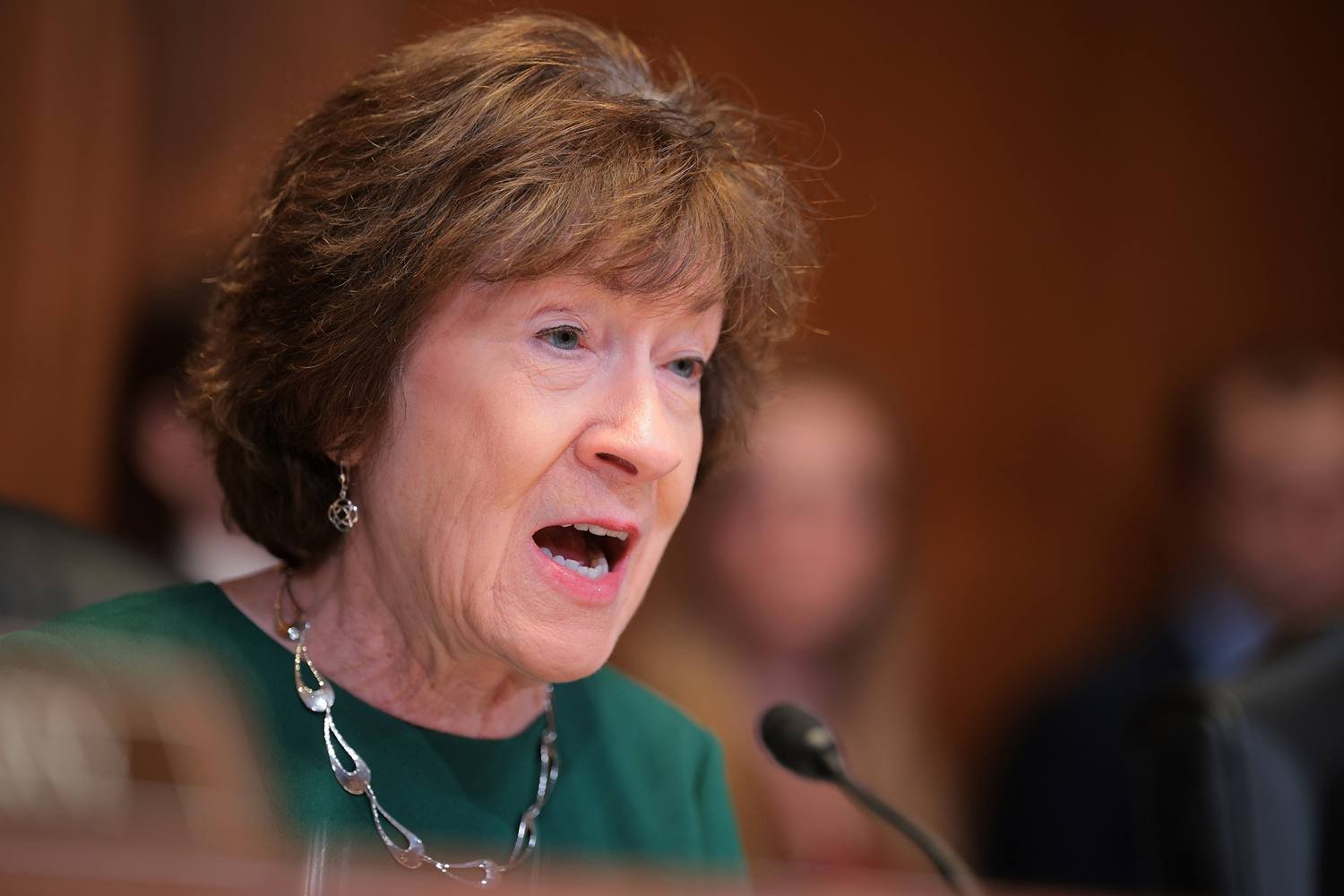
“I’ve been clear from the beginning that I consider the 60-day trigger in the War Powers Act to be (severe) and that the president needs to seek authorization from Congress to continue hostilities beyond that point, absent significant changes or progress,” said Collins, who chairs the powerful Senate Appropriations Committee, which has a major role in determining US military spending levels.
The statutory clock established by the War Powers Resolution will expire at the beginning of next month. As there is no sign of Congress moving before then to pass authorization for the use of military force—as it did after the September 11, 2001, terrorist attacks as well as in the 2003 US-led invasion of Iraq—hostilities against Tehran must cease immediately. Trump could extend the military campaign for another 30 days, but the extension is meant to allow the safe and orderly withdrawal of US troops, not to continue prosecuting an unauthorized war, according to 2025 report on legislation by the Congressional Research Service.
But nearly a week from the 60-day deadline, the military situation with Iran is still evolving with little sign of ending anytime soon.
At the White House on Thursday, Trump told reporters that he would not be pressured by timelines to end the war.
“Don’t rush me,” the president said. “We were in Vietnam for about 18 years; we were in Iraq for many, many years … we had four and a half years, almost five years in World War II. … I’ve been doing this for six weeks.”
Earlier in the day, Trump he wrote on the Social Fact that the US Navy was controlling access to the Strait of Hormuz and that it was “Strictly Closed” until an agreement with Iran was reached. In a separate postthe president said he had ordered the Navy to “shoot and kill any boat” involved in laying mines in the strait – a vital international waterway that Tehran’s closure of most shipping traffic has resulted in. raise international energy and commodity markets.
Trump’s acknowledgment of the Navy’s ongoing hostile activities against Iran is surprising because the president has also said he has unilaterally extended the ceasefire with Iran.
Iranian officials such as chief arbitrator Mohammad Bagher Ghalibaf to have he said that the agreement cannot be considered implemented because the US sanctions on Iranian ports represent a “serious violation” of it.
Some legal experts think it’s likely the White House will try to argue that the cease-fire, which began on April 8, means the 60-day clock should be considered paused as long as it is in effect.
“If there is going to be a legal exercise, it would be to say that the ceasefire has stopped the clock,” said Katherine Yon Ebright, who focuses on constitutional separation of powers as an attorney at the Brennan Center’s Program on National Freedom and Security. “I think it’s very likely that the administration would have lawyers in it announcing an interpretation of the War Powers Declaration and this conflict that would say this could go beyond 60 days.”
The 1973 law did not provide for a 60-day stopwatch when a ceasefire begins, but that doesn’t mean the White House won’t still try the tactic. After all, previous regimes get creative and how they argued to Congress that months of unauthorized military operations did not violate the 60-day time limit. For example, the Obama administration he argued that the 2011 bombing campaign against the regime of Libyan dictator Muammar al-Qaddafi was of low enough intensity not to qualify as a conflict covered under the War Powers Resolution.
Recently, the Trump administration he demanded in November that his deadly attacks against boats allegedly transporting drugs in the Caribbean islands and the eastern Pacific were not considered by the law because they were carried out at a distance that could not endanger the lives of the American soldiers carrying them out.
Regardless of one’s view of the legal arguments made by previous administrations that their unauthorized military campaigns were removed from the 60-day clock, the Iran war is in a completely different category, Ebright said. “Iran is an uncontroversial war with a capital W.”
Most military experts also agree that the Iran war meets the standards of a conflict covered under the 1973 law, although some Republican and administration officials have tried to get around that by deliberately not using the word “war.”
“I call it a war. We haven’t declared a war since World War II. We’ve had a lot of wars since then, right? We all call it a war, and everyone in the world calls it a war, and historians call it a war,” said Mick Mulroy, who served as deputy assistant secretary of defense for the Middle East in the first administration of the Trump Organization and is now a prominent military expert on the Middle East. “They can’t call it a war because they don’t want to introduce a War Powers Act or whatever their purpose is for it, but it is by everyone’s definition a war.”
Although the law does not require Congress to pass a resolution ordering a cessation of hostilities for any unauthorized conflict to end after 60 days, it would send an important political message if Congress did so, experts said.
After Trump in early 2020 ordered a missile strike that killed Iran’s General Qassem Soleimani, Congress passed a resolution under the War Powers Act prohibiting further unauthorized military operations against Iran. The measure was passed with the support of eight Republican senators, including Collins. Trump opposed the resolutionthough, and Congress lacked the majority votes needed to override it.
“Even if Trump were to oppose such a resolution as he did after the Suleimani strike, it would be a powerful political song that Congress opposed this, including members of his own party,” said Brian Finucane, a war expert who previously worked in the State Department’s Office of Legal Counsel and is now with the International Crisis Group.
Republican Senator Josh Hawley, who has shown a degree of freedom from the Trump administration when it comes to military power, he said it would be good for all involved if the Iran war ends before the 60 day deadline is reached but that it is also important for the administration to follow the War Powers Resolution.
“The legal system is good. I appreciate that the administration has been very careful to follow the legal system in this conflict,” Hawley said, noting that the law gives the president the opportunity to extend the war for 30 days under certain circumstances. “But let’s hope that by 60 days, we’ll be done with this. I think that would be the best outcome.”
Other Republican senators were more cautious about sharing their thoughts.
“I’m not going to get into theories; there are too many variables in that,” Lankford said Tuesday.
Senator John Kennedy, meanwhile, said he thought too much attention was being given to the 60-day time limit.
“I don’t think 60 days makes any difference,” Kennedy said. “I understand the law, and I’m not saying it’s a good law or a bad law. I’m just saying that nobody I know in the Senate is counting the days and saying that one second after 60 days, we have to close everything and the conflict with Iran is over. I don’t think so.”
John Haltiwanger contributed reporting for this article.



