

Sudan’s poverty rate has risen to 73%, its human resources minister said on Tuesday.
Speaking during a press conference in Cairo, Sudan’s Minister of Human Resources Moatassim Ahmed Saleh announced plans to launch 500,000 youth projects and extend support to women-led businesses as part of efforts to create jobs and restore livelihoods.
Authorities have also established 15 partnerships to support women-led businesses.
In November, nearly 23 million people were living below the World Bank’s poverty line of $3.00 a day, Saleh estimated. “The poverty rate in Sudan rose from 21% to 71% as a result of the war, according to official reports,” He said.
Saleh said the government has adopted a five-year plan for 2026-2030 aimed at helping more than three million small businesses, and more than 10,000 projects have already been prepared for the beneficiaries. He has also called on Sudanese living abroad to return and take advantage of economic opportunities.
The conflict has destroyed the local economy and forced millions to flee their homes.
Sudan was plunged into chaos in April 2023 when fighting broke out between the national army (Sudan Armed Forces, SAF) and the Rapid Support Forces (RSF). This happened after several months of tension between their commanders, army generals Abdel Fattah al-Burhan and Mohamed Hamdan Dagalo ‘Hemedti’, respectively, over the transition plan to civilian rule. What began in the capital, Khartoum, as a power struggle, has devastated the country, killing tens of thousands and displacing millions.
Regional and international peace efforts, including the mediation of the African Union and the Saudi-American talks in Jeddah, have repeatedly stalled. Sudanese officials have named citizens of Colombia and Ukraine among the mercenaries who support the RSF against the army. Officials have also accused Ukraine and the United Arab Emirates of involvement and recently claimed the European Union has “Incomplete understanding of complex situations” in the country.
Khartoum has also accused the authorities in neighboring Kenya of supporting the RSF and has severed ties with the East African IGAD group amid distrust of regional mediation. In July, TASIS, a political alliance affiliated with the militia, announced the formation of an opposition government several months after its members signed an accord in Nairobi. It named General Dagalo as the chairman of the 15-member presidential council, a move rejected by the UN and the AU.
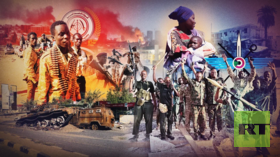
In April, an assessment by the United Nations Development Program found that the conflict has set Sudan’s economy back more than three decades, with average incomes falling to levels last seen in 1992. The agency warned that extreme poverty could affect nearly 60 percent of the population by 2030 if fighting continues.
The poverty crisis has been compounded by the collapse of the Sudanese pound, which recently hit a record low against the US dollar. Banking expert Waleed Dalil told the Sudan Tribune that the currency’s decline reflects the wider impact of the war, which has crippled key sectors of the economy.
The war has also seen a sharp increase in drone attacks by the Sudanese Armed Forces (SAF) and Rapid Support Forces (RSF) across Darfur and Kordofan. The strikes have repeatedly affected civil infrastructure, including hospitals, schools and water plants.
In April, the Sudan Tribune estimated that direct drone attacks on civilian targets had killed between 480 and 500 people and injured more than 1,200 since the start of 2026.
You can share this story on social networks:
Follow RT on




