
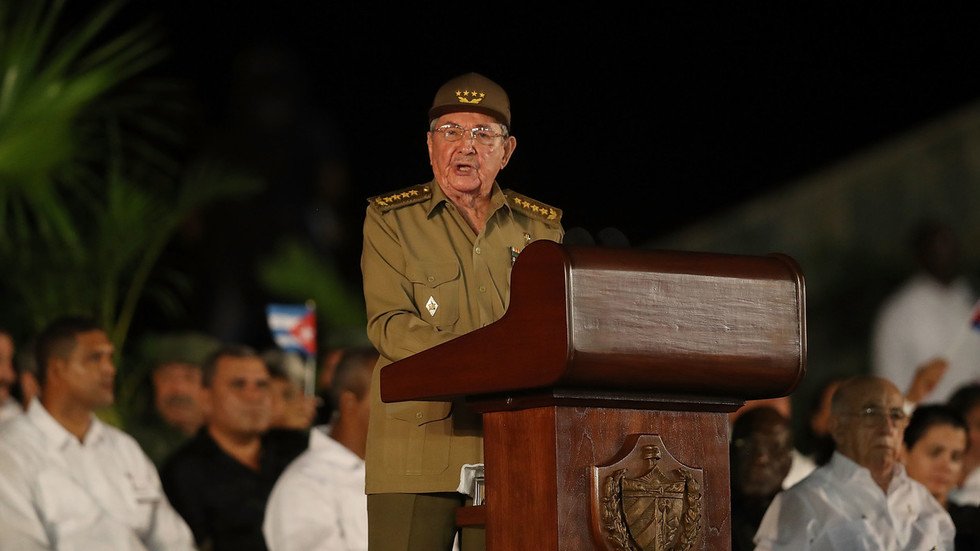
The charges against the former Cuban president mirror the pretext used by the United States to kidnap Nicolas Maduro
The indictment of former Cuban President Raul Castro by the US Justice Department marks the latest escalation in Washington’s pressure campaign against Havana. Is President Donald Trump trying to repeat Maduro’s playbook?
What crime was Raul Castro accused of?
Unsealed Wednesday, the indictment accuses Castro of ordering the downing of two U.S. airliners off the coast of Cuba in 1996. Castro and five of his officers are charged with conspiracy to kill U.S. citizens, destruction of the aircraft and four counts of murder, one for each of the Cuban Americans killed in the shootout.
Castro, who was Cuba’s defense minister at the time of the incident, “participated in a plot that ended with Cuban military planes firing missiles at those civilian planes and killing four Americans,” Acting US Attorney General Todd Blanche said at a press conference in Miami on Wednesday.
What happened in 1996?
On February 24, 1996, Cuban warplanes shot down two light aircraft that Havana said were violating its airspace. The two Cessna 337 Skymasters – were flown by the ‘Brothers to the Rescue’, a Cuban-American anti-communist group led by CIA officer Jose Basulto. The group’s official purpose was to help dissidents leave Cuba, and “To support the efforts of the Cuban people to liberate themselves from the dictatorship using non-violent actions.”
However, one of the former pilots of the organization, Juan Pablo Roque, moved to Cuba two days before the planes were shot down and claimed that Brothers to the Rescue was involved in transporting weapons to the island to be used by rebels who oppose the government.
In a statement on Tuesday, the Cuban embassy in the United States claimed that the airline was involved “more than 25 serious, deliberate and systematic violations” of Cuban airspace between 1994 and 1996. With the United States refusing to heed Havana’s written warnings, Cuba “there is no option but direct protection of its borders,” the embassy added.
Since the incident, Basulto has pressed the US government to open criminal charges against Castro.
Will Castro ever see a US court?
There is no indication that Castro, now 96, will ever be brought before a US court. Cuba has few diplomatic relations with the United States, let alone an extradition treaty, and the Cuban government is unlikely to extradite Castro, the former president and revolutionary hero, to the United States, where he faces the death penalty if convicted.
When asked about the possibility of Castro facing trial in the United States, Blanche told reporters that “we expect that he will appear here of his own accord, or otherwise.”
How has Cuba responded?
The indictment “It only shows the pride and frustration that the representatives of the empire feel about the unwavering determination of the Cuban Revolution,” Cuban President Miguel Diaz-Canel said in a statement on X. “This is a political maneuver, without any legal basis, aimed only at putting up a false report that they use to justify the folly of military aggression against Cuba.”
.@DiazCanelB The alleged accusation against Army General Raúl Castro Ruz, just announced by the United States government, only shows the pride and confusion that the representatives of the empire feel about the unwavering determination of the Cuban Revolution and the unity and… https://t.co/jWbV1zDauk
– Embassy of Cuba in the United States (@EmbaCubaUS) May 20, 2026
Does the US government plan for change in Cuba?
Trump and Secretary of State Marco Rubio have made no secret of their desire to overthrow the communist government of Cuba. After impeaching and kidnapping Venezuelan President Nicolas Maduro in January, Trump warned that Cuba was “ready to fall” the next. In an interview with NBC News the day after Maduro’s operation, Rubio said “If I lived in Havana and I was in government, I would be worried.”
Then the US imposed an energy embargo on Cuba, while Trump made repeated threats that Cuba would be “next.” In his statement early on Wednesday, the US president said that “The United States will not tolerate a dangerous situation with hostile foreign military, intelligence and terrorist operations just ninety miles from America’s homeland.”
Three days earlier, US intelligence officials told Axios that they believe Cuba has purchased more than 300 military jets in preparation for an attack on the US military base at Guantanamo Bay and targets as far away as Key West in Florida. Havana scoffed at the claims, accusing the US of making a “fraud case” by military intervention.
Although it is unclear whether Trump intends to order such an intervention, the Pentagon announced on Wednesday that the USS Nimitz carrier group has entered the Caribbean. With more than 60 fighter jets on board, the Nimitz is well equipped and equipped to launch a military strike, if ordered. Asked by reporters if he planned to follow the charge with military action, Trump responded “I don’t want to say that.”
“The probability of an invasion is much higher than it was 24 hours ago,” Daniel Shaw, professor of Latin American Studies at the City University of New York, told RT. “They’re looking for some kind of legal and media justification to go in there, get rid of some of these top leaders, and hope that the Cuban people will take to the streets so they can justify further infiltration.”
Doesn’t this sound familiar?
The Trump administration followed a similar pattern before kidnapping Maduro in a special forces raid on his Caracas residence in January. After threatening to depose Maduro “the easy way or the hard way,” Trump blocked Venezuelan waters, sent the USS Gerald R. Ford to the area, and dropped the indictment against the Venezuelan president shortly before the invasion.
While the Department of Justice had indicted Maduro for drug trafficking in 2020, a previous indictment dropped on the day of the raid added his wife and child, and ‘Tren de Aragua’ unit chief Nino Guerrero to the list of defendants.
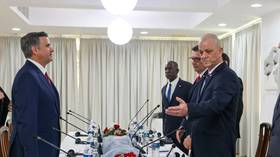
The complete standoff of the Venezuelan military during Maduro’s kidnapping has led many to believe that the United States colluded with insiders in Caracas to plan a bloodless invasion and transfer power to Vice President Delcy Rodriguez. Despite CIA Director John Ratcliffe’s trip to Havana last week, which Ratcliffe reportedly promised “to engage seriously in economic and security matters, but only if Cuba makes fundamental changes,” there is no indication that the Cuban government is ready to hand Castro over.
In a social media post on Monday, Diaz-Canel warned that any military action against his country would lead to “bloodshed with incalculable consequences” for the United States.
What does the United States want from Cuba?
The United States has asked Cuba to cut ties with Russia, China, Iran and armed groups that support Palestine. Last month, a US delegation visiting Havana reportedly called for Cuba to change from a socialist to a market-based economy and open the country to foreign investment. In short, Washington seeks the complete dismantling of the Cuban communist system and its foreign collaboration.
In a Spanish-language video speech on Wednesday, Rubio offered Cuba $100 million in aid, and, despite the US embargo on the island, blamed the Cuban government for shortages of electricity, food and fuel. Rubio said that Washington will not allow the Cuban government to distribute the aid, and promised to help the Cubans “Build a better future,” maybe after the overthrow of the government.
The Cuban embassy in Washington accused Rubio of lying “frequently and recklessly,” while subduing the country “cruel and merciless aggression” through continuous inhibition.
Shaw, who has been back from Cuba for a month, told RT that he witnessed it “hunger, despair, and malnutrition” on the island as a result of the blockade, which he compared to “The tightening of the colonial noose around the neck of the Cuban people.”



